
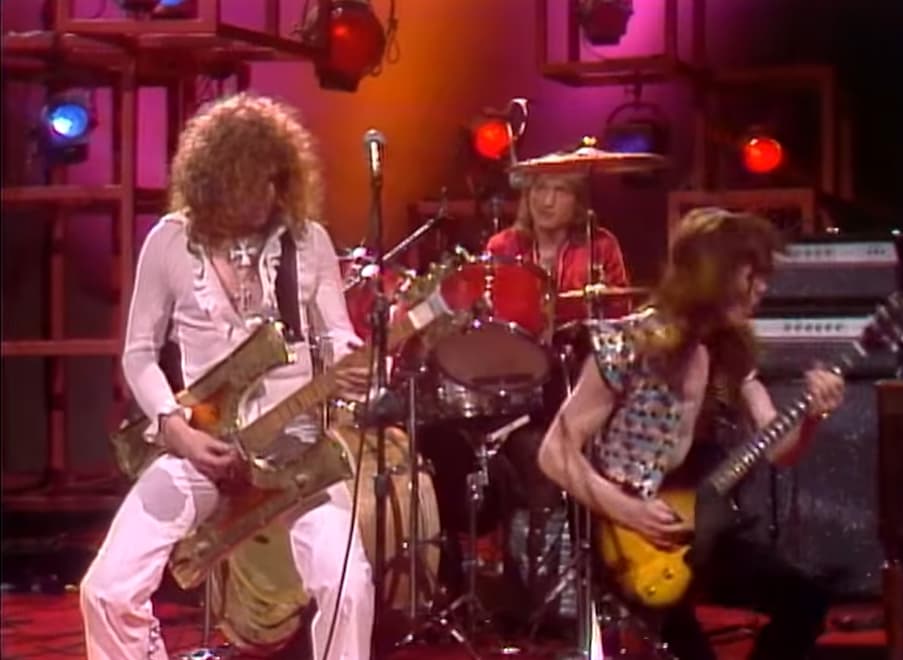
A Defining Television Moment for Mott the Hoople in Late 1973
The December 7, 1973 appearance of Mott the Hoople performing Drivin’ Sister on The Midnight Special stands as a vivid document of the band at a crucial point in its evolution. Broadcast nationally in the United States, the performance captured Mott the Hoople during a period of renewed confidence and creative momentum, following their breakthrough into mainstream recognition earlier in the decade.
By late 1973, the band was firmly established as one of the most compelling acts to emerge from the British glam rock movement. Their success had not come easily. Years of near misses and critical praise without commercial reward had shaped Mott the Hoople into a hardened and determined live band. The Midnight Special performance reflected that hard earned assurance, presenting a group fully aware of its identity and purpose.
Drivin’ Sister, taken from the album Mott, was a natural choice for a television audience. The song carried a raw, driving energy that emphasized the band’s rock and roll foundations rather than glam theatrics alone. Frontman Ian Hunter delivered the song with conviction and authority, his vocal performance balancing grit with melodic control. His presence anchored the performance, projecting both confidence and emotional urgency.
A key element of this particular appearance was the guitar work of Ariel Bender, who had replaced Mick Ralphs earlier in 1973. Bender brought a sharper and more aggressive edge to the band’s sound, and his performance on Drivin’ Sister highlighted that shift. His playing was forceful and unrestrained, adding tension and volume that pushed the song forward and reinforced its raw character. This lineup change marked a new chapter for the band, and the Midnight Special performance clearly demonstrated how Bender’s style reshaped their live sound.
The Midnight Special was renowned for showcasing artists in a performance driven setting that emphasized musicianship and authenticity. For Mott the Hoople, this format was ideal. The band appeared focused and cohesive, prioritizing energy and connection over polish. The performance conveyed a sense of urgency that translated powerfully through the television screen, making it clear why the group had built such a loyal following.
Viewed today, the December 1973 broadcast remains an important historical record. It captures Mott the Hoople at a moment when they were neither looking back nor standing still, but pushing forward with renewed intensity. The performance of Drivin’ Sister endures as a reminder of the band’s resilience, adaptability, and enduring place in the story of classic rock.