
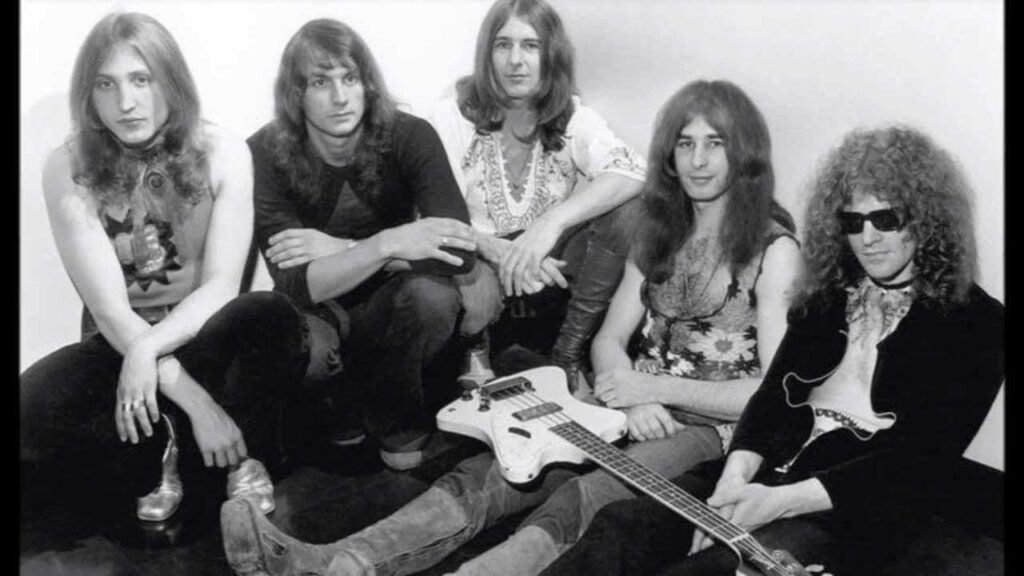
A Glittering Gem of Glam-Rock Narrative and Gritty Reality
“Momma’s Little Jewel,” a vibrant and often overlooked track from Mott the Hoople’s influential 1972 album, All the Young Dudes, is a vivid slice of glam-rock storytelling, painting a poignant picture of youthful ambition and the allure of the spotlight. While it was not a single and thus did not chart independently, it is a crucial component of an album that fundamentally shaped the sound and aesthetic of an era. This song, with its driving rhythm and Ian Hunter’s distinctive narrative voice, captures the yearning for escape and the bright, sometimes harsh, glow of fame, resonating with a timeless quality that speaks to anyone who’s ever dreamt of a different life.
The album All the Young Dudes represents a monumental turning point for Mott the Hoople. On the brink of disbanding, the band was famously championed by David Bowie, who not only offered them the eponymous hit song but also produced the entire album. This collaboration infused Mott the Hoople with renewed energy and a more focused glam-rock identity, propelling them into the mainstream and solidifying their place in rock history. “Momma’s Little Jewel,” nestled within this iconic album, stands as a testament to the band’s enhanced creative synergy and their newfound confidence. It demonstrates their ability to craft compelling narratives set against a backdrop of electrifying rock and roll.
Lyrically, “Momma’s Little Jewel” is a character study, a finely etched portrait of a young woman drawn to the intoxicating promise of the rock and roll world. Ian Hunter’s lyrics are rich with evocative imagery and a gritty realism, depicting a girl who trades the mundane confines of home for the thrilling, if sometimes perilous, embrace of the music scene. Phrases like “Left her home in the evening, said ‘Momma, don’t you wait for me'” immediately establish the sense of departure and youthful rebellion. The “jewel” of the title can be interpreted in multiple ways: the girl herself, seen as precious by her mother, or perhaps the glittering, alluring promise of fame and a life far removed from her humble beginnings. Hunter’s narrative style is both empathetic and observational, capturing the dreams, the naivete, and the fierce independence of those who flocked to the bright lights of London in the early 1970s. It’s a tale that many can relate to, a yearning for something more, a desire to be seen and recognized, even if it means stepping into an unknown and potentially dangerous world.
Musically, “Momma’s Little Jewel” is a dynamic showcase of Mott the Hoople’s evolving sound. The song opens with a catchy, insistent guitar riff that immediately grabs attention, setting a driving, almost propulsive pace. The rhythm section, with Pete Watts’s solid bass and Dale Griffin’s powerful drumming, provides a relentless backbone that perfectly supports the narrative’s forward momentum. Mick Ralphs’s guitar work is both raw and melodic, delivering crunchy riffs and sharp solos that add texture and edge. Ian Hunter’s vocals, with their signature sneer and theatrical delivery, bring the character of the “jewel” vividly to life, conveying both her vulnerability and her fierce determination. The production by Bowie and Ken Scott adds a polished yet still raw quality, balancing the glam-rock flamboyance with the band’s inherent grit. The interplay between the instruments is tight and cohesive, demonstrating a band firing on all cylinders.
While overshadowed by the title track, “Momma’s Little Jewel” holds significant weight within All the Young Dudes and the broader Mott the Hoople legacy. It is a brilliant example of the band’s ability to craft compelling, character-driven rock songs that resonate beyond simple catchy hooks. For those who immersed themselves in the glam-rock era, this song evokes a specific memory of an exciting, flamboyant, and deeply authentic time in music. It’s a testament to the dreams of youth, the irresistible pull of the stage, and the quiet sacrifices made in pursuit of a different, more glittering life. It remains a sparkling, if unsung, gem in the band’s rich catalog, a vivid snapshot of a bygone era still shimmering with energy and longing.