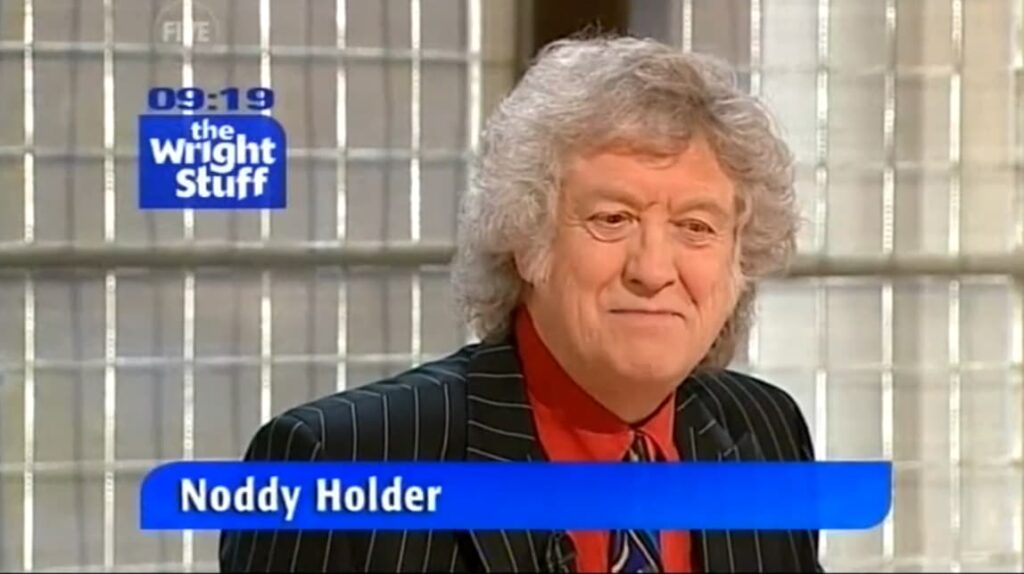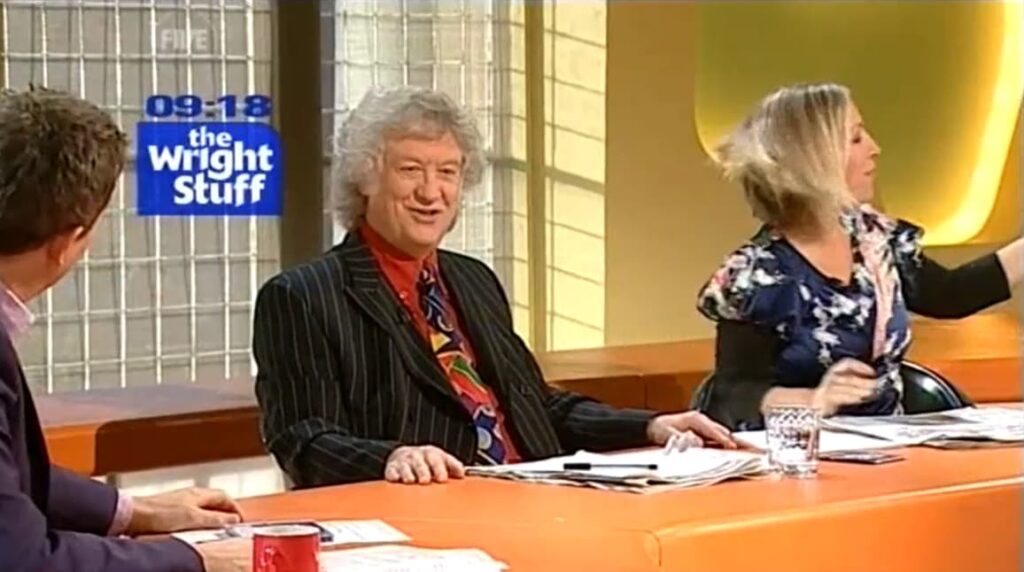
Noddy Holder in Conversation, 2009: Humor, History, and the Heart of Slade
When Noddy Holder appeared on TWStuff on December 1, 2009, it was immediately clear that this was not going to be a routine promotional interview. Officially, he was there to talk about his new release, Slade’s Party Hits, but what unfolded was something far richer: a portrait of a pop legend whose humor, honesty, and deep connection to British music culture remain completely intact.
From the opening moments, Holder’s personality filled the studio. His quick wit, self awareness, and playful banter set a relaxed tone, reminding viewers why he was always more than just a frontman. There was warmth in the way he spoke, an ease that comes only from someone who has spent a lifetime in the public eye without losing perspective. Even the most lighthearted moments carried the sense of a storyteller who understands the value of shared laughter.
As the conversation shifted toward Slade’s legacy, the scale of their success came into focus. Holder casually reminded listeners that Slade once sold more singles than any other UK band, a fact often overlooked in modern discussions of seventies rock. Yet there was no arrogance in the way he spoke about it. Instead, there was pride mixed with realism, an understanding that success is shaped as much by timing and circumstance as by talent.
One of the most compelling moments came when Holder reflected on the creation of “Merry Christmas Everybody.” His account stripped away any mythmaking. The song was written quickly, born from a practical idea during a period of national hardship. Britain in 1973 was struggling through recession, strikes, and uncertainty. Against that backdrop, Slade chose optimism. Holder spoke openly about wanting to give people something uplifting, a record that looked forward rather than inward. That honesty explains why the song has endured far beyond its original moment.
The story of recording the track in a sweltering New York summer added another layer of contrast, as did the remarkable detail that John Lennon was working in a nearby studio at the same time. Borrowing Lennon’s keyboard for the opening chords felt less like name dropping and more like a quiet reminder of how closely connected that musical era truly was.
Holder was also clear about the present. Slade’s Party Hits was not positioned as a greatest hits album, but as a response to another difficult economic period. Once again, his instinct was to offer joy rather than nostalgia. The album’s mix of classic Slade tracks and carefully chosen covers reflected his belief that music should still function as release and celebration.
When asked about a Slade reunion, Holder was firm and honest. There would be no return of the original lineup. His refusal to romanticize the idea felt refreshing. It showed respect for what the band had been, without turning it into something forced or artificial.
Throughout the interview, what stood out most was Holder’s balance. He honored the past without living in it. He joked freely but spoke seriously when it mattered. More than a promotion, this appearance became a reminder of why Noddy Holder remains such a respected figure. Not just for the songs he helped create, but for the clarity, generosity, and humanity he continues to bring to every conversation.
Video: