
Ronnie Montrose Leaves a Lasting Impression Without Excess
In a performance setting built to celebrate virtuosity, Ronnie Montrose chose a different path. His appearance in “Night of the Guitars” stands as a compelling reminder that technical brilliance does not always require spectacle. Surrounded by players known for speed and intensity, Montrose delivered a moment that relied on control, tone, and musical clarity rather than sheer volume of notes.
The concept of the event itself created a unique challenge. Multiple guitarists shared the same stage, each given limited time to establish identity and leave an impression. In such an environment, the temptation to overwhelm an audience with complexity is strong. Montrose resisted that impulse. Instead, he approached the performance with a sense of economy, allowing each phrase to carry intention and weight.
From the moment he stepped forward, there was a noticeable shift in atmosphere. His presence did not demand attention in an obvious way, yet it drew focus through subtle authority. The opening notes of his instrumental passage were clean and deliberate, immediately setting him apart. Where others leaned into speed, Montrose emphasized phrasing, shaping each line as if it were part of a larger conversation.
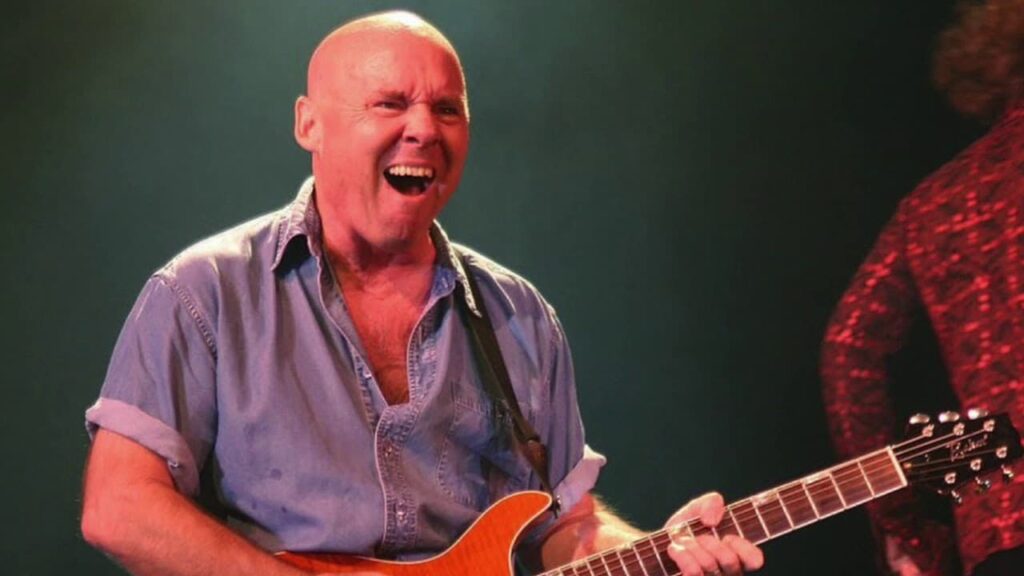
Visual elements also played a role in defining the performance. The distinctive guitar he carried, reflecting the stage lights with a striking brilliance, added a layer of theatrical presence without distracting from the music itself. It reinforced the idea that performance is both a sonic and visual experience, though in this case, the sound remained the central force.
As the piece developed, Montrose demonstrated a refined sense of structure. Rather than extending his solo indefinitely, he built toward a clear peak and resolved it with precision. This restraint proved to be one of the most memorable aspects of the set. It suggested confidence not only in his ability, but in his understanding of what the moment required.
The broader significance of this performance lies in its contrast. Within a showcase designed to highlight extremes, Montrose offered balance. His playing served as a reminder that expression in music often emerges from what is left unsaid as much as from what is performed.
In retrospect, this appearance captures an artist secure in his identity. Ronnie Montrose did not need to compete for attention. By remaining true to his style, he created a moment that continues to resonate, defined not by excess, but by lasting clarity.