
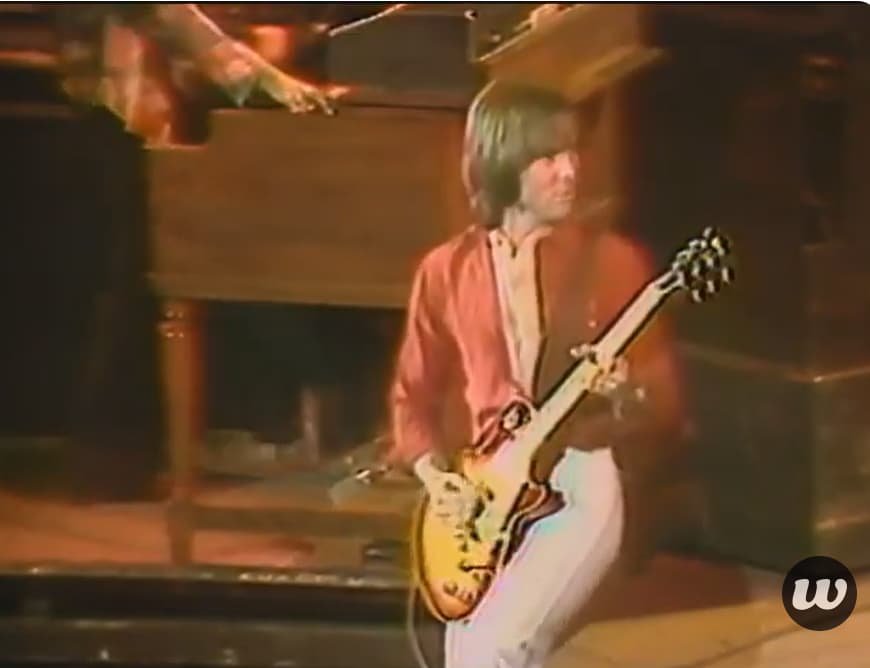
Ronnie Montrose Reimagines a Classic on Stage in 1978
On April 3, 1978, in New York City, Ronnie Montrose delivered a performance that quietly redefined the expressive limits of rock guitar. His interpretation of “Town Without Pity” stood apart from the rest of the set, offering a moment of reflection within an evening largely driven by instrumental exploration. It was not simply a cover. It was a transformation that revealed how deeply a melody can endure even when its original form is stripped away.
The song itself carries a long history as a vocal driven ballad, known for its emotional weight and lyrical vulnerability. In Montrose’s hands, however, the narrative shifts entirely. Without a singer, the responsibility for conveying feeling falls solely on the guitar. This challenge becomes the defining strength of the performance. Through phrasing, sustain, and tonal control, Montrose recreates the emotional arc of the original while introducing a new dimension of intensity.
From the opening notes, recognition plays a key role. The audience is drawn in by a melody that feels familiar, yet the absence of lyrics creates a sense of anticipation. As the piece develops, that anticipation gives way to immersion. Each phrase is delivered with restraint, allowing space between notes to carry as much meaning as the notes themselves. This measured approach reflects a broader artistic direction associated with his work around Open Fire, where experimentation and subtlety replace conventional rock structures.
The performance also highlights Montrose’s ability to balance fidelity and reinterpretation. He does not abandon the essence of the original composition. Instead, he preserves its emotional core while amplifying its dynamics through electric guitar. In the climactic passages, the sound expands with a richness that surpasses the limitations of the earlier version, suggesting a deeper, more personal engagement with the material.
Equally notable is the placement of the piece within the concert. Surrounded by more energetic and technically driven segments, “Town Without Pity” provides contrast and narrative flow. It becomes a moment where the audience is invited to listen rather than react, to reflect rather than respond.
Viewed in retrospect, this New York performance stands as a testament to the enduring power of melody. By removing words and relying entirely on instrumental expression, Ronnie Montrose demonstrates that emotion in music does not depend on language. In some cases, it becomes even more profound without it.