
“Editions of You”: A Dazzling, Anxious Dance Through Modernity and the Shifting Sands of Identity.
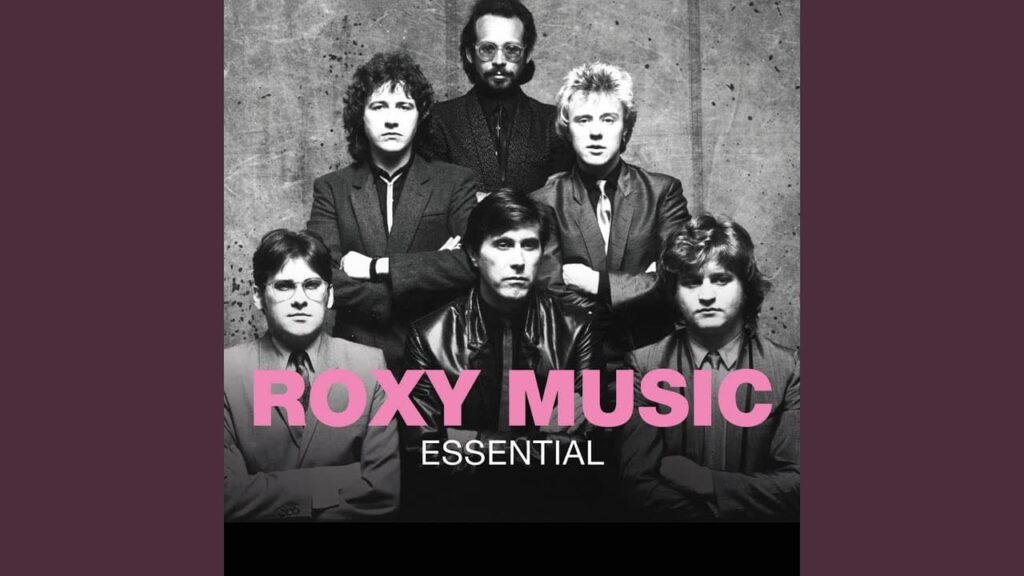
For those of us who experienced the exhilarating, often disorienting, cultural shifts of the early 1970s, Roxy Music emerged as a truly singular force – a band that defied easy categorization, blending avant-garde art-rock with glam theatricality and a sophisticated, sometimes unsettling, pop sensibility. They were the epitome of cool, always a step ahead, challenging perceptions of what rock music could be. Among their most electrifying and distinctive tracks, “Editions of You,” released in 1973 as part of their groundbreaking second album, For Your Pleasure, stands as a blistering testament to their unique vision. It’s not just a song; it’s a dizzying, complex exploration of desire, disillusionment, and the fragmented nature of the self in a rapidly modernizing world. For older, well-informed readers, it evokes the thrilling, slightly anxious pulse of an era shedding its old skin for something entirely new.
While “Editions of You” was never released as a standalone single, its impact was undeniable within the context of For Your Pleasure, an album that solidified Roxy Music’s critical acclaim and growing cult following. The album itself achieved significant commercial success in the UK, peaking at a remarkable number 4 on the Official UK Albums Chart in 1973. Its influence, however, extended far beyond chart positions, shaping the sound and aesthetic of countless artists in the years that followed, from punk to New Wave and beyond. “Editions of You” became a live staple and a fan favorite, a quintessential example of the band’s dazzling musicianship and their ability to craft complex, layered soundscapes that were both intellectually stimulating and viscerally exciting. It showcased the individual brilliance of each member, particularly the iconic Bryan Ferry’s enigmatic vocals and the distinctive saxophone work of Andy Mackay, all propelled by a tight, driving rhythm section.
The story behind “Editions of You” is intertwined with Roxy Music’s rapid evolution and their commitment to art as performance. Following their highly impactful debut, the band, comprised of Bryan Ferry (vocals, keyboards), Phil Manzanera (guitar), Andy Mackay (oboe, saxophone), Paul Thompson (drums), and the newly recruited John Gustafson (bass, replacing Rik Kenton), was pushing their creative boundaries. For Your Pleasure was recorded at a time when the band’s collective chemistry was reaching a fever pitch. The song is credited to Bryan Ferry, reflecting his central role as the band’s chief lyricist and conceptual architect. His lyrical style was always rich with evocative imagery, drawing from film noir, high fashion, and a melancholic romanticism, all filtered through a lens of ironic detachment.
The meaning of “Editions of You” is open to interpretation, a characteristic hallmark of Ferry’s enigmatic songwriting. At its core, it appears to be a restless contemplation of a complex, perhaps elusive, lover, or even an exploration of the myriad facets of one’s own identity as presented to the world. The phrase “editions of you” suggests multiple versions, different facades, or perhaps the varying ways one is perceived by others or by oneself. It delves into themes of desire, disillusionment, and the fleeting nature of perfection. Lines like “I can see you looking back / You’re on the right track / You’re on the right track / But I’m looking back to see / If you’re looking at me” hint at a push-and-pull, a dance of observation and self-consciousness within a relationship. The song’s relentless energy, driven by Paul Thompson’s powerful drumming and Phil Manzanera’s angular guitar, mirrors the frantic energy of trying to pin down something, or someone, that is constantly shifting.
For older listeners, “Editions of You” might evoke memories of a time when popular music dared to be challenging, when artists were exploring new sonic territories and intellectual concepts. It recalls the thrill of encountering music that wasn’t immediately digestible but rewarded deeper engagement. It speaks to the anxieties and excitements of modern life, the feeling of being constantly on display, constantly evolving, and perhaps never quite knowing the “true” self or the true other. The song’s blend of cool detachment and underlying emotional intensity remains as captivating today as it was five decades ago, a vibrant, complex snapshot of a band fearlessly forging their own path and inviting us all to consider the many “editions” of ourselves.