
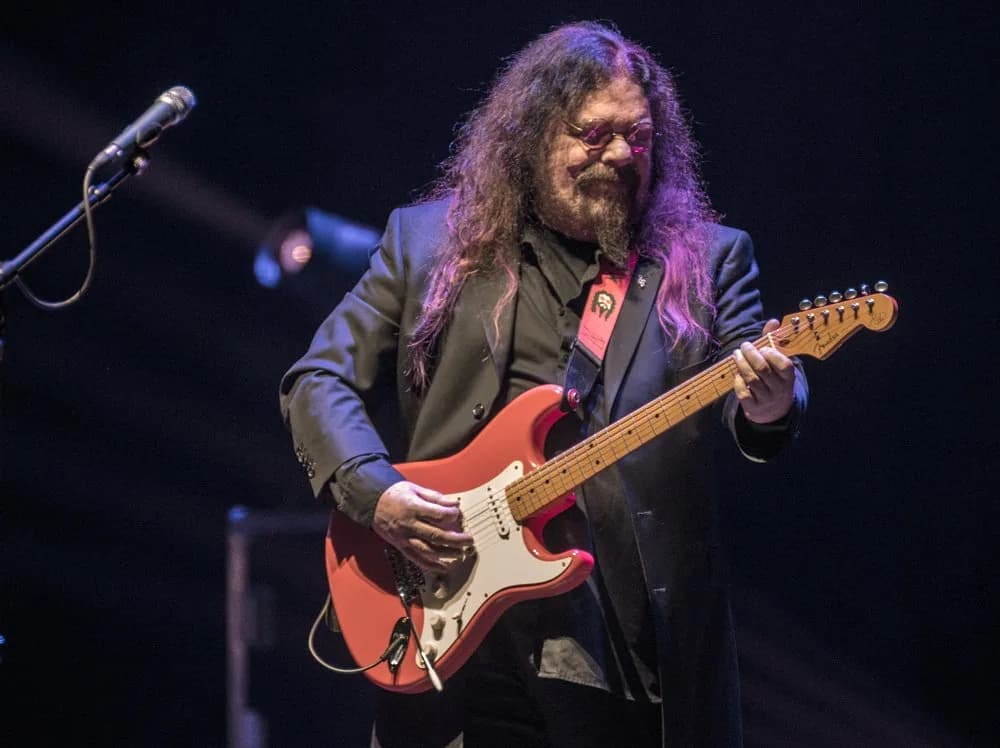
The Melancholic Maestro’s Masterpiece: A Layered, Symphonic Pop Ballad That Honors the Past While Mourning a Love That Could Not Endure.
The genius of Roy Wood—the eccentric, face-painted maestro behind The Move, Electric Light Orchestra, and Wizzard—lay in his audacious ability to synthesize rock’s future with pop’s glorious past. In late 1973, amidst the maximalist, costumed frenzy of his band Wizzard, Wood offered a dramatic counterpoint to the raucous Glam sound: the deeply personal, meticulously arranged ballad, “Forever.” This single was a surprising moment of stripped-back emotional clarity from the man who often hid behind the theatrical roar of his music.
Key Information: “Forever” was a single released by Roy Wood on November 16, 1973. It was entirely written, produced, and performed by Wood himself, who played all the instruments and provided the multi-tracked vocals—a true auteur’s recording. The track achieved significant commercial success, peaking at a highly respectable No. 8 on the UK Singles Chart, spending 13 weeks on the chart and straddling the transition from 1973 to 1974. It also charted in Australia, reaching No. 43 on the Kent Music Report. Notably, the single’s label bore a written acknowledgment: “with special thanks to Brian Wilson and Neil Sedaka for their influence,” a crucial clue to the song’s musical DNA.
The story behind “Forever” is one of profound, introspective homage and personal heartache. The gratitude expressed to Brian Wilson (of The Beach Boys) and Neil Sedaka is not casual; it speaks to Wood’s core artistic philosophy. While he was spearheading the theatrical volume of Glam Rock, his heart remained tethered to the sophisticated, multi-layered vocal arrangements and orchestral pop of the early 1960s. “Forever” is an incredible, almost psychedelic blend of these influences—its harmonies and sweeping, melancholy melody feel like a direct, British response to the lush, intricate production of The Beach Boys’ Pet Sounds. The drama here is internal: the struggle between the outlandish demands of his current rock persona and the quiet, melodic beauty he cherished.
The meaning of the song is deeply rooted in the painful realization that youthful love and promises often fail to withstand the pressures of reality. The lyrics contrast the grand, hopeful expectations of romance with the harsh reality of its collapse. The narrator reflects on being hurt by a “brand new baby” and ponders the futile nature of finding a love that lasts: “And I wonder who she’ll be / If she’ll put the hurt on me / Forever, Forever.” It is a mournful acknowledgment of recurring heartbreak—the “teenage heartaches” that linger into adulthood—a cyclical sadness that the narrator recognizes but cannot escape.
For older readers, this track provides a magnificent wave of nostalgia, not just for the musical landscape of 1973, but for the universal experience of love’s disillusionment. The majestic, multi-tracked vocal work of Roy Wood wraps the listener in a warm, complex embrace, turning personal sadness into a sweeping, symphonic piece of pop art. It reminds us of a time when pop singles could be both deeply commercial and intensely personal, a perfect example of a musical wizard stepping out from behind his elaborate stage makeup to sing a beautiful, heartfelt truth. It is a dramatic, poignant moment in Wood’s catalogue—a moment where the clamor of the stage gives way to the quiet, heartbreaking truth of the human condition.