
A Raw and Defiant Anthem of a Woman’s Power, a Gritty Tribute to a Fallen Rock and Roll Soul.
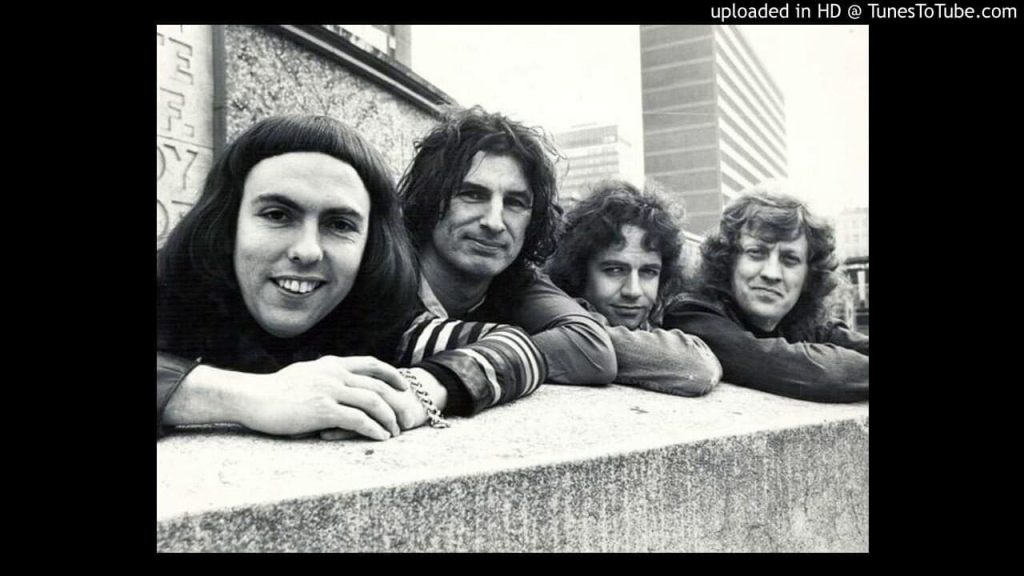
In the chaotic, glitter-strewn world of early 1970s Britain, a band of working-class titans named Slade was forging a path of their own. They were a raw, unapologetic force, a band of hard-rocking gladiators who, against all odds, had become the kings of the UK singles charts. Their 1972 album, Slayed?, was a commercial juggernaut, a record that distilled their explosive live energy and soared to number one on the UK Albums Chart. But amidst the stomping anthems and riotous singalongs, there was a song that was both a thunderous rock number and a profound act of tribute. That song was “Move Over.” It was never a single and never found its way onto the pop charts, a fact that only deepens its allure as a cherished, intimate masterpiece. Its power lies not in fleeting popularity, but in its dramatic backstory—a hard-rock homage to one of the most soulful voices in American history.
The story behind “Move Over” is a tragic, yet beautiful, piece of musical history. The song was originally written and recorded by the legendary Janis Joplin for her 1971 posthumous album Pearl. Joplin had died tragically in 1970, leaving behind a legacy of raw, soul-baring music that was as honest as it was powerful. Her original version of the song was a bluesy, defiant demand for space and respect, a testament to her unyielding spirit. Slade’s decision to cover it just two years after her death was a bold, dramatic act of homage. It was not a superficial choice; it was a testament to their deep respect for a fellow artist who lived and died for her music. The contrast between Joplin’s blues-inflected delivery and Slade’s hard-rocking, unpolished style is the heart of the drama—a new voice breathing a different kind of life into a timeless message.
The lyrical drama of “Move Over” is delivered with a kind of defiant pride. The song is a powerful monologue from a woman who has had enough, a person who refuses to be pushed aside. Slade’s musical interpretation adds a layer of hard-rocking swagger that is perfectly suited to their working-class image. The rhythm section is a driving, relentless force, and the guitars are raw and unpolished, reflecting the gritty realism of their sound. Noddy Holder’s voice, with its famous gravelly roar, turns the song from a blues lament into a powerful, almost aggressive anthem of self-assertion. The band’s performance feels like a final, glorious salute to a rock and roll goddess, a way of keeping her spirit alive in their own thunderous way. It is a moment of profound musical camaraderie, a moment where a band from the other side of the Atlantic honors a fallen hero in their own unmistakable style.
For those of us who came of age with this music, “Move Over” is more than a song; it’s a testament to the band’s depth and humanity. It’s a perfect example of how a cover can be more than a simple re-recording—it can be an act of tribute, a transformation, and a re-creation. It’s a song that speaks to the band’s deep respect for their musical roots and their ability to inject their own unique energy into any material. For older listeners, it’s a nostalgic reminder of an era when rock was a shared language, and a song could connect two artists across an ocean and across time. It stands as a powerful and profoundly emotional piece of rock history, a tribute that is as raw and real as the artist it honors.