
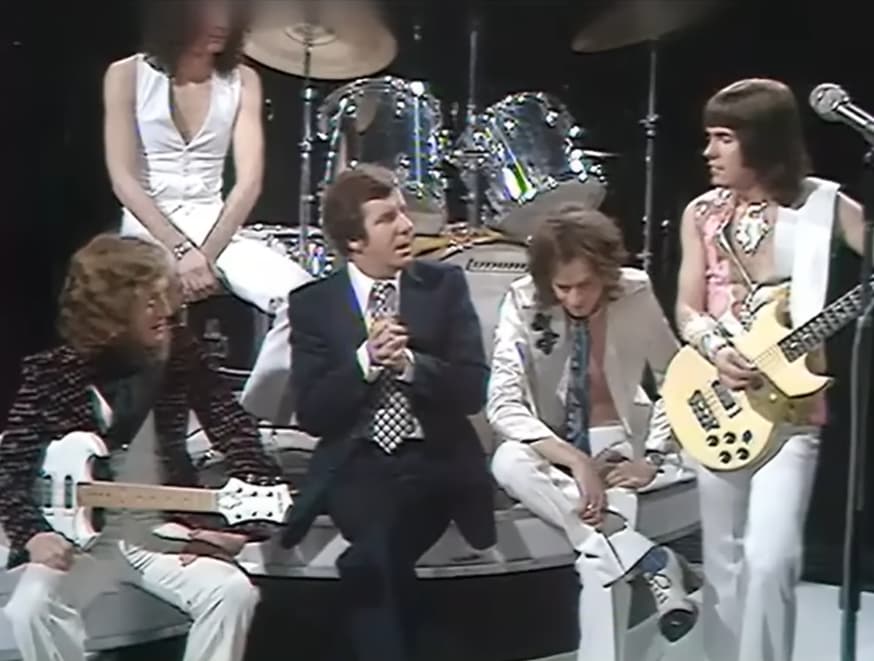
A Different Side of Glam Rock: Slade Reveal Depth and Doubt on Russell Harty in 1975
On February 7, 1975, Slade appeared on The Russell Harty Show at a pivotal moment in their career, offering audiences something far removed from the loud, celebratory image that had made them one of Britain’s biggest rock acts. Performing “How Does It Feel,” the band presented a quieter, more introspective side that many viewers were not expecting.
Released the same day as their television appearance, “How Does It Feel” was the second single from the soundtrack album Slade in Flame. Written by Noddy Holder and Jim Lea, the song marked a clear departure from the group’s earlier, high energy glam rock anthems. Instead of stomping rhythms and crowd chants, the track leaned into piano driven melodies and orchestral arrangements, reflecting a more thoughtful and emotionally complex direction. How Does It Feel reached number 15 on the UK charts, signaling both its impact and the risk the band had taken in changing their sound.
The performance itself captures that transition in real time. On stage, Slade appear more restrained, allowing the song’s structure and mood to take precedence over showmanship. Noddy Holder’s vocal delivery, typically powerful and commanding, is notably more controlled, aligning with the song’s reflective tone. It is a moment where the band seems less concerned with entertaining and more focused on expressing something deeper.
Equally revealing is the interview that follows. The conversation turns to their film Slade in Flame, a project that deliberately avoided the glamorous image often associated with rock bands. Instead, the group describes a story rooted in the harsher realities of the music industry, emphasizing that much of what is depicted reflects genuine experiences. This context adds weight to the performance, framing “How Does It Feel” not simply as a song, but as part of a broader artistic statement about ambition, illusion, and the cost of success.
What makes this appearance particularly valuable today is its honesty. At the height of their popularity, Slade chose not to repeat a winning formula, but to challenge both themselves and their audience. The result is a performance that feels unusually sincere for mainstream television of the time.
Viewed now, the footage stands as more than a promotional appearance. It captures a band in transition, willing to step away from expectation in search of something more meaningful. In doing so, it preserves a rare moment when commercial success gave way to artistic risk, and when one of glam rock’s loudest voices chose, briefly, to speak with quiet clarity.