
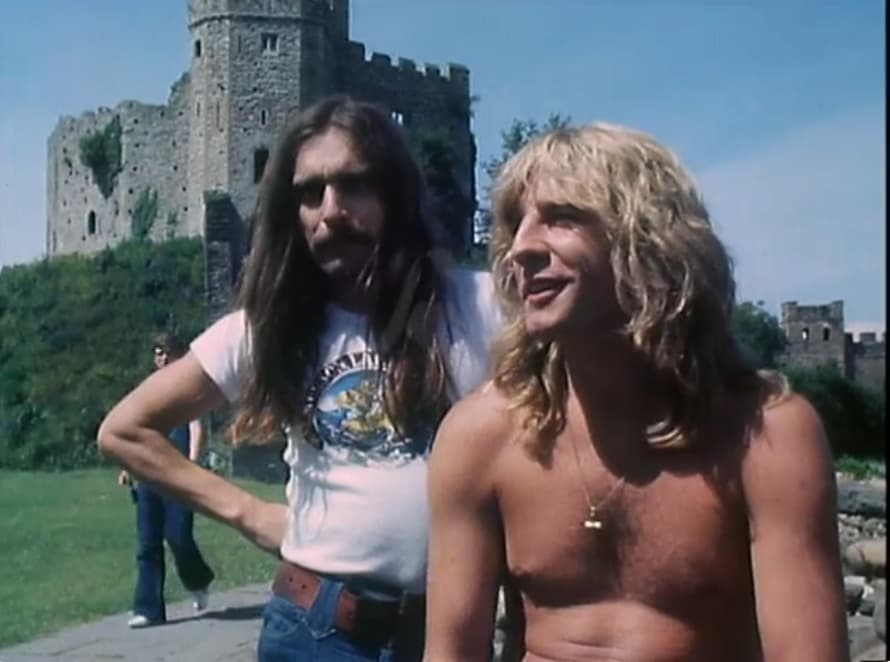
Status Quo at Cardiff Castle 1976 A Confident Band Reflects on Longevity and the Road Ahead
In July nineteen seventy six, Cardiff Castle became the setting for one of several major outdoor rock concerts held in the mid seventies, welcoming Status Quo at a time when the band were firmly established as one of Britain’s most reliable live attractions. The performance, captured alongside a brief interview segment, offers valuable insight into both the music and the mindset of a group entering the height of its commercial power.
By the summer of nineteen seventy six, Status Quo had been together for approximately fourteen years, an unusually long run in the pop and rock world of the era. In the filmed conversation, guitarist Rick Parfitt and drummer John Coghlan speak openly about the reasons behind the band’s durability. Rather than pointing to strategy or business decisions, Parfitt emphasizes musical agreement as the core factor. According to him, the shared understanding of what the band should sound like, combined with years of familiarity, allowed them to function smoothly both on and off stage.
This sense of unity is reflected in the live performance footage that follows. Status Quo appear relaxed, confident, and deeply connected to their audience. Outdoor shows such as the Cardiff Castle concert suited the band’s straightforward, high energy approach, allowing their driving rhythms and tight ensemble playing to reach large crowds without sacrificing clarity or impact.
During the interview, the discussion turns toward ambition. Despite major success across Europe, including multiple number one records, Parfitt identifies breaking into the American market as the band’s remaining major objective. He notes the contrast between performing for audiences who know the band well and those who do not. In Europe, Status Quo could step on stage knowing exactly what the crowd expected. In America, the challenge lay in winning over listeners unfamiliar with their sound and image.
This honest assessment captures a crucial moment in the band’s history. Status Quo were no longer striving for recognition at home, yet they were still motivated by the idea of expanding their reach. The Cardiff Castle appearance shows a group comfortable with its identity but not content to stand still.
From a historical perspective, the footage is valuable not only for the music but for the context it provides. It documents Status Quo as working musicians who understood the importance of consistency, audience connection, and long term collaboration. The interview and performance together present a clear picture of a band that had learned how to last.
Nearly fifty years on, the Cardiff Castle clip remains a telling snapshot of Status Quo in their prime, grounded, confident, and still looking forward.