
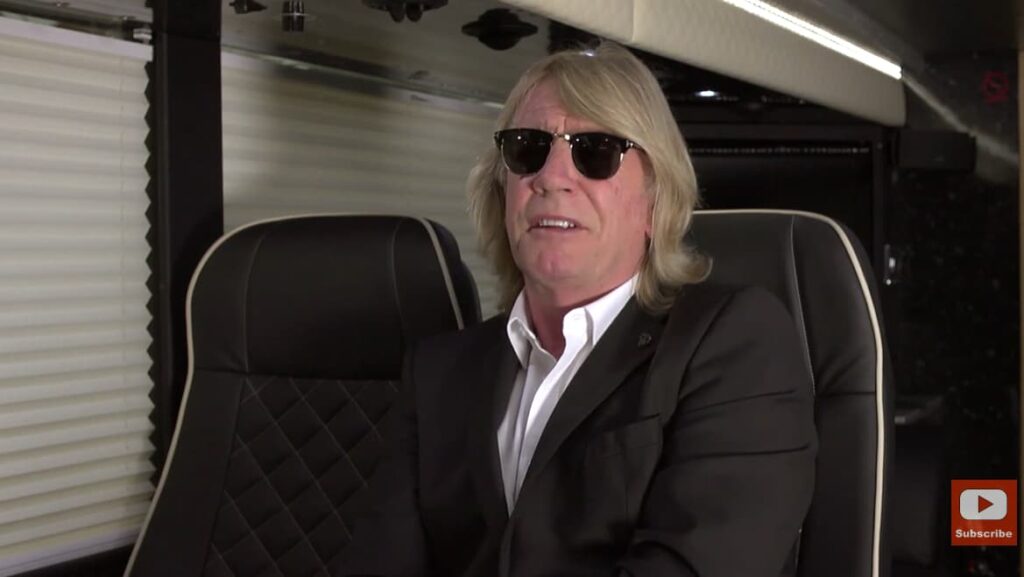
Rick Parfitt Reflects on the Status Quo Frantic Four Reunion in Candid Interview
In a revealing reunion interview, Rick Parfitt offered an unfiltered look into what it truly meant to bring Status Quo back to the stage with the legendary Frantic Four lineup. Speaking with excitement and honesty, Parfitt described the experience as both exhilarating and demanding, capturing the physical, emotional, and musical reality behind a reunion many fans believed would never happen again.
For Parfitt, the return felt immediate and deeply personal. He spoke passionately about revisiting the band’s pre-1976 material, music defined by raw volume, relentless rhythm, and uncompromising power. Compared to later incarnations of Status Quo, this lineup felt louder, tougher, and far more exposed. With no keyboards to soften the sound, the responsibility fell squarely on the guitars and rhythm section. Parfitt and Francis Rossi, seasoned road veterans, were forced to operate at full intensity throughout the entire set, much like they had in the early 1970s.
The rehearsal process, however, was far from straightforward. While Parfitt and Rossi instinctively knew the material, bringing Alan Lancaster and John Coghlan back to full arena-level performance required time and effort. Parfitt spoke openly about Lancaster’s serious mobility issues, acknowledging the physical struggle while praising his unbreakable determination. Despite health challenges, Lancaster’s “Bulldog spirit” remained intact, embodying the stubborn resilience that had always defined the band.
John Coghlan’s role was equally crucial. Having spent years playing smaller pub gigs, Coghlan needed to rebuild the sheer force and precision demanded by large venues. Parfitt emphasized just how intense that transition was, but also how powerful the results became once everything locked into place. At one point in the interview, he described Coghlan’s drumming in vivid terms, comparing it to a howitzer, and quoting a friend who said the drums sounded like “an army of trucks coming at you.” The image perfectly captured the physical weight and forward momentum of Coghlan’s playing, which once again drove the band with unstoppable force.
What emerges most strongly from Parfitt’s words is commitment. He described performing with his head down, fully concentrated, maintaining power from start to finish, just as he had decades earlier. This was not a nostalgia exercise, but a return to discipline, volume, and collective focus. For Parfitt, the reunion represented “real rock and roll,” stripped of safety nets and delivered without compromise.
The audience reaction, particularly at the Hammersmith Apollo, confirmed the significance of the moment. Parfitt recalled the instant the curtain dropped and the sight of the crowd sent chills down his arms. Many in attendance believed they would never witness this lineup again, and that shared disbelief created an emotional surge felt on both sides of the stage.
This interview stands as a powerful document of a band reconnecting with its roots under demanding circumstances. The Frantic Four reunion was not about rewriting history, but about proving that the original Status Quo spirit, loud, physical, and unapologetic, was still alive and capable of shaking the room to its core.