
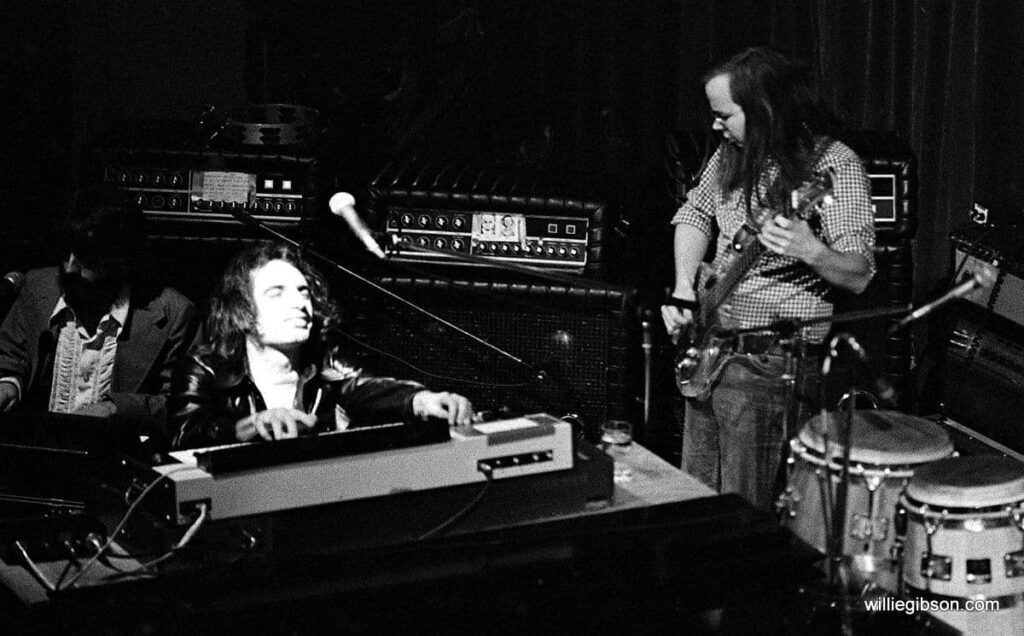
Rare Daylight Glimpse of Steely Dan Before the Myth Fully Hardened
A daytime television performance by Steely Dan broadcast in 1973 offers a fleeting but invaluable snapshot of a band still inhabiting the space between working rock group and future legend. Appearing during the early success of Can’t Buy a Thrill, which had already produced major chart hits and established the band as a commercial force, this broadcast captures Steely Dan at a moment when visibility was still part of the job, before retreating almost entirely into the studio would become their defining posture. While daytime television was rarely a natural habitat for a band of such cerebral instincts, this appearance now stands as a rare document of presence rather than polish.
What makes this performance especially compelling is not virtuosity or spectacle, but tension. Steely Dan were already an uneasy fit for traditional television formats. Donald Fagen and Walter Becker were writers and architects, not showmen, and the daylight studio setting exposes that contrast. The cameras catch a band performing with discipline and restraint, focused inward rather than outward, playing the songs cleanly but without theatrical exaggeration. There is no attempt to charm the room. The music does the work, and the musicians appear content to let it speak for itself.
For longtime listeners, the fascination lies in the lineup itself. Early Steely Dan was still a functioning touring unit, with rotating players who would soon fade into footnotes as Becker and Fagen withdrew from the stage altogether. Seeing faces onstage that would later disappear from the official narrative reinforces how transitional this period truly was. This was still a band navigating the practical realities of promotion, even as its leaders were already dreaming of a more controlled, studio-bound future.
Musically, the performance reflects a group in the process of refinement. The arrangements are tighter than their club-era looseness but not yet sculpted into the immaculate precision that would define albums like Aja or Gaucho. The grooves breathe more, the edges are less polished, and that slight roughness lends the songs a human warmth that later recordings would deliberately suppress. It is Steely Dan with fingerprints still visible.
What also resonates is the contrast between this early footage and what followed. By the mid-1970s, televised appearances by Steely Dan would become virtually nonexistent. Becker and Fagen would choose invisibility over compromise, depth over exposure. That later scarcity gives this 1973 appearance its emotional weight. It feels like a last moment of accessibility before the door quietly closed.
The mention of later clips preserved by the same archive, including Steely Dan on late night television in 1995 and a Donald Fagen interview from 1991 featuring Michael McDonald and Phoebe Snow, only deepens the sense of long arc. These fragments, scattered across decades, form a mosaic of an artist who revealed himself sparingly and always on his own terms.
Seen today, this daytime television performance is not just a curiosity. It is a reminder that even the most elusive artists once stood under bright studio lights, playing for a general audience, before choosing a different path. In that daylight setting, Steely Dan appear briefly human, transitional, and quietly determined, already inching toward the myth they would soon become.