
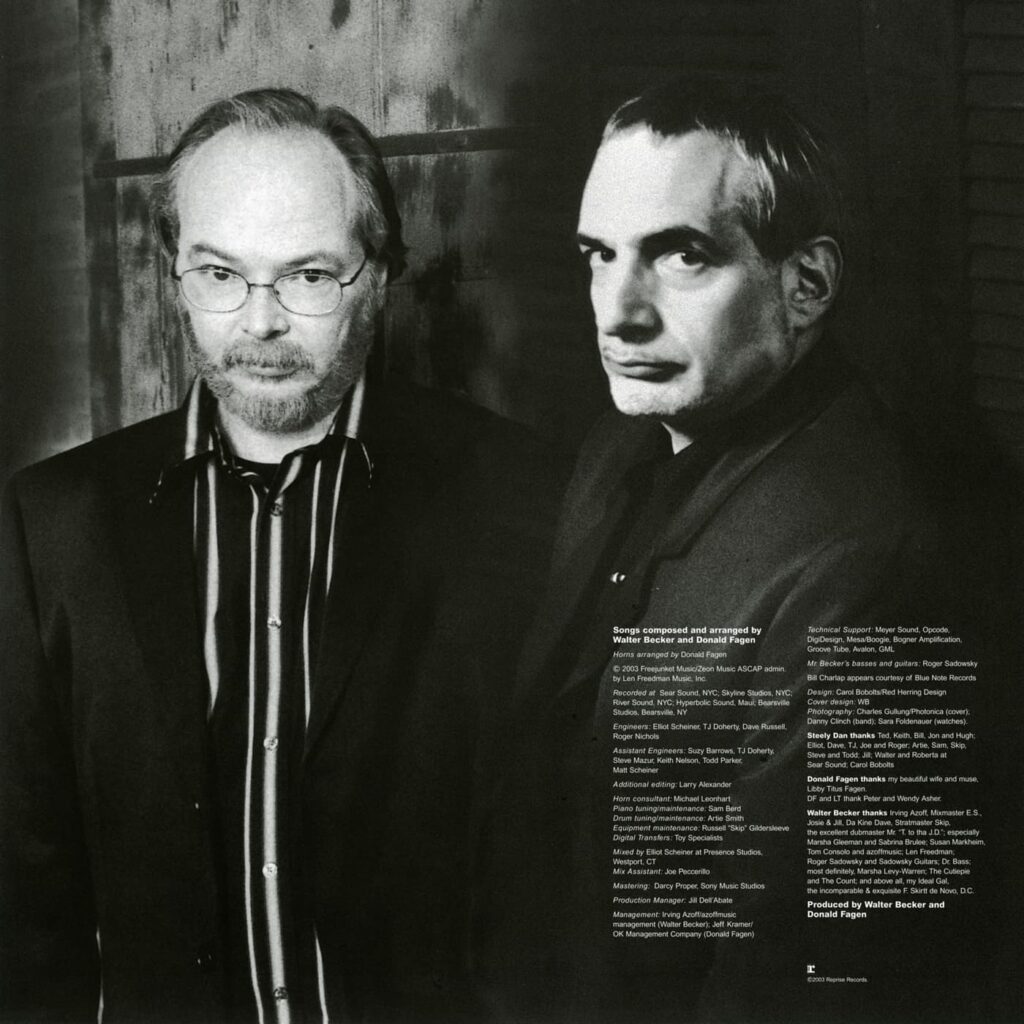
Slang of Ages Live 2003 A Rare Walter Becker Moment with Steely Dan
The live performance of Slang of Ages by Steely Dan in 2003 holds a unique place in the band’s long history. Captured on video during their tour supporting the album Everything Must Go, this rendition stands out not just for the music itself, but for who delivers it and what it represents within the band’s evolution. Slang of Ages was originally released on Everything Must Go in June of 2003. It marks an uncommon moment in Steely Dan’s studio catalog because it features co-founder Walter Becker on lead vocals, a role he rarely assumed on official band recordings.
Steely Dan’s music has long been defined by meticulous craftsmanship, complex arrangements, and the distinct vocal presence of Donald Fagen. Across their career, Becker was usually the quiet partner to Fagen’s frontman role, contributing songwriting, bass, and production insights behind the scenes. Slang of Ages diverges from that formula. According to Becker, he offered to sing the track because the lyrical structure and range suited his voice, making it the first time he took on a lead vocal part in a Steely Dan studio recording.
The live performance reflects the song’s offbeat personality. Rather than traditional melodic phrasing, Slang of Ages leans into a conversational vocal style that suits Becker’s timbre. The arrangement on stage maintains the steady groove and layered instrumentation characteristic of Steely Dan’s live ensemble in this era. Together with a full touring band that blended jazz, rock, and pop elements, the performance remains faithful to the original while also showcasing the musicianship that Steely Dan brought to the stage during their early twenty-first century tours.
Live footage from nineteen seventy two and later tours often shows a band comfortable with both complexity and nuance, and Slang of Ages fits this pattern. The song’s lyrical content, delivered through Becker’s voice, captures a character sketch infused with irony and playful language, elements consistent with Steely Dan’s broader lyrical approach.
Beyond its musical qualities, the 2003 performance also serves as a historical document. This period marked one of the final major tours featuring Walter Becker before his death in two thousand seventeen. Seeing him at the mic, engaging directly with the audience and the material, adds emotional resonance to the performance for fans who know the fuller arc of his career.
In the context of Steely Dan’s legacy, Slang of Ages and its live interpretation illustrate the band’s willingness to experiment with roles and textures even decades into their evolution. The 2003 performance remains a testament to Becker’s multifaceted contribution to Steely Dan’s identity, both as a player and as a rare vocal presence.