
Beyond the Highway Anthem: Steppenwolf’s “Magic Carpet Ride” Reveals a More Expansive Vision of Rock
In 1969, Steppenwolf released “Magic Carpet Ride,” a recording that broadened public understanding of the band’s artistic range. While they had already achieved major success with direct and powerful rock anthems, this track introduced a more atmospheric and exploratory dimension, aligning with the cultural and musical shifts of the late nineteen sixties.
Written by John Kay and Rushton Moreve, the song reflects a period when rock music was expanding beyond its earlier structures. Rather than focusing solely on volume and immediacy, artists were beginning to incorporate texture, mood, and a sense of spatial movement into their work. “Magic Carpet Ride” stands as a clear example of this transition, blending the band’s established hard rock identity with elements associated with the psychedelic movement.
The opening of the track signals this shift immediately. Instead of relying on a forceful guitar introduction, the arrangement creates a feeling of suspension, drawing the listener into a sonic environment that feels fluid and immersive. This approach distinguishes the song from many of its contemporaries and demonstrates the band’s willingness to experiment without abandoning accessibility.
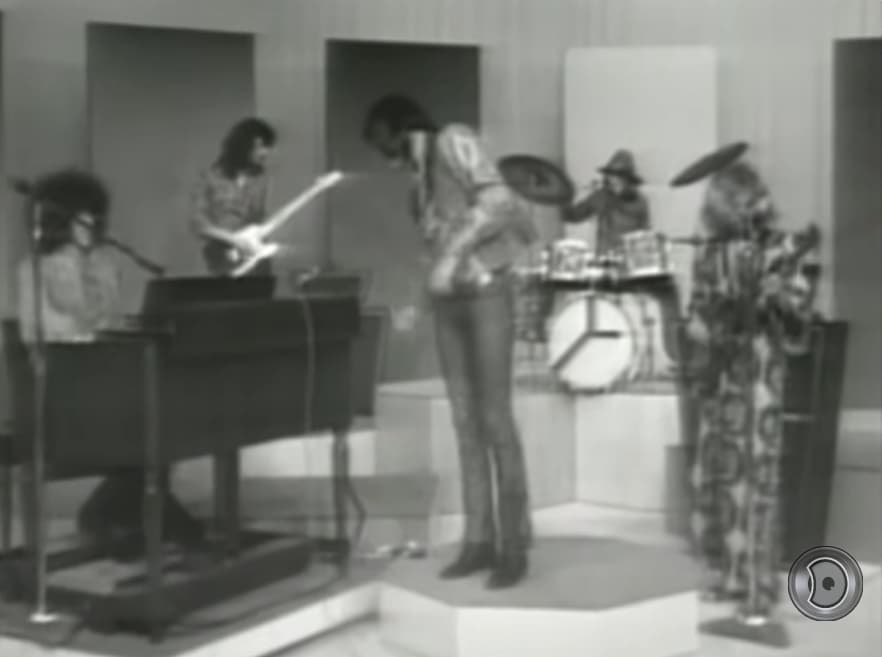
At the center of the performance, John Kay delivers a controlled and steady vocal that anchors the composition. His voice provides clarity within an evolving instrumental backdrop, allowing the song to maintain structure even as it explores more expansive sonic territory. This balance between stability and exploration is one of the defining qualities of the recording.
The rhythmic foundation of “Magic Carpet Ride” contributes significantly to its impact. The consistent groove creates a sense of forward motion that mirrors the imagery suggested by the title. Rather than building toward a dramatic conclusion, the track maintains its momentum, giving the impression of an ongoing journey. This structural choice reinforces the thematic concept of movement and escape, which resonated strongly with audiences during a time marked by cultural transformation and a search for new forms of expression.
By the end of the nineteen sixties, Steppenwolf had already secured a prominent place in the rock landscape, with millions of records sold and multiple chart successes. “Magic Carpet Ride” added another dimension to that legacy, showing that the band was not limited to a single style or identity.
Today, the recording remains an important document of its era. It captures a moment when rock music was evolving in real time, and when artists like Steppenwolf were willing to explore new directions while maintaining a strong connection to their audience.