
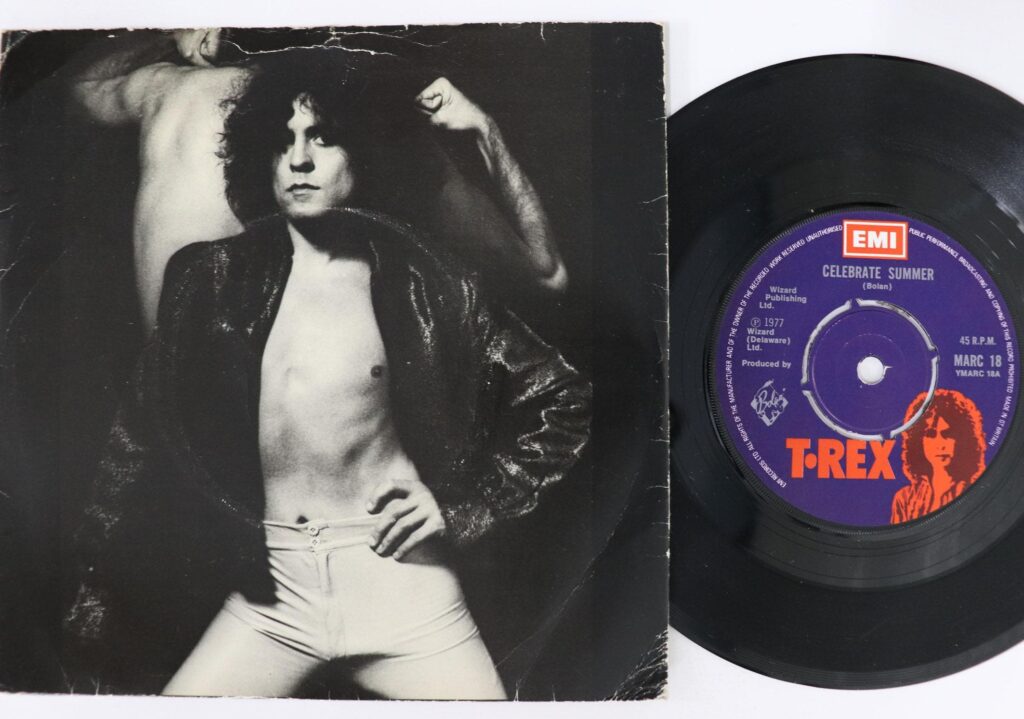
A fractured star searching for light in the depths of his own myth.
When T. Rex released Dandy in the Underworld in 1977, as part of the album of the same name, it arrived at a moment when Marc Bolan was fighting to reclaim both his artistic identity and his sense of self. This final studio album marked a creative resurgence, a return to form after several years of commercial decline, and its title track stood as one of its most revealing statements. Although Dandy in the Underworld did not climb high on the charts, the record captured critics’ attention for its sharpened songwriting and emotional clarity, signaling that Bolan had entered a new, more introspective chapter.
At the center of this piece lies a portrait of a man confronting the wreckage and wonder of his own legend. Dandy in the Underworld blends Bolan’s trademark glam sensibilities with a more restrained, almost confessional tone. The song feels like a whispered memoir disguised beneath swaggering rhythm and elegant phrasing. The character of “Dandy” moves through shadows and half-light, carrying a glamour that is both a burden and a shield. Bolan paints him as a fallen aristocrat of the night, someone who has traveled too far into excess but remains irresistibly alive, hungry for redemption and understanding.
What makes this track so striking is how transparently it echoes Bolan’s personal life. By 1977 he was rebuilding: healthier, sharper, eager to re-enter the cultural conversation. The song’s slow, pulsing groove frames a narrative of descent and return, suggesting that anyone who has once lived at dizzying heights must eventually confront the valleys beneath them. Bolan’s vocal delivery is rich with nuance, neither theatrical nor subdued, but something in between: a man telling his truth without relinquishing his mystique.
The instrumentation supports that duality. The track’s structure moves with the confidence of classic glam rock but is tempered by a maturity absent from the early T. Rex years. Guitars glide rather than roar, and the rhythm wears an understated elegance. Everything feels deliberate, as if Bolan were sculpting the sound to mirror a journey inward rather than a march toward stardom.
Lyrically, the song is both self-reflective and archetypal. The underworld motif evokes mythic descent, a path taken by heroes who must confront shadows before rising renewed. “Dandy” becomes a vessel for Bolan’s own reckoning: the fame that once crowned him now lingers as a ghost, and the path forward requires humility, clarity, and the courage to reassemble what had been broken. The result is one of the most emotionally textured songs of his later career.
Dandy in the Underworld endures not simply as the title track of Bolan’s final album but as a closing chapter he wrote with surprising honesty. It is the sound of a once-mythic figure stepping back into the world with open eyes, ready to climb again.