
Ted Nugent No No No and the Return to Basics in 1982
In nineteen eighty two, Ted Nugent released his second self titled album, a project widely regarded as a deliberate reset in both sound and image. Among the standout tracks was No No No, a song that reflected Nugent’s intention to return to a more direct and stripped down hard rock approach. The period marked a significant transition for the guitarist, who sought to reconnect with the raw energy that had defined his earlier success.
The album’s presentation signaled this shift immediately. Its black and white sleeve suggested a move away from elaborate concepts and toward something more fundamental. Nugent also reunited with vocalist Derek St. Holmes, whose voice had been central to many of the guitarist’s most recognized recordings during the nineteen seventies. The reunion was interpreted by many observers as a conscious effort to restore a familiar dynamic within the band’s sound.
For this project, Nugent assembled a strong supporting lineup. Carmine Appice, known for his work with Jeff Beck and Rod Stewart, handled drums, bringing a powerful and disciplined rhythmic presence. Bass duties were carried by Dave Kiswiney, a longtime Nugent collaborator, ensuring continuity within the low end of the band’s sound. The combined experience of the musicians created a tight and assertive foundation that supported Nugent’s guitar driven direction.
No No No reflects the album’s broader aesthetic. The track is built around straightforward riffing and a steady groove rather than layered production or stylistic experimentation. Nugent’s guitar tone remains sharp and prominent, while the rhythm section maintains clarity and force. The arrangement emphasizes structure and impact over complexity, reinforcing the stated goal of returning to basics.
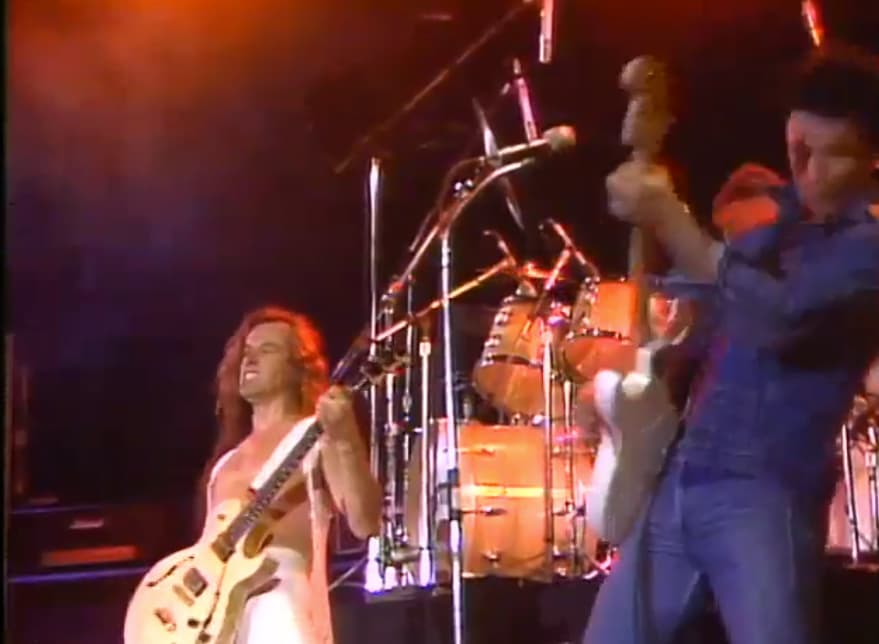
A promotional video for No No No, produced and directed by Chris Balton, further presented the renewed identity of the project. The visual approach complemented the music’s directness, focusing on performance and presence rather than elaborate narrative concepts. In the early nineteen eighties, as rock music increasingly embraced new wave influences and emerging production trends, Nugent’s choice to emphasize traditional hard rock elements positioned the album as both a reaffirmation and a statement of independence.
The nineteen eighty two release did not attempt to reinvent Ted Nugent. Instead, it clarified his priorities at that stage of his career. Through No No No and the broader album, Nugent underscored his commitment to guitar driven rock rooted in rhythm and attitude.
More than four decades later, the recording remains a clear example of an established artist choosing consolidation over reinvention. In doing so, Ted Nugent reaffirmed the core identity that had first defined his presence in American rock music.