
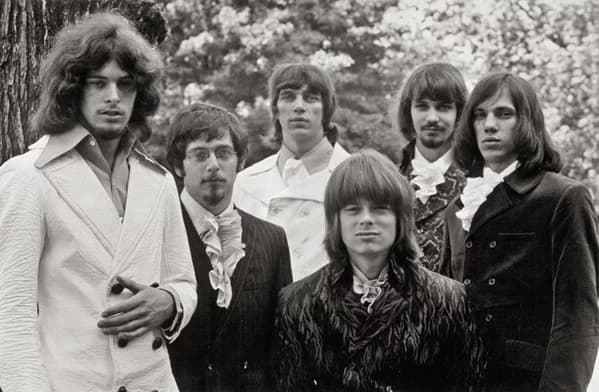
The Amboy Dukes Bring Blues Standard to Life Baby Please Don’t Go in 1968
On May eighth nineteen sixty eight The Amboy Dukes released their version of Baby Please Don’t Go as a single and part of their self titled debut album. The song itself is not an original composition by the band. It began life as a blues classic first recorded by Big Joe Williams in nineteen thirty five and has been recognized over decades as one of the most played and rearranged pieces in blues history, shaping rock and roll through countless reinterpretations.
The Amboy Dukes’ recording stands out as one of the more energized rock interpretations of this foundational piece. Emerging from the vibrant Detroit and Chicago rock scenes of the late nineteen sixties, the group took the traditional structure and injected a raw, guitar driven intensity into the performance. With Ted Nugent’s guitar work at the forefront, the band twisted the familiar blues pattern into something that bridged garage rock, early hard rock and proto metal influences. Critics and historians have noted that this version includes stylistic nods to contemporary British rock, even referencing guitar lines that evoke Jimi Hendrix, while still maintaining a distinctly American rock feel.
At the time of release, the single reached number one hundred six on Billboard’s extended Bubbling Under the Hot One Hundred chart in early nineteen sixty eight, indicating a moderate national impact beyond its strong regional success in Detroit. The performance and recording contributed to The Amboy Dukes’ reputation as one of the more compelling rock acts emerging from the Midwest, setting the stage for their later, more commercially successful work such as Journey to the Center of the Mind.
What makes this version noteworthy beyond its chart placement is the way it reflects the musical transitions of the era. Baby Please Don’t Go sits at a crossroads between blues roots and the heavier, more amplified expression that would define late sixties and seventies rock. Rather than simply repeating or updating the original, The Amboy Dukes leaned into the song as a vehicle for guitar expression and rhythmic urgency. Nugent’s stylized lead playing and the band’s energetic performance pushed the song into new territory, making it not only a cover but a statement about where rock music was heading.
Decades later, this version is still celebrated among collectors and classic rock enthusiasts. It is frequently highlighted in historical retrospectives on the band and on the larger influences of blues on early rock. Baby Please Don’t Go by The Amboy Dukes remains a key example of how a simple blues standard can be reimagined and reinterpreted to capture the spirit of its time.