
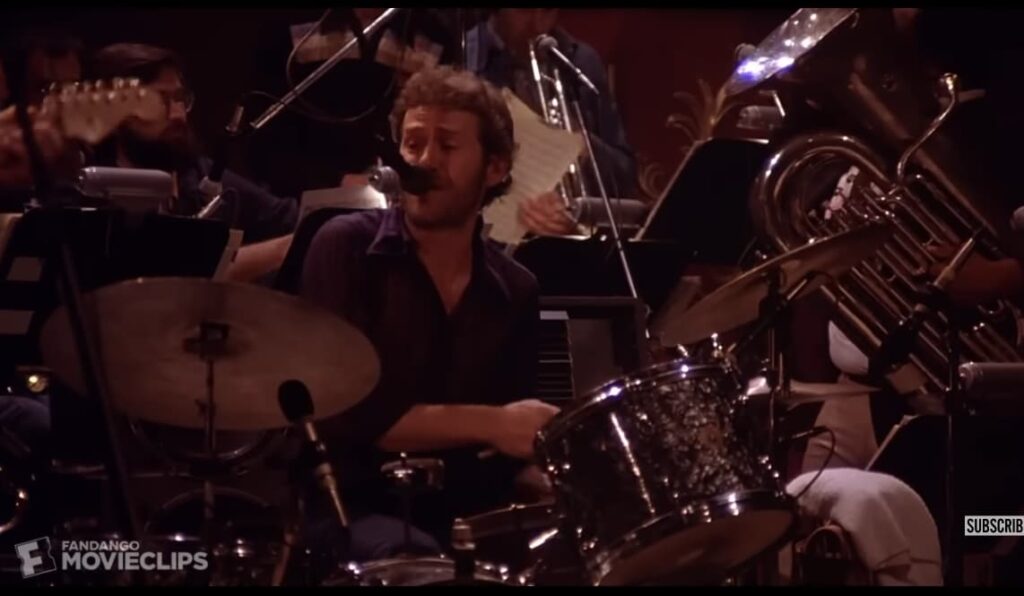
A Farewell Wrapped in History: Levon Helm’s Defining Moment in The Last Waltz
When The Last Waltz reached the segment for “The Night They Drove Old Dixie Down,” it was no longer just another performance in a carefully staged farewell. It became one of the rare moments where the mythology of The Band aligned almost perfectly with reality.
By Thanksgiving 1976, the group had decided to end their life on the road. The official narrative, led largely by Robbie Robertson, framed the concert as a dignified conclusion to years of relentless touring. But behind that decision, tensions had already formed. Not every member agreed that it was time to stop. Drummer and vocalist Levon Helm would later speak openly about his dissatisfaction with how the story was told, particularly in the film itself.
That tension gives this performance its weight.
“The Night They Drove Old Dixie Down,” written by Robertson but deeply shaped by Helm’s Southern roots, tells the story of loss during the American Civil War. It is a song about a world collapsing, seen through the eyes of someone left behind. On this stage, however, the meaning shifts. The Band was not portraying an ending. They were living one.
Helm’s role is central, and not just musically. As the only Southern-born member, he carried the narrative with an authenticity that could not be replicated. His vocal does not feel performed in the conventional sense. It feels inhabited. Each line lands with a sense of lived experience, even though the story itself belongs to another century. This is precisely what Robertson had relied on when writing the song years earlier.
There is also a technical truth that makes the moment stand out. Much of The Last Waltz was later refined in post production, with certain parts re recorded to meet cinematic standards. Helm’s performance, however, is widely regarded as one of the most intact from the original night. That detail matters. In a film often shaped by careful editing, this remains one of its most genuine fragments.
The connection between song and setting becomes impossible to ignore. A composition about defeat and irreversible change is delivered during the final concert of a band already beginning to fracture internally. The parallel is not emphasized on stage, yet it defines how the performance is remembered.
When the song ends, there is no sense of resolution. No dramatic closure. Instead, it leaves behind the impression of something unfinished, as if the story continues beyond the frame.
That is what makes this moment endure. It is not simply a highlight within a celebrated concert film. It is a convergence of narrative, history, and circumstance, captured at the exact point where all three briefly become the same story.