
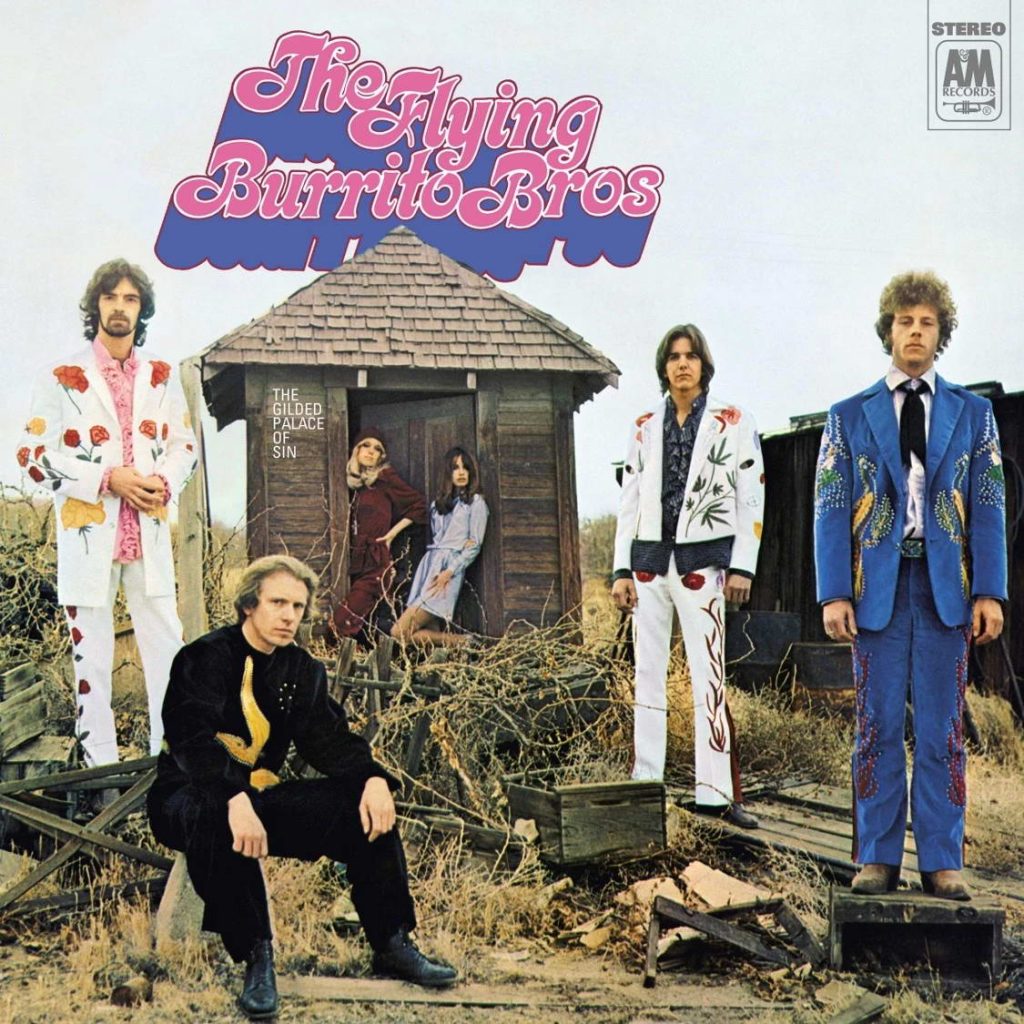
A Profound and Cynical Lament for the Souls Lost and Morals Compromised on the Road to Fame.
In the late 1960s, a quiet revolution was taking place in American music, a dramatic merger of two seemingly disparate genres: the raw, rebellious spirit of rock and the soulful, down-home twang of country. At the heart of this revolution were two unlikely heroes, Gram Parsons and Chris Hillman, who, as The Flying Burrito Brothers, dared to build a bridge between these worlds. Their 1969 debut album, The Gilded Palace of Sin, was their magnificent but tragically misunderstood masterpiece. It was a record that would, over time, be recognized as a genre-defining work, but upon its release, it was a commercial failure. The album did not produce any charting singles, a cruel irony for a project so rich with creative genius. Yet, buried within its tracklist was a dark, brooding, and profoundly prophetic song that would become its dark, beating heart: “Sin City.”
The story of “Sin City” is an intimate, high-stakes drama rooted in the personal and spiritual battles of Gram Parsons. A trust-fund kid with a deep, almost religious love for country music, Parsons was a visionary who had a desperate, almost reckless ambition to be a rock star. The song, co-written with his creative partner Chris Hillman, is a devastatingly honest critique of the very world they were trying to conquer. The “Sin City” of the title is a powerful, double-sided metaphor: on one hand, it’s the superficial glitz of Hollywood and the commercial pressures of Nashville; on the other, it’s a spiritual state of being, a place where moral lines are blurred and souls are sold for fame. The song is a theatrical monologue, a confession of disillusionment from a man who had already seen too much, a man whose own life would tragically become a reflection of the themes he wrote about.
The musical and lyrical drama of “Sin City” is palpable. The song begins with a mournful, almost hymnal quality, with the beautiful, otherworldly harmonies of Parsons and Hillman creating a sense of a shared lament. The lyrics are filled with biblical imagery and a cutting, cynical wit. Lines like “On the street they’re selling like hotcakes / The latest word on the way to be saved” are a savage commentary on the commercialization of everything, even spirituality. The dramatic tension builds as the song progresses, with the weeping pedal steel guitar acting as a grieving character, echoing the sorrow and regret of the singers. The music doesn’t just accompany the story; it embodies the pain, the moral compromise, and the haunting sense of foreboding that permeated their world.
For those of us who have followed the long and winding road of American music, “Sin City” is a poignant reminder that some of the most influential and beautiful art is often not appreciated in its own time. It’s a testament to the raw, unfiltered truth of The Flying Burrito Brothers’ work, a band that chose to follow their hearts even when it led them down a commercially unpopular path. “Sin City” remains a haunting, beautiful masterpiece, a timeless and chilling tale of the high price of ambition and the pain of moral compromise that continues to resonate with its raw, emotional power.