
Before the Boogie Years: Status Quo’s Psychedelic Identity Captured on Belgian Television in 1968
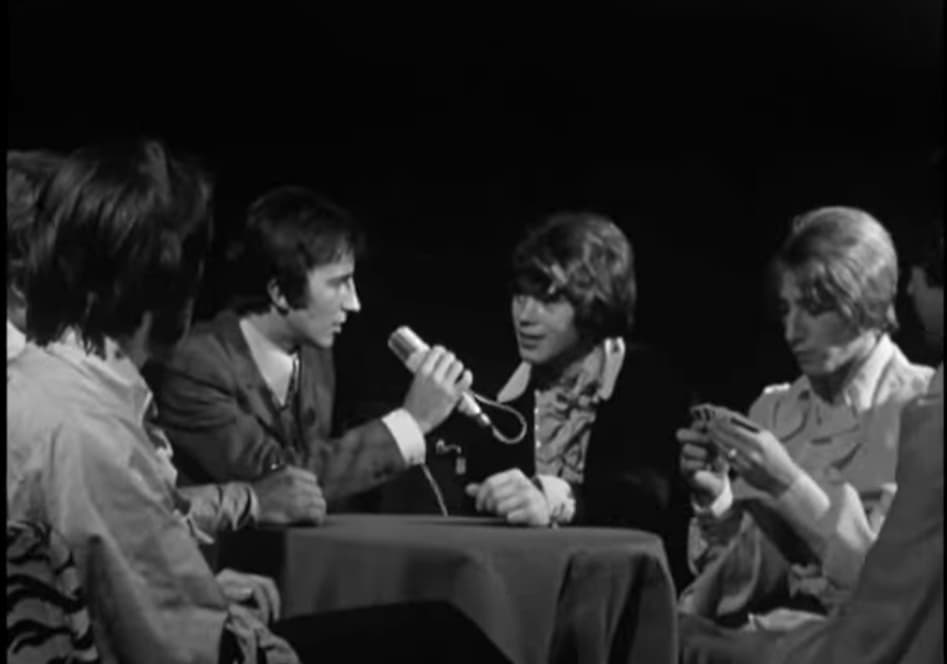
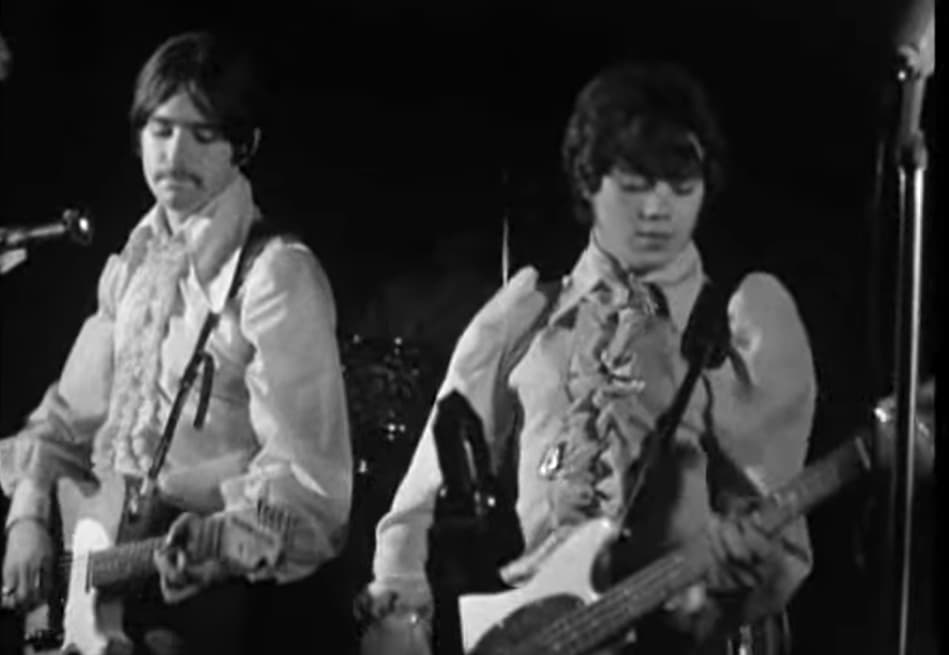
On December 10, 1968, a young Status Quo appeared on Belgian television to promote their latest single, offering a revealing snapshot of a band still defining its musical identity. The surviving footage, featuring performances of “Ice in the Sun” and “When My Mind Is Not Live” alongside a brief interview, now stands as an important historical document from the group’s early psychedelic phase.
At the time, Status Quo had not yet become the denim clad boogie rock institution that would later dominate British charts. Instead, they were part of the late 1960s psychedelic movement, following the success of “Pictures of Matchstick Men.” Their 1968 single “Ice in the Sun,” written by Marty Wilde and Ronnie Scott, was released during this transitional moment and became a significant hit, reaching the Top 10 in the United Kingdom and charting internationally.
The Belgian television appearance fits squarely into a broader promotional push. Throughout 1968, the band made numerous appearances across European television, using the medium as a primary way to build recognition beyond the United Kingdom. The December broadcast is particularly notable for pairing both sides of the single, presenting not only the more commercially accessible “Ice in the Sun” but also the B side “When My Mind Is Not Live,” a track that reflects the band’s own songwriting direction.
Visually and musically, the performance captures a group in flux. The arrangements are concise, shaped by the limitations of television formats, yet they retain the hallmarks of the era’s psychedelic sound. Light, melodic phrasing and a slightly experimental tone define “Ice in the Sun,” aligning it with the broader stylistic trends of 1968 rock.
The accompanying interview adds further context. Rather than presenting a fully formed rock identity, the band appears as emerging artists navigating the expectations of the industry. Their presence is confident but not yet iconic, reflecting a period when success was still being consolidated rather than assumed.
What makes this footage particularly valuable today is its position within Status Quo’s long career arc. Later decades would redefine the band through a more straightforward, hard driving rock style, often overshadowing their earlier work. This 1968 appearance, however, preserves a different version of the group, one rooted in experimentation and shaped by the rapidly evolving musical landscape of the late 1960s.
For contemporary viewers, the clip offers more than nostalgia. It provides a rare opportunity to observe a major band before its defining transformation, capturing the uncertainty, ambition, and creative exploration that precede lasting success.