
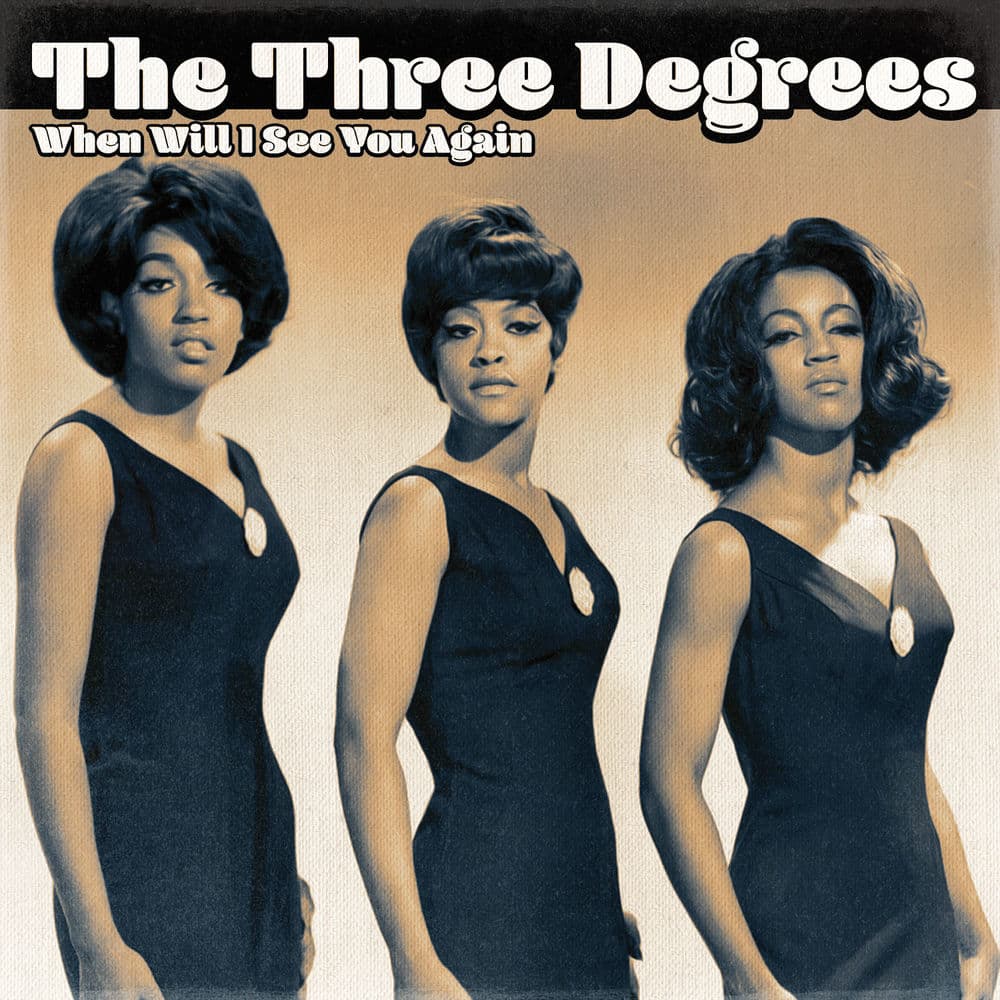
The Enduring Heartache of a Single Question: A Timeless Ballad that Captured the Lingering Doubt of Love’s Uncertain Dawn.
There are records that simply arrive, and then there are those that cascade, washing over the listener with an orchestral depth and emotional urgency that instantly makes them a classic. “When Will I See You Again,” released in 1974 by the incomparable trio The Three Degrees on their eponymous album, is a masterpiece of the latter category. It is a song that defined the sophisticated, lush sound of Philadelphia Soul, transforming a moment of fragile, romantic insecurity into a global, multi-million-selling phenomenon.
Key Information: The single was released from the album The Three Degrees in 1974 and became a colossal hit on both sides of the Atlantic. In the UK, the single shot straight to Number 1 on the UK Singles Chart, holding the top spot for two weeks in August 1974. Stateside, it achieved nearly equal success, peaking at Number 2 on the U.S. Billboard Pop Singles Chart, while simultaneously topping the Adult Contemporary chart at Number 1 and reaching Number 4 on the R&B chart. The song was written and produced by the legendary architects of the Sound of Philadelphia, Kenny Gamble and Leon Huff, and featured the passionate lead vocals of Sheila Ferguson, backed by Fayette Pinkney and Valerie Holiday. Its global success, including being the first single by an all-female group to top the UK charts since The Supremes in 1964, cemented the group’s legacy and the dominance of the Philadelphia International Records label.
The story behind this iconic ballad is one of dramatic tension, both within the narrative of the song and in its very creation. The songwriting duo of Gamble and Huff had to fight to convince lead singer Sheila Ferguson to record it. Ferguson initially felt the lyrics were too simple and “insulting” to her vocal talents, viewing it as a naive novelty song. This internal drama—an accomplished vocalist resisting a song she deemed beneath her—ironically mirrors the emotional rawness of the lyrics: a sophisticated, powerful woman stripped down to a single, childlike fear. Gamble and Huff, with their unparalleled instinct for the universal heart of a song, knew better. They insisted, and their vision prevailed, creating a track whose sheer simplicity is its emotional lightning rod.
The true meaning of “When Will I See You Again” lies in that agonizing space between a perfect encounter and an uncertain future. The entire song is built on a series of searching, vulnerable questions: “When will I see you again? / When will we share precious moments?” There are no declarations of eternal love, no promises of “forever,” only the lingering doubt that clings to the end of a magical evening. For a generation of listeners, especially those who came of age during the romantic idealism of the 60s and 70s, this song was profoundly relatable. It wasn’t about the grand gesture; it was about the small, terrifying hope of a callback—the quiet anxiety that precedes real commitment.
Imagine a soft-focus memory from that era: the velvet-smooth strings of the MFSB orchestra swell, the rhythm section’s gentle, insistent pulse of the ‘Philly Sound’ provides a comforting heartbeat, and then Ferguson’s voice breaks through, urgent and crystalline, asking the question we’ve all held our breath for. It is the sound of vulnerability set against an atmosphere of musical luxury. It’s the drama of a single, unanswered question hanging in the air like smoke in a dimly lit cocktail lounge. This gorgeous, emotionally stark performance proved that the most powerful drama in life is often found not in sweeping tragedy, but in the intimate, fragile moment where two lives pause and one person dares to ask: Is this real, and will you return? A question that, forty years later, still resonates with a devastating clarity.