
“Shambala”: A Visionary Search for Inner Peace and an Idealistic, Utopian Sanctuary.
There are certain songs that, even decades later, manage to evoke a specific kind of spiritual yearning, a longing for a place of serenity and harmony amidst the often-turbulent realities of life. For those of us who came of age during the early 1970s, as the idealism of the previous decade began to coalesce into new forms of introspection and aspiration, Three Dog Night’s “Shambala” resonated with a profound sense of hope and a quest for inner peace. Released in 1973, this track wasn’t just another pop hit; it was an auditory pilgrimage, a vibrant invitation to imagine a utopian sanctuary, offering a comforting vision of a world where tranquility and understanding reigned supreme. For older readers, it conjures memories of a time when the search for meaning and a better way of living felt more immediate and attainable.
Upon its release as a single in May 1973, “Shambala” quickly became a major commercial success for Three Dog Night, solidifying their reputation as one of the most consistently charting bands of the era. It soared to number 3 on the Billboard Hot 100 chart in the United States, showcasing its widespread appeal and undeniable melodic charm. The song was featured on their album Cyan, which was released in October 1973 and peaked at number 26 on the Billboard 200. This impressive chart performance demonstrated the band’s enduring ability to blend rock, pop, and soulful harmonies into a sound that captivated millions. For many of us, hearing those distinctive opening chords on the radio was an instant recognition of a song that spoke to something deeper, something hopeful, amidst the daily news.
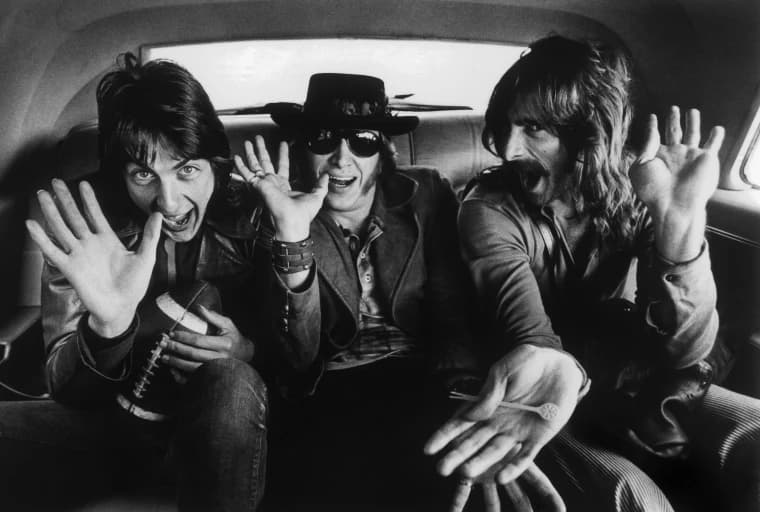
The story behind “Shambala” is rooted in the lyrical genius of Daniel Moore, who wrote the song. Moore, an American singer-songwriter, had a knack for crafting evocative and often spiritually infused narratives. While “Shambala” itself is not explicitly tied to a personal anecdote from Moore’s life, it draws heavily from the ancient Buddhist myth of Shambhala (often spelled with an “h”), a legendary mystical kingdom hidden in the Himalayas, believed to be a pure land, a source of peace, wisdom, and enlightenment. This mythical concept, a utopian paradise, provided the perfect metaphorical framework for Moore’s lyrical exploration of hope and serenity. Three Dog Night, with their powerful vocal lineup of Danny Hutton, Chuck Negron, and Cory Wells, were masters at taking well-crafted songs by outside writers and imbuing them with their signature energy and vocal prowess. Their harmonious delivery brought a palpable sense of sincerity and warmth to Moore’s evocative lyrics.
The meaning of “Shambala” is a powerful and enduring quest for a place of ultimate peace and harmony, whether that place is a physical location or an inner state of being. The lyrics paint a vivid picture of this idealized sanctuary: “Ah, Shambala, in the mountain there / In the valley there, is a temple bright / Shan-gre-la, in the fountain there / By the mountain there, you will see the light.” It speaks to a yearning to escape the chaos and disillusionment of the material world and find refuge in a place where “the sun shines bright” and “every heart is gay.” It’s a vision of a simpler, purer existence, free from conflict and filled with an almost childlike joy. For older readers, this song taps into a shared memory of a time when idealism was a powerful driving force, when many sought alternative lifestyles or spiritual awakenings as a path to true contentment. It might evoke reflections on personal journeys, moments of seeking solace, or the enduring human desire for a perfect haven, whether found in nature, in community, or deep within one’s own soul.
“Shambala” by Three Dog Night stands as more than just a pop hit; it’s a lyrical and melodic balm, a reminder of the timeless human search for paradise, both external and internal. Its enduring appeal lies in its gentle optimism and its ability to transport us to a place where hope springs eternal, a harmonious retreat from the world’s clamor, urging us to remember that the brightest light often shines from within.