
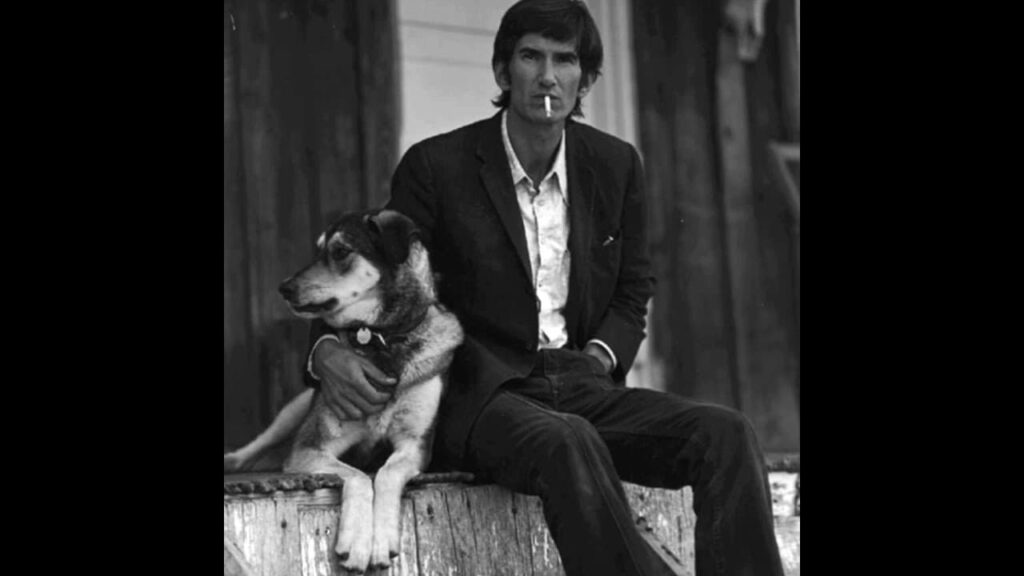
“Waiting Around To Die”: A Stark, Unflinching Portrait of Despair and the Weight of a Hard Life.
There are songs that gently caress the soul, and then there are those that rip it open, laying bare the raw, often uncomfortable truths of human suffering. Townes Van Zandt’s “Waiting Around To Die” falls resolutely into the latter category. Released in 1968 on his debut album, For the Sake of the Song, this track is not merely a folk song; it is a harrowing, unflinching autobiography of a life marked by addiction, poverty, and profound disillusionment. For those of us who appreciate the stark honesty and poetic brutality of true artistry, Van Zandt’s gravelly voice and sparse guitar on this tune resonate with an almost unbearable authenticity, stirring deep, empathetic reflections on the fragility of hope and the relentless grip of despair. It is a song that doesn’t just ask you to listen; it demands that you bear witness.
Upon its initial release, “Waiting Around To Die” did not achieve commercial chart success in the traditional sense. Townes Van Zandt was never an artist whose measure of impact was found on the Billboard Hot 100. His was a cult following, deeply loyal and fiercely dedicated, built on the sheer power of his songwriting and his mesmerizing, often haunting, live performances. His debut album, For the Sake of the Song, laid the groundwork for a legendary career that would influence countless songwriters across country, folk, and even rock genres. While the album itself didn’t climb the mainstream charts, it became a foundational text for a generation of artists and listeners seeking authenticity beyond the polished sounds of mainstream radio. “Waiting Around To Die” quickly emerged as one of the album’s most powerful and frequently covered tracks, earning its place as a cornerstone of Van Zandt’s formidable legacy, recognized by critics and fellow musicians as a chilling masterpiece.
The story behind “Waiting Around To Die” is as bleak and unvarnished as the song itself. It is widely considered to be one of Van Zandt’s most autobiographical and deeply personal compositions, reflecting the struggles with addiction, mental health, and aimlessness that plagued much of his early life. Born into a wealthy and prominent Texas family, Van Zandt famously rejected a life of privilege, choosing instead a nomadic, often self-destructive path that led him through various forms of hardship, including institutionalization for mental health issues and a persistent battle with alcohol and drugs. This song is a direct product of that lived experience, a raw confessional told from the perspective of an individual utterly consumed by his vices and the grim inevitability he perceives. Van Zandt’s genius was his ability to distill immense personal pain and societal marginalization into verse so potent it felt universal.
The meaning of “Waiting Around To Die” is a chilling descent into the heart of chronic despair. The lyrics follow the narrator’s life journey from a troubled youth, through a life of petty crime and addiction, all leading to a profound sense of resignation and hopelessness. Lines like “I fell in with some drifters / And I learned a thing or two / I got into whiskey and a little cocaine / And there ain’t nothin’ I can do” paint a picture of a life spiraling out of control, not with a cry for help, but with a weary acceptance of fate. The recurring refrain, “Sometimes I don’t know where this dirty road is leading / Sometimes I don’t know where I’ve been / But I’m waiting around to die,” is not a dramatic plea, but a haunting statement of fact, a man utterly depleted of fight.
For older readers, particularly those who have witnessed life’s cruelties or known individuals lost to their demons, this song resonates with a profound, almost uncomfortable familiarity. It evokes the quiet tragedies that unfold in the shadows, the lives lived on the fringes, and the silent battles fought within. It’s a reminder of the fragility of the human spirit when confronted with overwhelming forces, and the grim reality that not every story has a redemptive arc. Van Zandt doesn’t offer solutions or hope; he simply presents the truth as he sees it, raw and unadorned. His delivery, tinged with a weariness that belies his relatively young age at the time of recording, makes the song less of a performance and more of a chilling confessional. “Waiting Around To Die” is a testament to Townes Van Zandt’s unparalleled gift for capturing the darkest corners of the human condition with unflinching honesty and poetic grace, leaving an indelible mark on anyone brave enough to truly listen. It remains a powerful, timeless piece, a somber echo from a troubadour who stared into the abyss and, for a moment, let us see it too.