
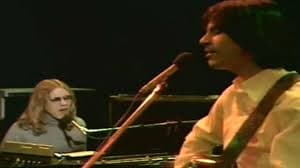
When Rock’s Sharp Edge Meets Wit: Zevon and Browne’s “Cocaine” at VPRO Studio Holland
On December 8, 1976, an intimate radio session at the VPRO Studio in Hilversum, The Netherlands, brought together two of Southern California’s most distinctive singer-songwriters in a rare live collaboration that would resonate in bootleg circles for decades.
At that moment Warren Zevon was emerging from the release of his self-titled 1976 album produced by Jackson Browne, an album that had begun to attract critical notice for its razor-sharp songwriting and unflinching perspective on life’s darker corners. Browne, already well-established with a series of acclaimed albums including The Pretender, was on a European tour that folded Zevon into the set, showcasing both artists at a creative crossroads.
The session at VPRO was radio broadcast, stripped back and conversational rather than stadium-like, featuring alternating performances, shared harmonies, and brief interviews. Among the highlights is their rendition of Cocaine, a bluesy and direct interpretation of the traditional number Cocaine Blues. The song’s subject matter offered no romantic veneer; instead it presented addiction’s grip with plainspoken urgency. In their performance the song felt raw, unvarnished, and immediate, the voice and guitar work highlighting the hard edges that defined both artists’ approaches to rock music.
Zevon and Browne did not merely trade verses; their interplay underscored a mutual respect and creative kinship. Browne’s melodic fluidity and Zevon’s sardonic edge complemented one another throughout the session, as they shifted from one songwriter’s material to the other’s. Zevon’s own compositions such as Mohammed’s Radio, Frank and Jesse James and Excitable Boy, interwoven with Browne’s selections like These Days, revealed a camaraderie rooted in shared influences but also clear stylistic contrast.
Listeners of that broadcast and subsequent bootlegs have long cherished this moment for its immediacy and honesty. The performance of Cocaine stands as a snapshot of two artists grappling with themes of excess and consequence at a pivotal time in their careers. It reflects an era when rock music could be both confessional and confrontational, and when a studio radio session in Holland could become, in retrospect, a defining artistic statement.