
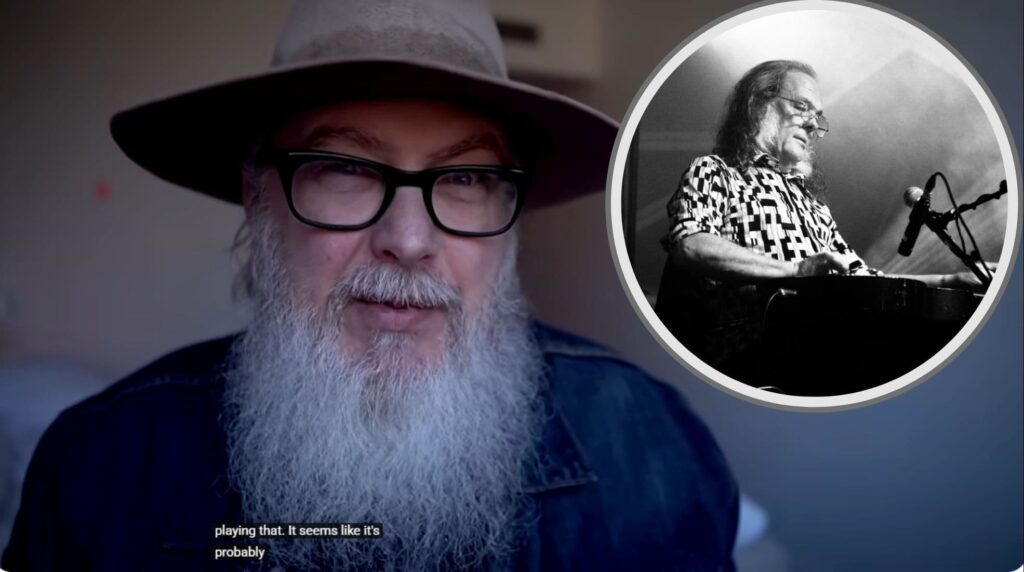
Remembering a Voice Unlike Any Other: The Enduring Legacy of David Lindley
News of the passing of David Lindley has prompted a wave of reflection across the music community, as artists and fans revisit a body of work that quietly shaped the sound of an era. Known for his singular tone, eclectic instrumentation, and deeply expressive playing, Lindley leaves behind a legacy that resists easy categorization.
For many listeners, his name is inseparable from his collaborations with Jackson Browne. Throughout the 1970s, Lindley’s contributions became an essential part of Browne’s live and recorded sound. Performances such as Doctor My Eyes in 1978 and Running on Empty in 1979 continue to circulate widely, not because they are technically perfect, but because they capture something far more elusive. They reveal a band fully committed to the moment, where energy and instinct take precedence over polish.
What stands out immediately in these recordings is Lindley’s unmistakable musical voice. It is often said that true originality can be measured by recognizability, and Lindley embodied that principle. His phrasing, particularly on slide guitar, carried a fluid, almost vocal quality. At times he would drift deliberately outside the strict timing of a song, only to return with striking precision, creating tension and release in a way that felt both spontaneous and intentional.
Beyond his work with Browne, Lindley’s versatility as a performer deserves equal attention. Live footage from appearances such as Reggae on the River highlights his ability to move effortlessly between styles. Whether playing a Silvertone guitar with fingerpicks or exploring reggae rhythms, he approached each genre with curiosity rather than imitation. His voice, understated yet distinctive, added another layer to performances that were as much about feel as they were about technique.
Colleagues often point to the difficulty of defining who influenced Lindley, even as countless musicians have drawn inspiration from him. There are echoes of blues and rock traditions in his playing, yet the final result feels entirely his own. That independence is perhaps his greatest artistic achievement.
The reaction to his passing also underscores a broader truth about his career. Much of what made Lindley extraordinary was never about visibility or commercial dominance. Instead, it lived in the details of performances, in the subtle interplay between musicians, and in the emotional weight carried by each note.
As audiences return to these recordings, they are not simply revisiting the past. They are rediscovering an artist who expanded the possibilities of his instrument and, in doing so, left an imprint that will continue to resonate for years to come.