
JACKSON BROWNE : World In Motion
A Resonant Performance and Candid Conversation on The Arsenio Hall Show
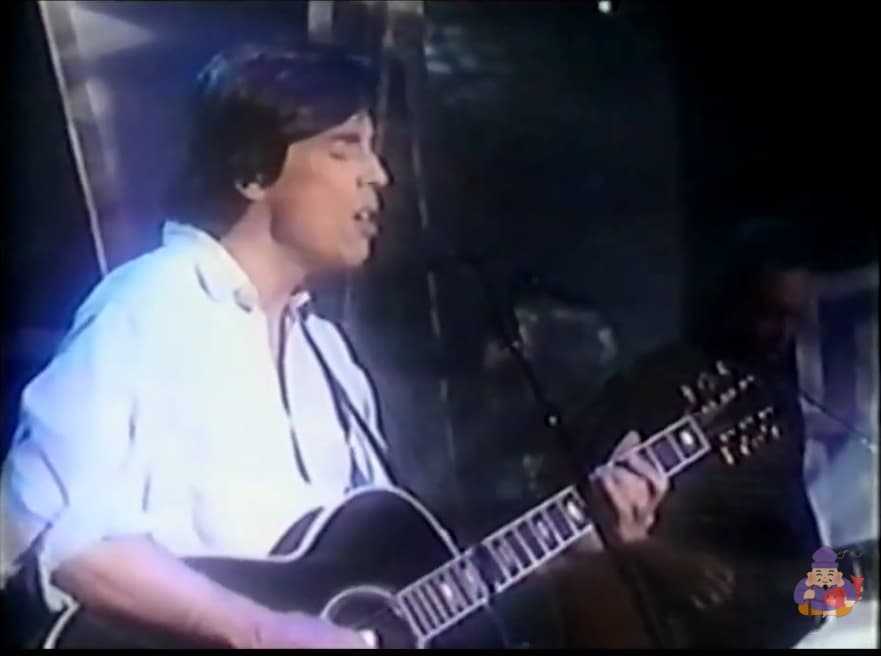
On April 5, 1990, American singer-songwriter Jackson Browne appeared on The Arsenio Hall Show, delivering a performance and conversation that encapsulated both his artistic ethos and his enduring commitment to socially conscious music. The episode, broadcast at a time when Browne was actively promoting his politically engaged work, featured a live rendition of the “World in Motion” title track followed by an interview exploring his motivations as a musician and commentator on contemporary issues.
“World in Motion” first appeared in 1989 as the title song of Browne’s ninth studio album, released through Elektra Records. The album marked a clear continuation of the songwriter’s shift toward explicit social commentary that had begun earlier in his career during the 1980s. The album makes pointed statements about economic inequality, the arms race, government secrecy and humanitarian concerns, themes that Browne articulated through both his music and public appearances during the long promotional tour.
In the performance on The Arsenio Hall Show, Browne and his band presented the song with its characteristic blend of rock instrumentation and thoughtful composition. The lyrics of “World in Motion” depict images of societal division and express an urgent call to collective action. Starting with evocative lines about life in the United States and transitioning into a refrain urging listeners to “speed your changes” and “lose your fears,” the song underscores Browne’s belief that cultural awareness is inseparable from a broader pursuit of justice.
Following the performance, Browne joined host Arsenio Hall for a frank interview. While transcripts and complete coverage of that specific interview are limited to archived recordings, it is evident from available documentation that Browne discussed his artistic intentions and the motivations behind his work at that time. Browne was no stranger to integrating social issues into his music and public dialogue. Over the preceding decade he had been deeply involved in benefit concerts and activism for causes including nuclear disarmament, human rights and environmental concerns.
The Arsenio Hall Show appearance offered Browne an opportunity to articulate how his music functioned both as entertainment and as a vehicle for social reflection at the close of the 1980s. It reinforced his enduring identity as an artist whose work is shaped by empathy, critique and a desire for meaningful change. Although the album itself received mixed critical and commercial reception compared with Browne’s earlier classics, the title track’s performance on national television highlighted his unwavering commitment to merging artistry with advocacy.
For viewers and listeners familiar with Browne’s catalog, that night on The Arsenio Hall Show remains a moment when music and message intersected in a candid and compelling way, reaffirming his place in American songwriting as both a reflective artist and a conscious commentator.