
Time Softens the Wound: Jackson Browne Reimagines a Song of Heartbreak in 1992
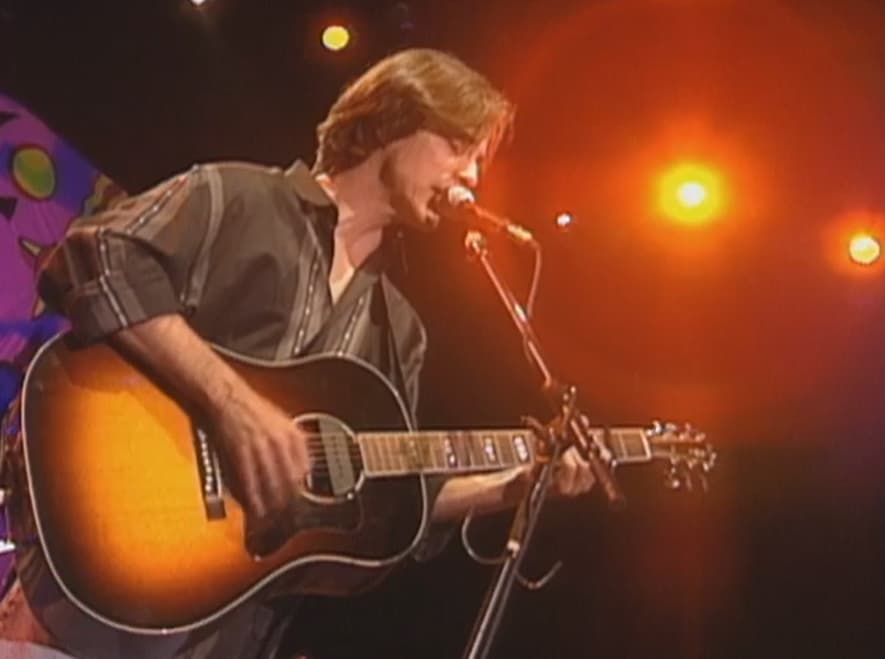
On an October evening in 1992 at the open air setting of Shoreline Amphitheatre, Jackson Browne delivered a performance that quietly redefined one of his most personal songs. “Here Come Those Tears Again,” originally released on the 1976 album The Pretender, returned not as a relic of the past but as a living, evolving narrative shaped by time, memory, and emotional maturity.
From the opening moments, Browne’s presence is measured and composed. The urgency that once defined the studio version gives way to a reflective tone, suggesting a man who has lived with the song’s meaning rather than simply performed it. This shift transforms the piece from a confession of immediate heartbreak into a meditation on how pain lingers and eventually settles into understanding.
A defining feature of this performance is the presence of Bonnie Raitt, whose voice adds a new emotional dimension. Rather than serving as a background element, her contribution feels like a response, creating a dialogue that reshapes the song’s emotional architecture. Where the original recording featured Rosemary Butler in a supporting role, this live interpretation allows for a deeper interplay, one that broadens the perspective of the narrative. It is no longer a solitary reflection but a shared emotional space.
The origins of the song further enrich this moment. Co written with Nancy Farnsworth, the lyrics carry an intimate weight rooted in personal experience. Hearing them performed years later introduces a sense of distance that is both poignant and revealing. The audience is not just witnessing a performance but an artist revisiting a chapter of his own life with greater clarity.
As the song progresses, the emotional peak arrives not through volume or dramatic flourish, but through subtle vocal interplay and restraint. The closing moments resist any grand finale, instead settling into a quiet resolution that invites reflection. It is this understated ending that leaves a lasting impression, echoing the song’s central theme that some emotions do not disappear but evolve.
For longtime listeners, this performance raises compelling questions. Is the original version more powerful in its immediacy, or does this later interpretation offer a deeper truth shaped by experience. The collaboration with Bonnie Raitt also invites discussion about how a familiar song can be transformed through partnership, altering not just its sound but its meaning.
In the end, this 1992 rendition stands as more than a live performance. It is a testament to the enduring nature of songwriting and the ways in which time can reshape even the most personal expressions into something richer and more universal.