
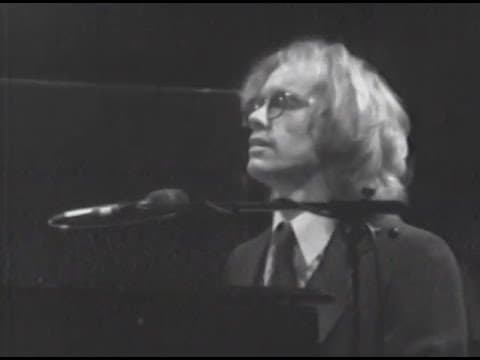
When the Airwaves Still Felt Like Freedom: Warren Zevon Brings “Mohammed’s Radio” to Life at the Capitol Theatre, 1980
On April 18, 1980, Warren Zevon stepped onto the stage of the Capitol Theatre in Passaic, New Jersey and delivered a performance that captured the restless spirit of American rock at the turn of the decade. Among the highlights of that evening was his haunting and reflective song Mohammed’s Radio, a composition that had already earned a reputation as one of the most evocative tracks in his catalog.
Originally released on the 1976 album Warren Zevon, the song had grown into a fan favorite by the time Zevon toured behind his 1980 record Bad Luck Streak in Dancing School. In concert it often served as a reflective centerpiece, blending sharp storytelling with the weary wisdom that defined Zevon’s songwriting.
The Passaic performance demonstrates why Zevon was widely respected by fellow musicians and devoted listeners alike. His stage presence was understated but compelling. Seated at the piano or standing with guitar in hand, he delivered the song with a calm intensity that drew the audience into its narrative world. Rather than relying on spectacle, Zevon allowed the power of the composition itself to carry the moment.
Musically, the band surrounding him created a rich but disciplined sound. Guitarists David Landau and Zeke Zirngiebel layered subtle textures, with Zirngiebel adding the distinctive color of lap steel guitar. Keyboardist Bob Harris provided atmospheric synthesizer and piano parts that reinforced the song’s reflective tone. The rhythm section of bassist Roberto Pinon and drummer Marty Stinger anchored the arrangement with steady restraint, allowing the melody and lyrics to remain at the forefront.
The live rendition highlights the emotional depth of the song. “Mohammed’s Radio” reflects on the uneasy intersection between celebrity culture and the private struggles of artists and dreamers. Zevon’s delivery in 1980 carries both empathy and distance, as though observing the characters in the song from a place of hard earned experience. That sense of perspective would become one of the defining qualities of his later work.
The Capitol Theatre show itself holds a special place in rock history. During the late 1970s and early 1980s the venue was a celebrated stop for touring artists and a frequent location for professionally recorded live performances. Many of these recordings were preserved and later released through archival collections, giving modern audiences a chance to witness the atmosphere of those nights.
More than four decades later, the performance remains a vivid reminder of Zevon’s artistry. While he would later gain broader recognition for songs like Werewolves of London, pieces such as “Mohammed’s Radio” reveal the deeper emotional core of his songwriting.
In the intimate setting of the Capitol Theatre that April night, Warren Zevon proved that a thoughtful lyric, a carefully arranged band, and a quietly commanding performer could still create one of rock music’s most enduring live moments.