
“The Quo… Everybody Wants the Quo”: When Status Quo Brought Their Boogie to British Television
In the golden decades of British television, few programs captured the imagination of young viewers quite like the BBC series “Jim’ll Fix It.” Broadcast for nearly two decades beginning in 1975, the show invited children to write letters describing their dreams, which host Jimmy Savile would then “fix” and make come true on national television. The format became a cultural phenomenon, drawing appearances from celebrities, athletes, and musicians who helped turn those wishes into reality.
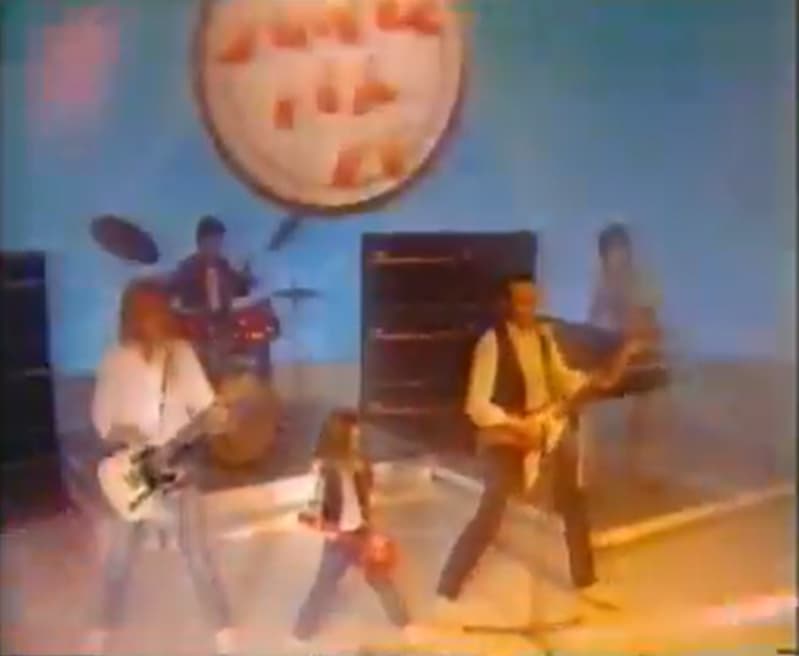
Among the many memorable guests who stepped into the studio was the British rock institution Status Quo, a band already known for its relentless touring schedule and its unmistakable boogie rock sound. Their appearance on the program produced a performance that still circulates among fans today, often accompanied by the enthusiastic remark heard in the clip: “The Quo… everybody wants the Quo.”
By the time of the broadcast, Status Quo had firmly established themselves as one of Britain’s most reliable hit making rock acts. Formed in the 1960s and first breaking through with the psychedelic single “Pictures of Matchstick Men,” the group evolved during the early 1970s into a driving boogie rock powerhouse built on the twin guitar attack of Francis Rossi and Rick Parfitt. Over the following decades they would accumulate dozens of chart singles and become one of the most enduring bands in British rock history.
The performance featured in the television clip demonstrates precisely why Status Quo developed such a devoted following. Rather than relying on elaborate stage production or studio trickery, the band’s appeal lay in its raw rhythmic momentum. Rossi and Parfitt’s guitars lock into a tight, repetitive groove while the rhythm section drives the music forward with almost mechanical precision. The result is a sound that is both simple and irresistibly energetic.
In the context of Jim’ll Fix It, the moment carries an additional charm. The program was designed around youthful excitement and spontaneous joy, and Status Quo’s upbeat performance fits naturally within that environment. Their music, built on direct riffs and sing along choruses, made them especially accessible to audiences of all ages. For viewers watching at home, the sight of the denim clad band tearing into a rock performance inside a family television show captured the spirit of the era.
Looking back today, the clip stands as a fascinating snapshot of British pop culture in the late twentieth century. It reflects a time when television variety shows frequently bridged the worlds of mainstream entertainment and rock music. It also highlights the remarkable staying power of Status Quo, a group whose straightforward approach to rock and roll helped them remain popular for decades.
For fans of the band, the performance serves as another reminder of why Status Quo became one of Britain’s most beloved live acts. Their music was never about complexity. It was about rhythm, energy, and the communal thrill of rock and roll. Watching the band play in that television studio, with the audience clearly delighted, it becomes easy to understand the sentiment heard in the introduction.
Everybody, it seems, really did want the Quo.