
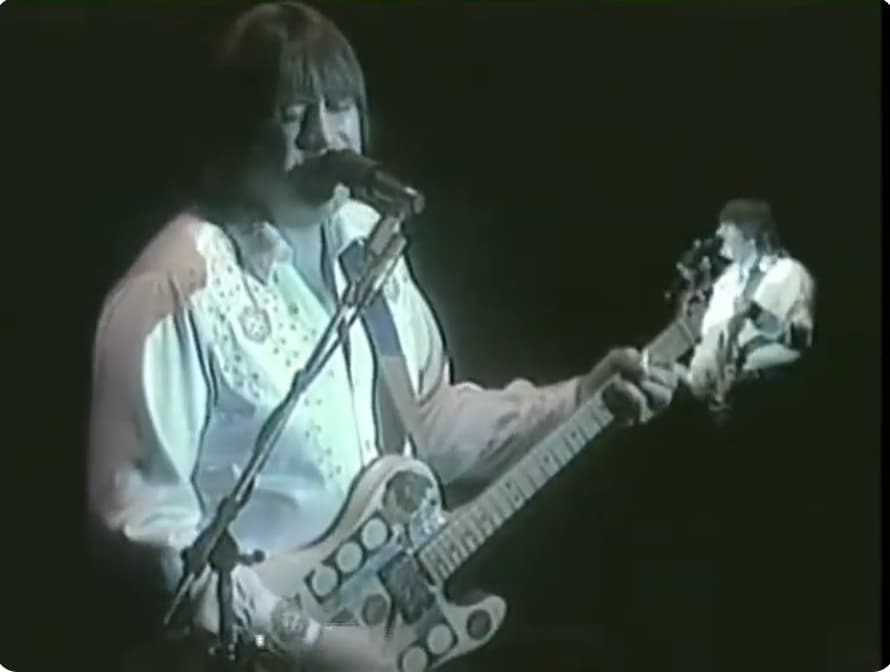
A Quiet Farewell in Motion: Terry Kath’s “Hope For Love” and the Weight of What Came After
The 1977 Amsterdam performance of “Hope For Love” captures Terry Kath in a moment that feels far more fragile today than it likely did at the time. Known as a founding force behind Chicago, Kath had long been celebrated for his powerful guitar work and deeply expressive voice, admired even by figures like Jimi Hendrix, who reportedly held him in the highest regard.
Originally appearing on the album Chicago X, “Hope For Love” stood apart from the band’s more polished, radio-friendly direction of the mid 1970s. By that point, Chicago had begun shifting toward shorter, commercially accessible ballads, a notable change from their earlier expansive jazz rock explorations. The studio version of the song reflects this transition, built around piano, acoustic guitar, and a restrained arrangement that some critics later described as underdeveloped or demo-like in feel.
Yet on stage in Amsterdam, something subtly different emerges. The live performance breathes with a looseness that the studio cut never quite achieves. Kath’s vocal carries a quiet weariness, less polished but more human, as if the song’s theme of longing is no longer just a lyric but a lived reality. The band supports him with restraint, allowing space rather than filling it, which gives the performance an almost confessional quality.
From a modern perspective, listening again with older ears changes the experience entirely. What may once have sounded like a minor track in a vast catalog now feels like an intimate document. There is an audible tension between the band’s technical discipline and Kath’s emotional delivery, a contrast that mirrors Chicago’s broader evolution during that era. Live, the imperfections become the point. They reveal an artist searching rather than performing.
The comparison between live and studio versions underscores this divide. The studio recording is structured, contained, and somewhat distant. The Amsterdam rendition, by contrast, feels exposed. Kath leans into phrasing rather than precision, stretching lines in a way that suggests instinct over arrangement. It is not about refinement but about presence.
There is also an unavoidable sense of hindsight. This performance took place just months before Kath’s untimely death in early 1978, an accidental shooting that would mark the end of a defining chapter for the band. Knowing this now, the performance carries an unintended finality. It is not officially his last moment on stage, but it feels like a closing statement of a certain emotional register he rarely displayed so plainly.
In the end, “Hope For Love” in Amsterdam is less about the song itself and more about what it reveals. It captures an artist in transition, a band in evolution, and a fleeting moment that only gains weight with time. What once might have passed quietly now resonates as something far more enduring: a soft, unguarded echo from one of rock’s most overlooked voices.