
A Forgotten Fire Burns Bright at Tanglewood
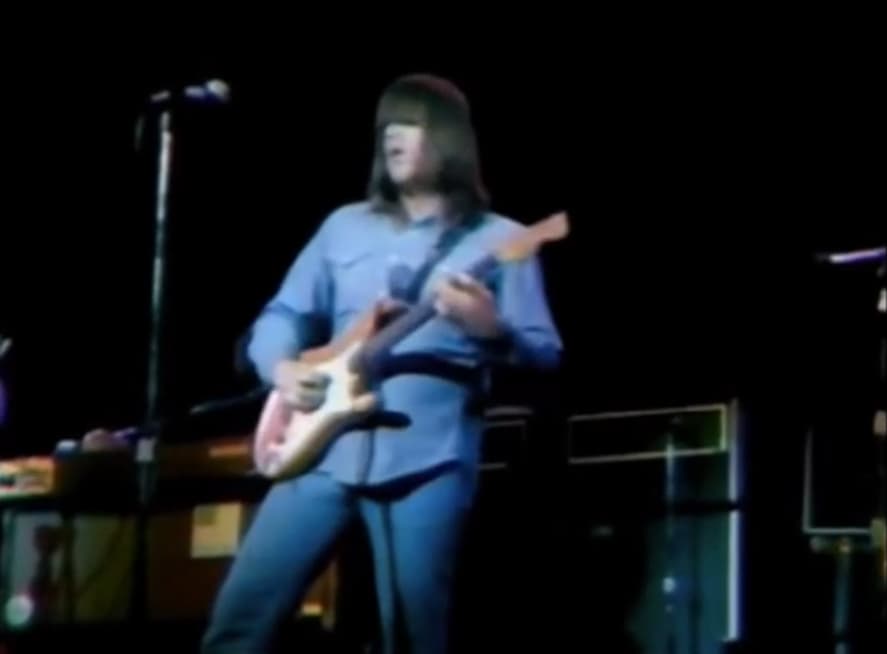
On July 21, 1970, within the refined setting of Tanglewood concert July 21 1970, Chicago delivered a performance that continues to challenge how their legacy is understood. The alternate camera view of “Mother” offers a rare and intimate perspective, placing the viewer close enough to witness not only the mechanics of the music but the intensity behind it. At the center stands Terry Kath, whose presence transforms the performance into something far more profound than a typical live rendition.
The setting itself adds an unexpected layer of meaning. Tanglewood had long been associated with classical music, making Chicago’s jazz rock experimentation feel almost subversive in this environment. Rather than conform, the band leans fully into its exploratory instincts. “Mother,” drawn from the ambitious Chicago III project, resists conventional structure. It unfolds more like a conversation than a composition, shifting in tone and direction with a freedom that defined the band’s early years.
Kath’s role in this moment is impossible to overlook. His guitar work, particularly the expressive use of the Cry Baby pedal near the conclusion, becomes the emotional axis of the performance. The sound is not merely technical. It feels vocal, almost human, bending and crying in a way that pushes beyond standard rock phrasing. This is where the alternate footage proves invaluable, capturing details that often escape wider broadcasts. Subtle movements, tonal shifts, and the physicality of his playing all come into sharper focus, reinforcing the sense that something unrepeatable is unfolding.
There is also a deeper narrative at play. Chicago in 1970 was still a band defined by risk. Long before their later commercial success, they operated in a space where jazz, rock, and improvisation intersected freely. This performance serves as a document of that identity, one that some listeners feel was gradually softened in later years. It invites reflection on what was gained and what may have been lost as the band evolved.
The audience response, though less overtly explosive than a typical rock crowd, carries a quiet attentiveness. It suggests a recognition that this was not music designed for instant gratification. Instead, it demanded patience and rewarded those willing to engage with its complexity. That dynamic continues to resonate with modern viewers, many of whom encounter this footage with a sense of discovery.
In retrospect, “Mother” at Tanglewood stands as both a celebration and a question. It celebrates a moment when artistic ambition outweighed commercial expectation, while also prompting debate about how Chicago came to be remembered. For those who revisit this performance, it offers compelling evidence that the band’s early voice, shaped in no small part by Terry Kath, remains one of the most distinctive and underappreciated forces in American rock history.