
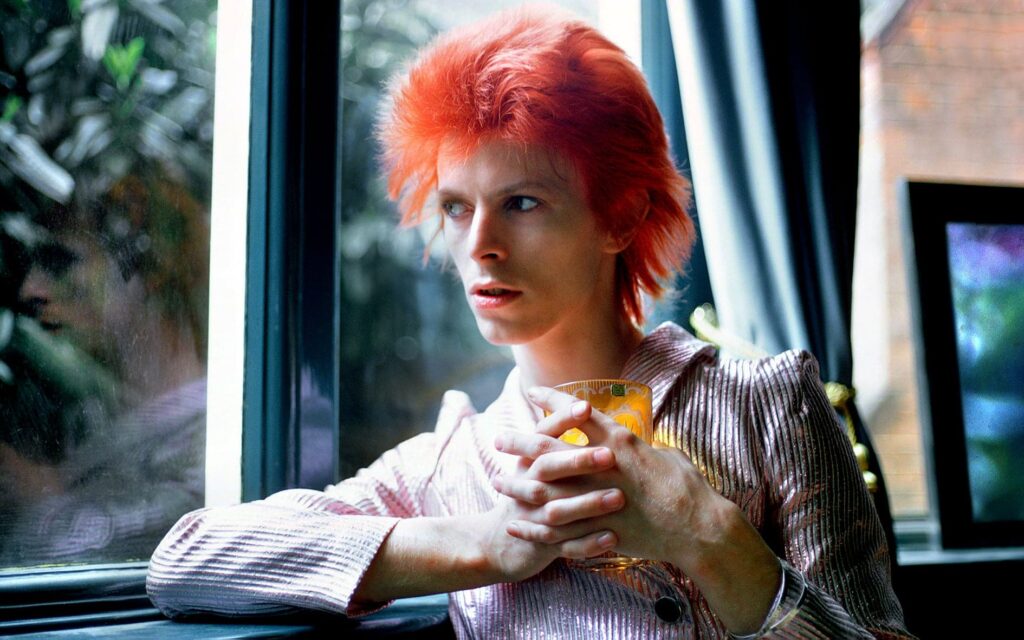
The Night David Bowie Changed Pop Culture Forever with “Starman”
On July 6, 1972, British television audiences witnessed a moment that would ripple far beyond the confines of a weekly music program. When David Bowie appeared on Top of the Pops to perform “Starman,” he was still a rising artist promoting his album The Rise and Fall of Ziggy Stardust and the Spiders from Mars. Within minutes, that status changed permanently.
Recorded a day earlier at BBC Television Centre in White City, London, the performance introduced the world to Bowie’s Ziggy Stardust persona in a way that studio recordings alone never could. With striking red hair, bold makeup, and an androgynous stage presence that defied convention, Bowie did more than sing a song. He presented a fully realized artistic identity that challenged the visual and cultural norms of early 1970s Britain.
The impact was immediate and, over time, widely documented. Numerous future musicians who would define the sound and style of the following decades have pointed to this broadcast as a turning point. Among those watching were Bono, Robert Smith, Boy George, Morrissey, and Siouxsie Sioux. Many have since described the experience as formative, even life changing, offering a new vision of what popular music could look and feel like.
Part of what made the performance so influential was its accessibility. Unlike large concerts or niche underground scenes, Top of the Pops brought Bowie directly into living rooms across the United Kingdom. The intimacy of television allowed viewers, particularly younger ones, to engage with something radically different without mediation. Bowie’s direct gaze into the camera and his relaxed physical connection with guitarist Mick Ronson created a sense of immediacy that felt both personal and disruptive.
Musically, “Starman” itself was already distinctive, blending melodic accessibility with a sense of cosmic narrative. However, it was the visual presentation that elevated it into a cultural landmark. The performance demonstrated that pop music could be theatrical, conceptual, and deeply individual all at once. It suggested that identity in music was not fixed but something to be constructed and performed.
In retrospect, the broadcast has often been described as a moment that helped shape the aesthetic direction of the 1980s, influencing glam rock, new wave, and the broader evolution of pop performance. While such claims carry a degree of hindsight, the consistency of testimony from artists across genres underscores its significance.
More than five decades later, the clip remains one of the most studied and revisited performances in popular music history. It stands as a reminder that sometimes a single televised appearance, lasting only a few minutes, can alter the trajectory of culture itself.
 Oldies Songs