
A Song That Held a Family Together and Still Echoes Today
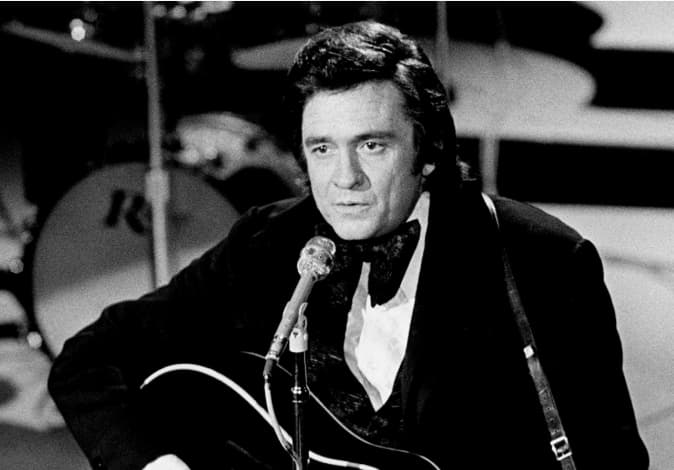
A performance of Daddy Sang Bass by Johnny Cash continues to draw attention decades after its release, not for spectacle but for something far more enduring. The song, written by Carl Perkins, stands as a quiet testament to family, faith, and the healing power of music.
First released in 1968 on the album The Holy Land, the track rose to the top of the Billboard Country chart and remained there for weeks. Yet its success cannot be explained by conventional standards. It carries no elaborate arrangement, no dramatic vocal display. Instead, it tells a simple story. A father sings bass, a mother sings tenor, and together they create a sense of unity that transcends hardship.
What makes this performance particularly compelling is the emotional weight behind its origins. The line referencing a “little brother” is widely understood to be connected to Cash’s own loss of his younger brother, adding a deeply personal layer to the narrative. At the same time, the song emerged during a period when both Cash and Perkins were confronting personal struggles, including addiction. Their collaboration reflects not just artistic partnership but mutual recovery and support.
On stage, the song often becomes more than a solo performance. With voices joining in, including members of The Carter Family and The Statler Brothers, the piece transforms into a shared moment that mirrors its own message. The structure of the song, borrowing from the gospel standard “Will the Circle Be Unbroken,” reinforces a theme of continuity and spiritual reunion. It suggests that the bonds formed in life are not easily broken, even by loss.
The opening moments of many live renditions are marked by a quiet introduction, as Cash recalls gathering around music in his youth. This understated beginning sets the tone for what follows. As the chorus rises, the distinction between performer and audience begins to dissolve. By the closing lines, the performance feels less like a concert and more like a collective remembrance.
Perhaps the most remarkable aspect of this song is its consistency across different stages. Whether performed in a prison, a concert hall, or a formal venue, it retains the intimacy of a small room filled with familiar voices. In an era often defined by scale and spectacle, Daddy Sang Bass remains a reminder that the most powerful stories are sometimes the simplest ones, carried not by volume but by truth.
Video:
A Song That Held a Family Together and Still Echoes Today
A performance of Daddy Sang Bass by Johnny Cash continues to draw attention decades after its release, not for spectacle but for something far more enduring. The song, written by Carl Perkins, stands as a quiet testament to family, faith, and the healing power of music.
First released in 1968 on the album The Holy Land, the track rose to the top of the Billboard Country chart and remained there for weeks. Yet its success cannot be explained by conventional standards. It carries no elaborate arrangement, no dramatic vocal display. Instead, it tells a simple story. A father sings bass, a mother sings tenor, and together they create a sense of unity that transcends hardship.
What makes this performance particularly compelling is the emotional weight behind its origins. The line referencing a “little brother” is widely understood to be connected to Cash’s own loss of his younger brother, adding a deeply personal layer to the narrative. At the same time, the song emerged during a period when both Cash and Perkins were confronting personal struggles, including addiction. Their collaboration reflects not just artistic partnership but mutual recovery and support.
On stage, the song often becomes more than a solo performance. With voices joining in, including members of The Carter Family and The Statler Brothers, the piece transforms into a shared moment that mirrors its own message. The structure of the song, borrowing from the gospel standard “Will the Circle Be Unbroken,” reinforces a theme of continuity and spiritual reunion. It suggests that the bonds formed in life are not easily broken, even by loss.
The opening moments of many live renditions are marked by a quiet introduction, as Cash recalls gathering around music in his youth. This understated beginning sets the tone for what follows. As the chorus rises, the distinction between performer and audience begins to dissolve. By the closing lines, the performance feels less like a concert and more like a collective remembrance.
Perhaps the most remarkable aspect of this song is its consistency across different stages. Whether performed in a prison, a concert hall, or a formal venue, it retains the intimacy of a small room filled with familiar voices. In an era often defined by scale and spectacle, Daddy Sang Bass remains a reminder that the most powerful stories are sometimes the simplest ones, carried not by volume but by truth.