
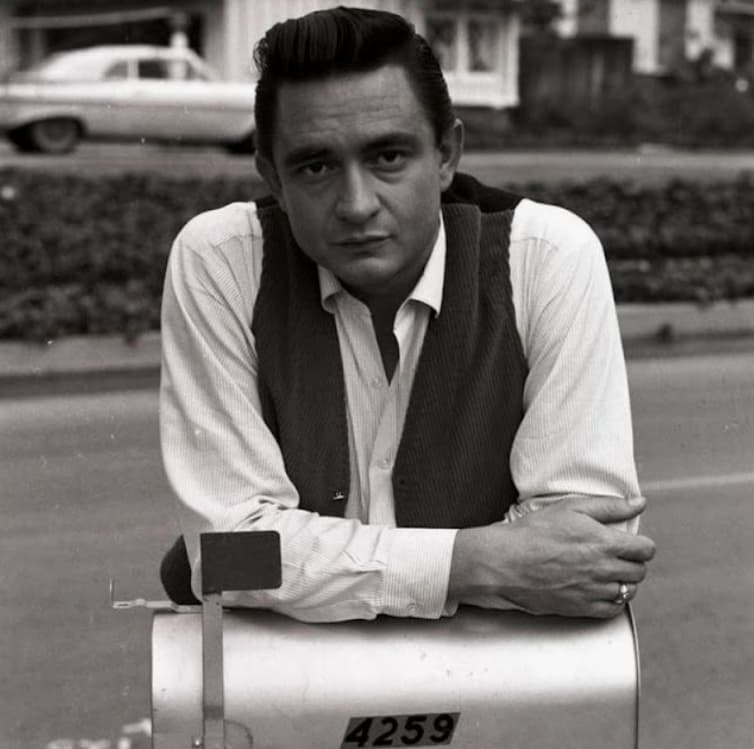
Into the Fire A 1963 Performance That Still Burns Through Time
In an era when country music often leaned on familiar sounds and safe storytelling, Johnny Cash stepped onto the stage and delivered something quietly radical. His performance of “Ring of Fire” in 1963 did not rely on spectacle or dramatic gestures. Instead, it carried a deeper weight, one rooted in lived experience and emotional truth.
The song itself already held an unusual origin. Written by June Carter Cash alongside Merle Kilgore, it was inspired by her own feelings as she fell in love with Cash. This context gives the performance a rare dimension. When Cash sings the words, he is not interpreting a distant narrative. He is inhabiting a story that was written about him, turning the act of performance into something closer to confession.
What immediately captures attention is the sound. The bold use of mariachi style horns sets the tone within seconds. At the time, this was an unexpected choice in country music, yet it became the defining signature of the song. The arrangement does more than decorate the melody. It frames the emotional core of the piece, creating a sense of brightness that contrasts with the underlying tension of falling into something uncontrollable.
Cash’s delivery remains striking for its restraint. He does not raise his voice to emphasize the drama of the lyrics. He does not reach for theatrical expression. Instead, he sings with a steady, grounded presence that suggests acceptance rather than resistance. This calmness becomes the emotional anchor of the performance. It feels less like a man caught in turmoil and more like one who has already made peace with the consequences.
There is also a visual and symbolic layer that deepens the moment. Cash’s signature black attire reinforces the image of a man shaped by hardship and introspection. Within that frame, “Ring of Fire” transforms from a love song into a reflection on choices, desire, and the inevitability of change.
Decades later, the performance continues to resonate because it speaks to a universal experience. It captures the moment when emotion overtakes reason, when a person recognizes the risk yet moves forward anyway. That quiet honesty is what allows the song to endure.
“Ring of Fire” is not simply remembered as a hit from 1963. It stands as a testament to how authenticity, when paired with simplicity, can create something that never fades.