
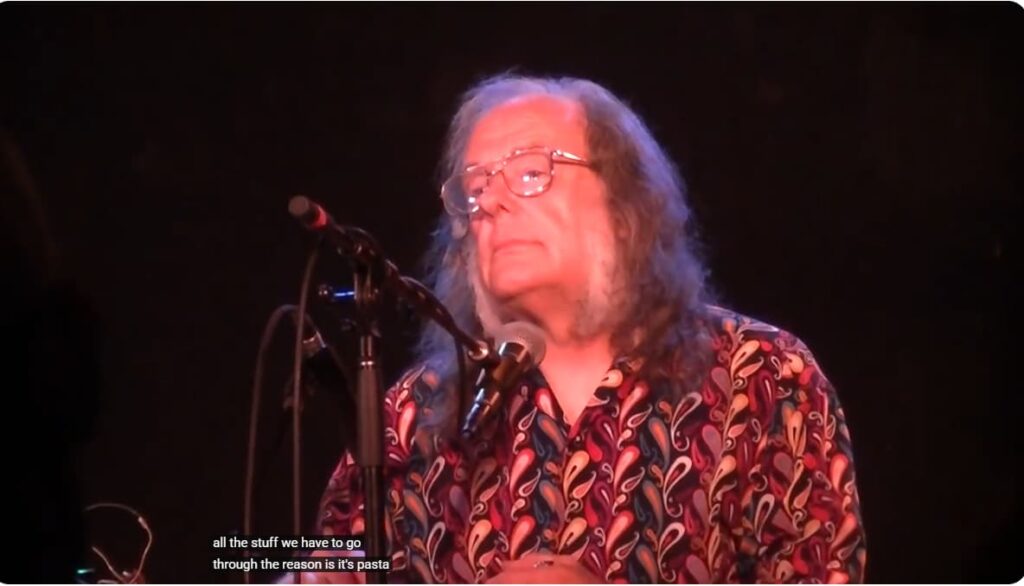
A Song Between Friends: David Lindley Keeps Warren Zevon Close in Milwaukee
On a modest stage at Shank Hall in May 2014, David Lindley delivered more than a live performance. What unfolded that night felt closer to a personal tribute, a quiet conversation carried through strings, phrasing, and memory. His rendition of Monkey Wash Donkey Rinse, originally written by Warren Zevon, stood as a reminder of a musical partnership that once thrived on instinct and mutual understanding.
Lindley and Zevon shared a history that went far beyond occasional collaboration. Lindley’s playing helped shape the sonic identity of Zevon’s work, adding texture and unpredictability to songs that often balanced wit with unease. Returning to this material years later, Lindley does not attempt to recreate the original. Instead, he reshapes it, allowing the song to breathe differently in a live setting.
The performance itself is deliberately unpolished. Lindley’s voice carries the wear of time, yet that very imperfection gives the song its emotional weight. His guitar work, particularly the signature slide phrases, moves with a looseness that resists strict timing. Notes arrive slightly ahead or behind the beat, then settle back into place, creating a sense of tension that feels entirely organic. It is a style that reflects a lifetime of playing, where precision is less important than expression.
There is also something telling about the setting. Shank Hall, known for its intimate atmosphere, strips away the distance between performer and audience. In a room like this, every nuance becomes visible. There are no large scale production elements to rely on, only the musician and the song. For Lindley, that simplicity works in his favor. It allows the performance to feel immediate, almost conversational.
What makes this moment particularly compelling is its place in Lindley’s later career. By 2014, he had long been recognized as a musician’s musician, admired for his versatility and unmistakable tone. Yet here, there is no sense of nostalgia for its own sake. The past is present, but it is not being replicated. It is being revisited, reinterpreted, and kept alive.
For those familiar with Zevon’s original, the contrast is striking. Where the studio version is structured and contained, Lindley’s live interpretation opens the song outward. It becomes less about form and more about feeling. In doing so, it reveals something essential about both artists. Their music was never static. It was meant to evolve, to shift, and to reflect the moment in which it was played.
In Milwaukee, that philosophy remains intact. Through a single performance, David Lindley reminds us that some songs are never truly finished. They simply find new ways to speak.