
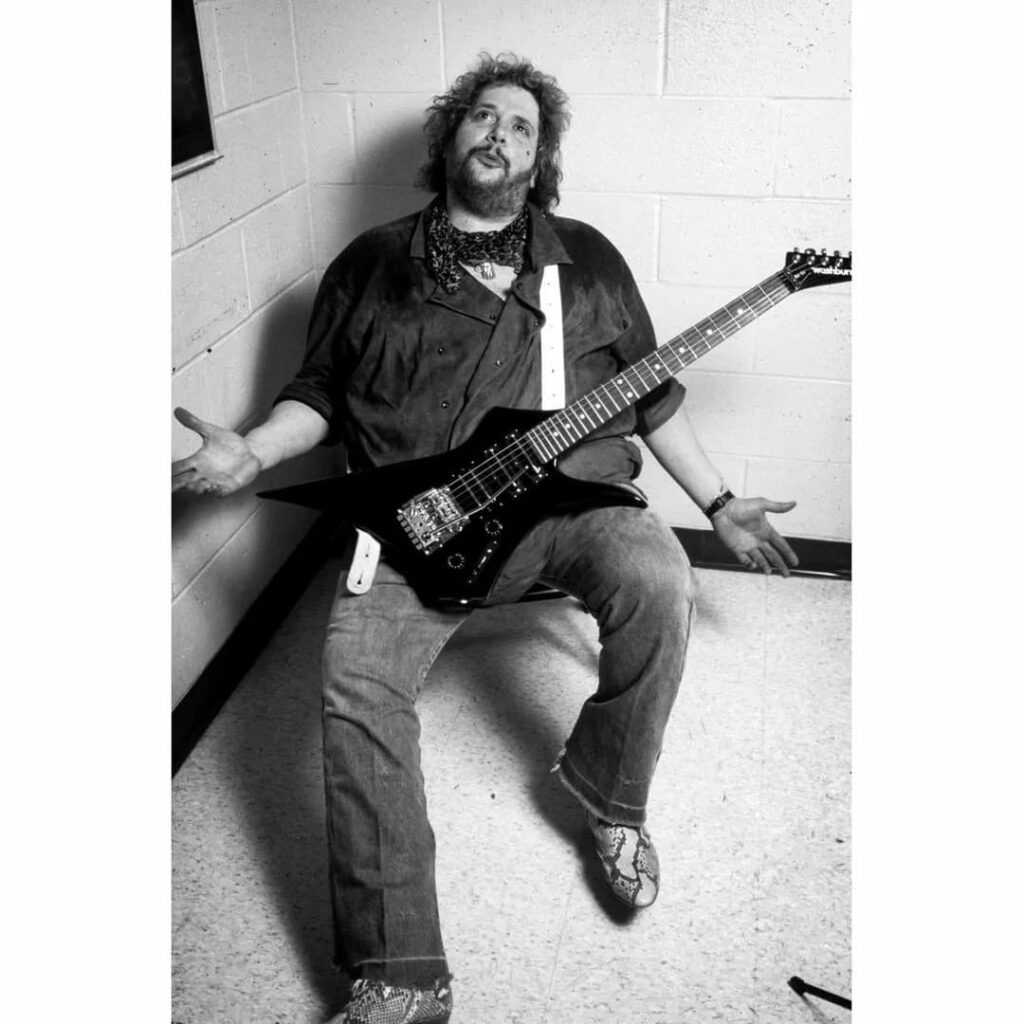
A Voice Too Heavy for Silence: Leslie West Returns to the Blues
There are performances that feel less like a recording and more like a confession. In “I Can’t Quit You”, Leslie West does not simply revisit a blues standard. He inhabits it, reshapes it, and in many ways, reveals something deeply personal through it.
Drawn from the album Got Blooze, this version stands as a deliberate return to roots. Long before the towering riffs of Mountain defined his legacy, blues was the foundation of West’s musical identity. Here, he strips everything back to that origin point, not to replicate the past, but to reconnect with it. The song itself, written by Willie Dixon and immortalized by artists like Otis Rush and later Led Zeppelin, carries a weight of history that West does not shy away from. Instead, he leans into it.
What immediately sets this rendition apart is its sheer physicality. The guitar tone is thick, almost overwhelming, each note pushed to its emotional limit. West does not rush. He lets the phrases breathe, stretching them until they feel like they might break. His voice follows the same path, raw and unpolished, carrying a sense of wear that cannot be faked.
There is no attempt here to outshine previous versions. That is precisely what makes it compelling. Where Led Zeppelin brought a controlled intensity, West offers something looser, heavier, and more grounded in feeling than form. It is blues filtered through decades of experience, delivered by an artist who understands that restraint can be just as powerful as virtuosity.
The emotional core of the song takes on an added dimension in this context. “I Can’t Quit You” becomes more than a narrative about love. It begins to echo something broader, a lifelong attachment to music itself. For West, stepping back into blues is not a stylistic choice. It feels inevitable.
In the end, this performance does not seek resolution. It fades rather than concludes, leaving behind a lingering sense of tension. And perhaps that is the point. Some things are never meant to be resolved. Some things, like the blues itself, are simply meant to be lived through.