
The Night “Big Man” Meant Something Else Entirely
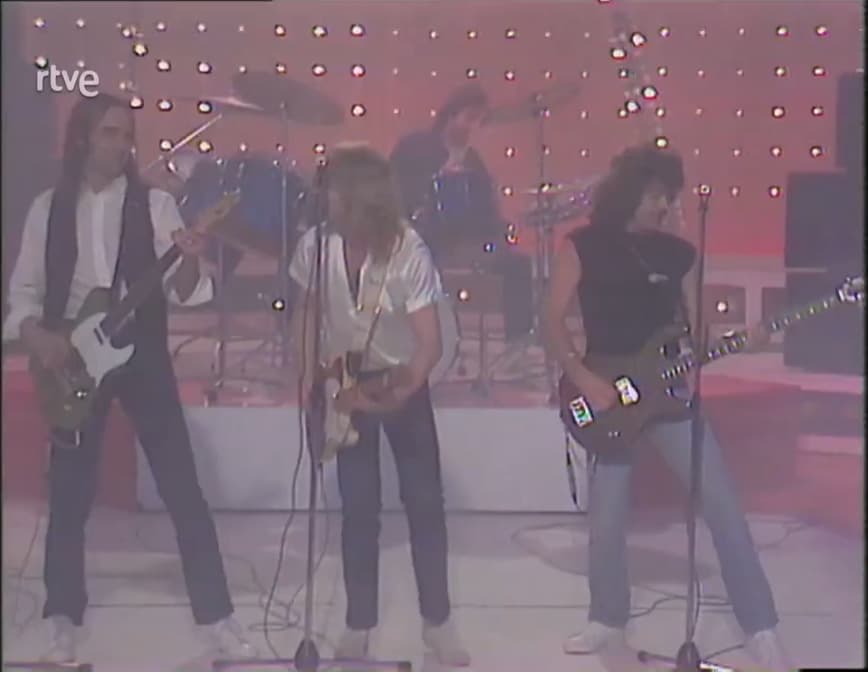
In 1982, when Status Quo stepped onto a Spanish TV stage to perform “Big Man,” everything looked exactly as it should. The denim. The twin guitars. The relentless, familiar engine of Quo. Nothing seemed broken.
But underneath, the story had already shifted.
This was no longer the same band that had stormed through the 70s. Just months earlier, John Coghlan had walked away, ending a rhythm section that had defined their identity for over a decade. Behind the scenes, tensions were quietly building between Alan Lancaster and Francis Rossi over where the band should go next. On stage, none of that is announced. But it lingers.
And then there is the song itself.
“Big Man,” taken from the album 1+9+8+2, was one of the last moments where Lancaster’s voice still carried real weight inside the band. A song about authority, identity, and presence. About who gets to stand tall. In another year, it might have just been another Quo track. Here, it feels uncomfortably specific.
Because while the band plays on, Lancaster is already slipping from the center of it.
That is what makes this performance quietly fascinating. No one says anything. No dramatic gestures. No visible conflict. The machinery still runs. But if you watch closely, it feels less like a unified force and more like four musicians moving forward out of habit, not direction.
The opening comes without ceremony. No buildup, no attempt to frame the moment. Just straight into the song, as if this is simply another night. But that is exactly what gives it weight. There is no effort to make “Big Man” feel important. Which, in this context, makes it feel even more so.
And when it ends, nothing resolves.
No grand finish. No sense of closure. The performance just stops, leaving behind a strange aftertaste. Not dissatisfaction. Something closer to incompletion.
Looking back, this is what gives the clip its real value.
It captures a band still standing together, just before the lines between them begin to show. It captures Alan Lancaster holding onto a space that would not remain his for much longer. And it turns “Big Man” into something it was never explicitly written to be.
A quiet, unintended farewell hiding in plain sight.