A Political Undercurrent on a Concert Stage: Chicago’s “A Song For Richard And His Friends” Revisited
When Chicago performed “A Song For Richard And His Friends” in the early 1970s, the moment carried far more weight than a typical live set. On the surface, it was another ambitious composition from a band already known for blending rock with jazz textures. Beneath that surface, however, the performance reflected a convergence of cultural tension, internal identity, and artistic risk that defined Chicago at their peak.
Written by Robert Lamm, the song has long been interpreted as a subtle political statement, widely believed to reference Richard Nixon during a period of growing public distrust in American leadership. Rather than presenting a direct protest, the band chose ambiguity. This allowed the message to exist in plain sight while avoiding overt confrontation, a strategy that gave the performance lasting intrigue.
The timing is critical. Chicago entered venues like Carnegie Hall not as underdogs, but as one of the most commercially successful acts in the United States. Yet they remained caught between audiences and critics. While fans embraced their sound, critics often struggled to categorize a group that refused to stay within the boundaries of rock convention. This tension is embedded in the performance itself. The arrangement shifts unpredictably, moving between structured sections and looser passages that feel deliberately unsettled.
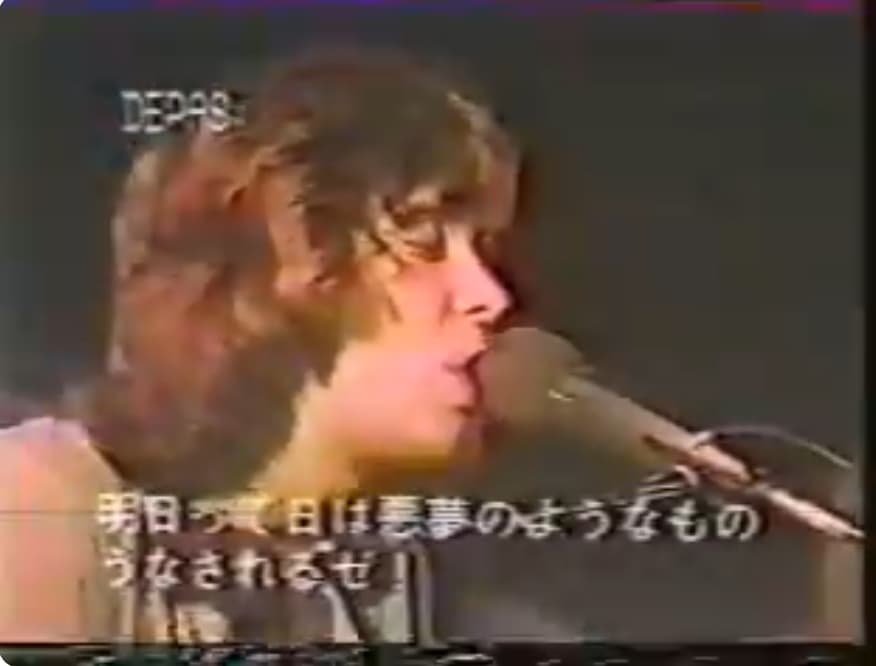
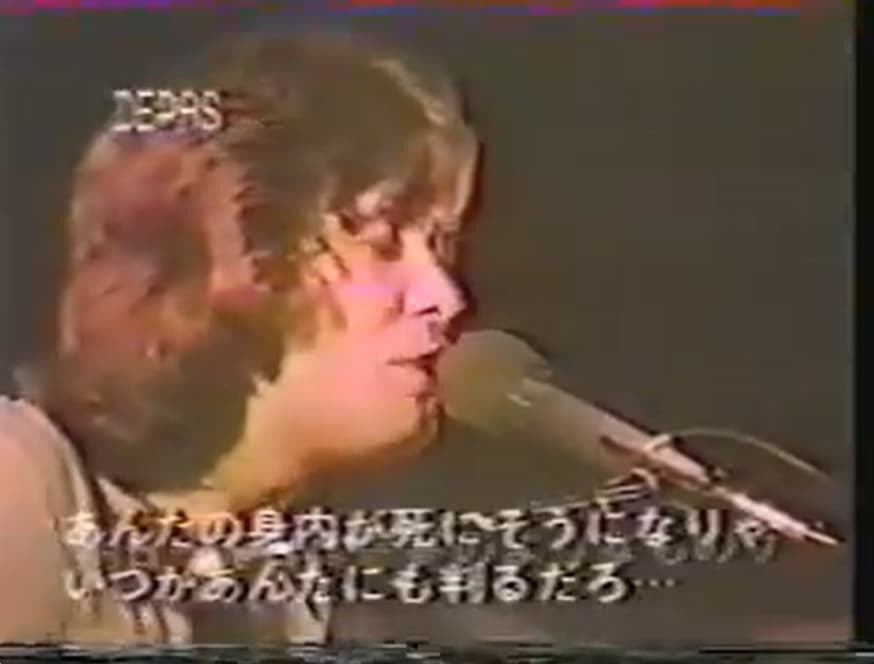
At the center of this controlled instability is Terry Kath, whose role extends beyond the expectations of a lead guitarist. While his reputation was built on powerful guitar work, performances like this reveal a broader musical presence. Kath operates as a stabilizing force, guiding transitions and maintaining cohesion as the composition moves through its more abstract moments. His brief use of piano is not a focal point, but it reinforces the collective, multi layered identity of the band.
What makes this performance particularly compelling is how closely the music aligns with its context. The fragmented structure mirrors a society experiencing uncertainty, while the restrained delivery avoids easy resolution. There is no clear emotional release at the end. Instead, the piece concludes in a way that feels intentionally unresolved, reinforcing the sense that the issues it alludes to remain open.
Viewed in hindsight, the performance also carries an additional layer of significance. It captures Terry Kath during one of the most creative periods of his career, years before his untimely death in 1978. For many listeners, this transforms the recording into more than a document of musical experimentation. It becomes a record of an artist operating at full capacity, within a band that was still willing to take risks.
Ultimately, this is not simply a live rendition of a deep cut. It is a snapshot of Chicago at a moment when commercial success, artistic ambition, and cultural commentary intersected. The result is a performance that continues to invite closer examination, not for what it declares openly, but for what it leaves deliberately unsaid.
Video: