
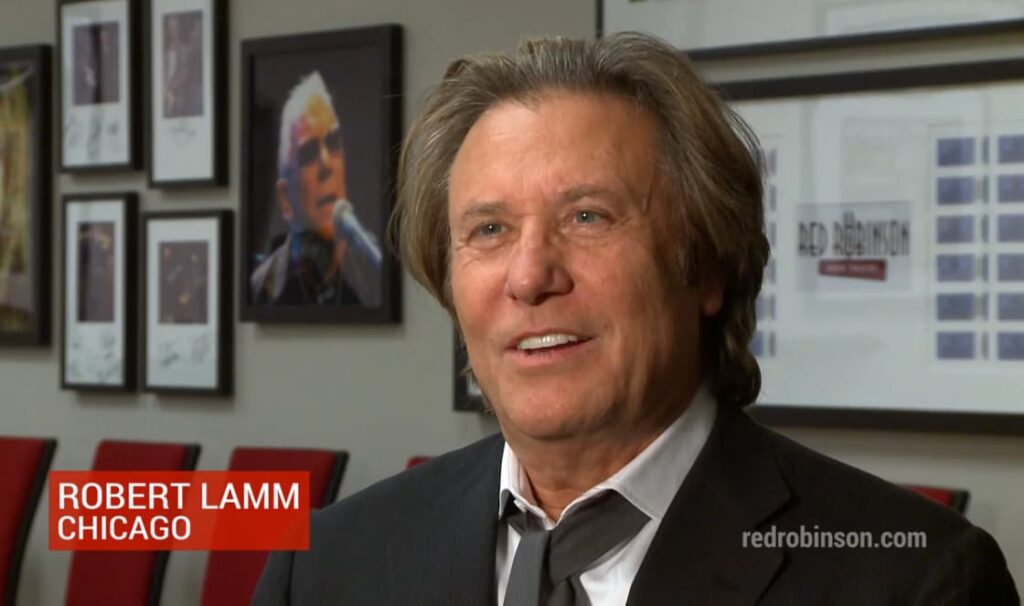
“We Never Thought Music Would Be Our Lives”: Robert Lamm Reflects on Chicago’s Unlikely Longevity
In a revealing 2012 conversation on Red Robinson’s Legends of Rock, Robert Lamm of Chicago offers a candid and grounded perspective on one of the most enduring careers in popular music. The interview does not rely on mythmaking or revisionism. Instead, it presents a band that evolved naturally with its time, often without fully realizing the scale of what it was building.
Formed in 1967, Chicago distinguished itself early through a bold integration of rock and a prominent horn section, drawing heavily from rhythm and blues traditions. Lamm acknowledges that this defining element was shaped by influences ranging from Memphis soul ensembles to jazz groups in Chicago’s local scene. The decision to incorporate horns was not a calculated commercial move, but a reflection of the band’s musical environment and instincts.
One of the most striking aspects of the interview is Lamm’s admission that the band never expected longevity. Like many artists of the era, they entered the industry at a time when rock music itself was often dismissed as a passing trend. Referencing early skepticism, including comments from figures like Buddy Holly, the conversation highlights how uncertain the future of rock once seemed. That Chicago would go on to sell over 100 million records and produce numerous Top 10 hits underscores the unpredictability of that period.
Lamm also clarifies a long standing misconception about the band’s internal structure. Despite his prominent role as a songwriter, particularly on their debut album, Chicago operated without a formal leader. Responsibilities emerged organically, with Lamm often acting as a spokesperson simply because he had written much of the material. His primary identity, however, remained that of a writer rather than a performer.
The discussion touches on the broader evolution of the music industry, particularly the rise of FM radio in the late 1960s and early 1970s. This shift allowed bands like Chicago to experiment with longer compositions, moving beyond the constraints of traditional radio formats. Lamm credits this era as a creative peak, when record companies and broadcasters alike were more receptive to innovation.
Touring is another area where the band adapted over time. Transitioning from private flights to bus travel in the 1980s marked a significant lifestyle change, yet it also brought unexpected benefits. Members were able to involve their families more closely in life on the road, creating a more sustainable and personal touring experience.
Ultimately, the interview presents Chicago not as a band driven by grand ambition, but as one shaped by circumstance, collaboration, and persistence. Even after five decades, Lamm expresses a quiet gratitude rather than triumph, suggesting that longevity in music is less about prediction and more about endurance.