
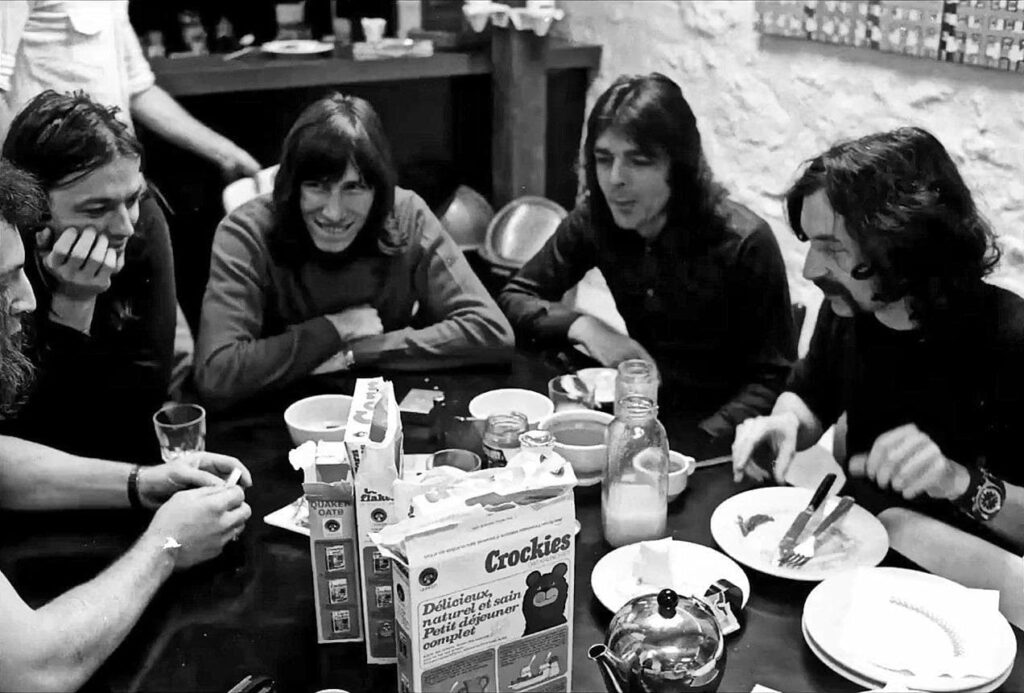
Before the Masterpiece Was Named: Pink Floyd Shape “Any Colour You Like” Live in Brighton, 1972
On June 29, 1972, Pink Floyd performed at the Brighton Dome, presenting material that would later become part of one of the most influential albums in rock history. Among these pieces was “Any Colour You Like,” an instrumental composition that, at the time, existed not as a finalized studio track but as a developing idea shaped through live performance.
This period marked a crucial phase in the band’s evolution. The music that would eventually form The Dark Side of the Moon was still in progress, and audiences were encountering it in a raw and exploratory form. Rather than unveiling a completed product, Pink Floyd used the stage as a creative laboratory, refining structure, texture, and atmosphere through repetition and variation. The Brighton performance offers a clear example of this process in action.
“Any Colour You Like” stands apart from traditional rock compositions due to its lack of conventional lyrics and its emphasis on sonic texture. The opening moments do not rely on a defined melody or immediate rhythmic hook. Instead, the piece begins with layered sound elements that gradually establish a sense of space. This approach invites the listener to engage with the music on a more immersive level, shifting attention from narrative to sensation.
As the performance develops, the interplay between guitar and keyboard becomes central. The musicians build a hypnotic flow, allowing phrases to expand and overlap in a way that feels fluid rather than fixed. Improvisation plays a key role, with subtle variations shaping each live rendition. This flexibility reflects the band’s broader artistic direction during the early nineteen seventies, where experimentation was not an occasional choice but a defining principle.
The absence of a conventional climax or resolution further distinguishes the piece. Instead of building toward a dramatic ending, the music gradually recedes, creating the impression that it continues beyond the audible performance. This open structure aligns with the conceptual themes that would later define the album, emphasizing continuity and psychological depth over traditional song form.
Placed within the context of the full set, which included similarly atmospheric works such as “Set the Controls for the Heart of the Sun” and “Careful With That Axe, Eugene,” the performance reveals a consistent artistic vision. Pink Floyd were not simply presenting individual songs but constructing an extended sonic experience.
Viewed today, the Brighton recording provides valuable insight into a moment of transition. It captures Pink Floyd in the act of creation, demonstrating how one of their most celebrated works began as a live exploration.
 Oldies Songs