
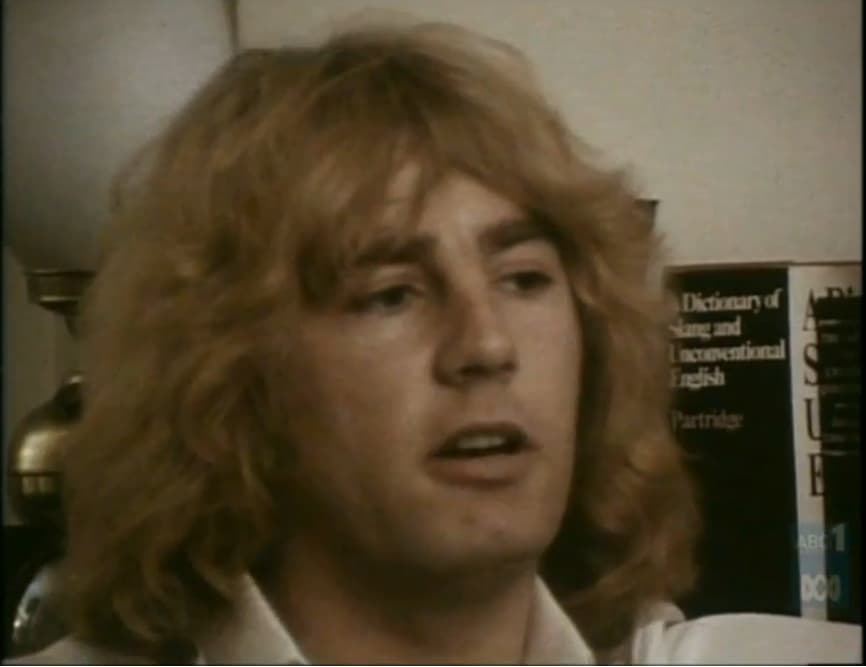
Holding the Line in a Changing World: Rick Parfitt on Identity and Endurance in Rock
In a 1980 television appearance on Countdown, Rick Parfitt offered a clear and thoughtful perspective on what it means to sustain a band in an industry defined by constant change. Speaking with Molly Meldrum, Parfitt addressed a question that continues to shape discussions about longevity in music. Why has Status Quo remained so consistent in its sound while others have pursued reinvention.
At a time when musical trends were shifting rapidly, with new movements emerging and redefining popular taste, Status Quo stood apart. Their commitment to a recognizable style was not presented as resistance, but as intention. Parfitt described a band that understood its identity and chose to develop it rather than abandon it. This approach, often simplified as repetition, emerges in the interview as something more deliberate. It reflects a belief that authenticity can be sustained through refinement rather than transformation.
The setting of the conversation adds to its significance. Countdown was one of the most influential music programs in Australia, offering artists a platform to connect with audiences beyond traditional touring circuits. For Status Quo, appearances such as this were part of a broader international presence, reinforcing their reputation as a band built on consistency and reliability. The interview captures a moment when television still played a central role in shaping public perception of musicians.
Parfitt’s manner throughout the discussion is direct and unembellished. He does not rely on abstraction or industry language. Instead, he speaks in practical terms about the dynamics that keep a band functioning over time. Trust, familiarity, and shared purpose emerge as key elements. These factors, often overlooked in favor of creative narratives, are presented as essential to survival in a demanding profession.
What becomes clear is that Status Quo’s stability is not accidental. It is the result of a collective decision to prioritize cohesion over experimentation. This choice has invited both admiration and criticism, yet it has also allowed the band to maintain a clear connection with its audience. In an environment where change is often equated with progress, the interview suggests an alternative view. Continuity, when grounded in conviction, can be equally powerful.
Looking back, the conversation offers more than a reflection on one band’s strategy. It provides insight into a broader question that remains relevant across generations of artists. How much should one adapt, and how much should one remain unchanged. Through Rick Parfitt’s perspective, the answer appears not as a formula, but as a commitment to knowing who you are and staying true to it.