
A Love Song That Refuses Love: Dylan and Baez Turn a Misstep into a Moment of Truth
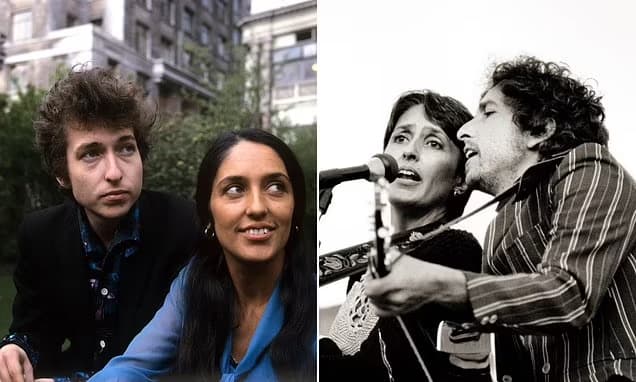
At the 1964 edition of the Newport Folk Festival, two of the most defining voices of the folk revival shared a stage and, for a brief moment, revealed something far more intimate than a polished performance. Bob Dylan and Joan Baez performed It Ain’t Me Babe with a simplicity that belied the emotional complexity beneath it.
On paper, the song is a declaration of refusal, a clear rejection of expectations in love. Yet in this setting, sung as a duet between two artists whose personal and artistic lives were deeply intertwined, it becomes something more layered. The irony is impossible to ignore. A song about not being the one is delivered by two people widely seen as a defining couple of the folk movement.
The performance begins with a quiet sense of ease. There is no grand introduction, no attempt to dramatize the moment. Their voices blend naturally, carrying the melody with a softness that reflects the acoustic roots of the genre. This understated opening invites the audience into a space that feels almost private, despite the scale of the festival.
Then comes the moment that has come to define this rendition. The lyrics falter. Words are missed, lines are slightly out of sync. In another context, such a mistake might be seen as a flaw. Here, it transforms the performance. The brief uncertainty reveals a human side that polished recordings often conceal. Instead of breaking the connection, it deepens it, drawing the audience closer to the performers rather than distancing them.
As the song progresses, the interaction between Dylan and Baez becomes the true focal point. There is a subtle exchange in glances and timing, a sense of two artists navigating the song together rather than delivering it independently. The emotional weight does not come from vocal intensity, but from the tension between the song’s message and the reality of their partnership at the time.
The closing moments do not attempt to resolve that tension. The song ends without a sense of finality, leaving behind an impression that lingers beyond the last note. It feels less like a conclusion and more like a fragment of a larger story that continues offstage.
Looking back, this performance invites ongoing discussion. Some listeners see it as a charming imperfection, a reminder that live music thrives on spontaneity. Others interpret it as a subtle reflection of a relationship in transition, captured unintentionally in front of an audience. Either way, it stands as a compelling example of how a single moment, even one marked by a mistake, can reveal truths that no perfect performance could fully express.
 Oldies Songs