
Alive Without a Crowd: Status Quo’s “Is There A Better Way” Captures Boogie Rock at Full Pulse
In 1978, a television performance managed to challenge a long held assumption about rock music. Energy, it suggested, does not depend on a roaring crowd. In a Musikbox special, Status Quo delivered “Is There A Better Way” with a vitality that felt immediate and unfiltered, even within the controlled environment of a studio broadcast.
The distinction is important. This was not a live concert in the traditional sense, yet it never feels staged or restrained. Instead, the band plays with the same relentless drive that defined their reputation on stage. The rhythm locks in quickly, the guitars interweave with precision, and the performance settles into the hypnotic boogie groove that became their signature. It is a reminder that authenticity in rock music is not tied to setting, but to execution.
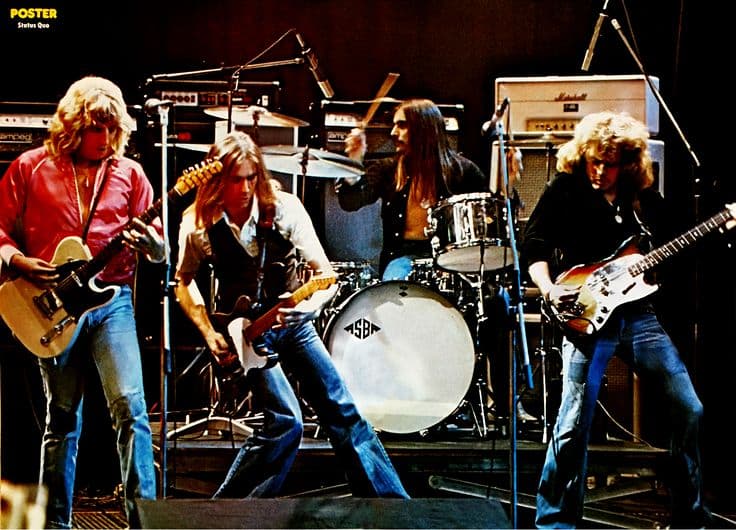
At the time, Status Quo stood at a creative peak, powered by what many fans regard as their definitive lineup. Francis Rossi and Rick Parfitt form the core of the band’s twin guitar attack, delivering tight, rhythmic patterns that emphasize feel over complexity. Behind them, Alan Lancaster provides a steady and confident presence, while John Coghlan anchors the performance with a driving, unyielding beat.
“Is There A Better Way” itself reflects the band’s philosophy. Built on repetition and momentum, the song does not seek to impress through intricate structure. Instead, it relies on consistency and groove, drawing listeners in through its pulse rather than its variation. In this performance, that approach is fully realized. The band does not deviate from its formula, yet the result feels anything but predictable.
Visually, the performance adds another layer to its appeal. The long hair, the relaxed stance, and the understated stage presence all contribute to a distinct identity that defined rock culture of the era. There is no attempt to overproduce the image. What emerges is a sense of natural confidence, a band comfortable in its own sound and style.
For longtime fans, the footage carries a strong sense of reflection. When compared to later performances, it highlights both continuity and change. The core elements remain, yet time inevitably reshapes the band’s dynamic. This contrast invites viewers to consider which era best represents the essence of Status Quo, a question that continues to spark discussion.
Ultimately, the Musikbox performance stands as a compelling document of a band in full command of its identity. It demonstrates that simplicity, when executed with precision and conviction, can achieve lasting impact. In this moment, Status Quo proves that rock does not need embellishment to feel alive.