
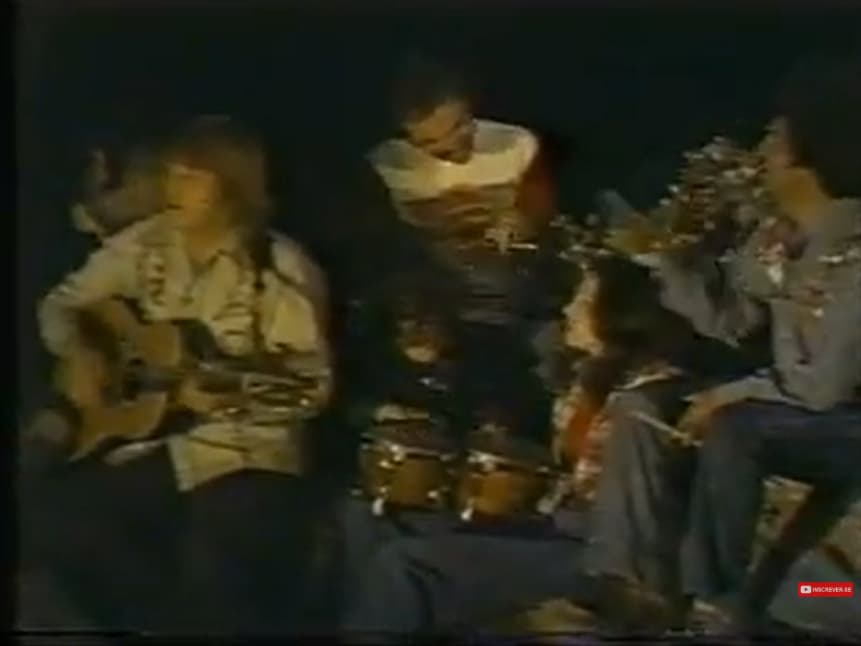
Before Music Television There Was Craft Chicago Capture a Quiet Masterpiece on Screen.
In the summer of 1974, Chicago presented a television special titled Meanwhile Back at the Ranch, a production that now stands as a fascinating document of a different era in music broadcasting. Among its most quietly powerful moments is “Happy Man,” a song that has gradually earned recognition as one of the band’s most refined and emotionally resonant works.
Filmed at the legendary Caribou Ranch, the performance carries a sense of intimacy that contrasts with the band’s often expansive sound. The setting allows the music to unfold with subtlety, giving space to the arrangement and highlighting the precision that defined Chicago during this period. Rather than relying on spectacle, the band leans into atmosphere, creating a mood that feels both relaxed and meticulously shaped.
“Happy Man” itself reveals a different dimension of Chicago’s artistry. Known for their bold horn arrangements and dynamic live energy, the group here demonstrates restraint and nuance. The song’s structure emphasizes melody and texture, with each instrument contributing to a carefully balanced whole. This attention to detail reflects a level of craftsmanship that rewards close listening, reinforcing the idea that some of the band’s most compelling work exists beyond their most famous hits.
The television format plays a significant role in shaping the experience. In an era before dedicated music video channels, such specials offered artists an opportunity to explore visual storytelling in ways that extended beyond standard concert footage. The result is a performance that feels curated rather than spontaneous, yet still retains an organic quality. It bridges the gap between studio recording and live interpretation, offering viewers a perspective that is both controlled and expressive.
Adding to the program’s appeal is the presence of guest performers, including Anne Murray, whose collaboration with the band underscores the versatility of the setting. These moments of crossover highlight a broader musical landscape, where genre boundaries were more fluid and collaboration was an integral part of the creative process.
For many who experienced the broadcast during its original airing, the memory is tied to a shared cultural moment. Viewers recall the act of switching between channels, balancing competing programs in real time. This context adds a layer of nostalgia that continues to shape how the performance is remembered today.
In recent years, discussions surrounding the availability of such material have brought renewed attention to its significance. The scarcity of high quality recordings has elevated “Happy Man” to near archival status, prompting conversations about preservation and access.
Ultimately, this performance endures because it captures a band at ease with its identity, exploring its musical range with confidence and care. It stands as a reminder that not all defining moments are the loudest ones. Some resonate most deeply through quiet precision and lasting emotion.