
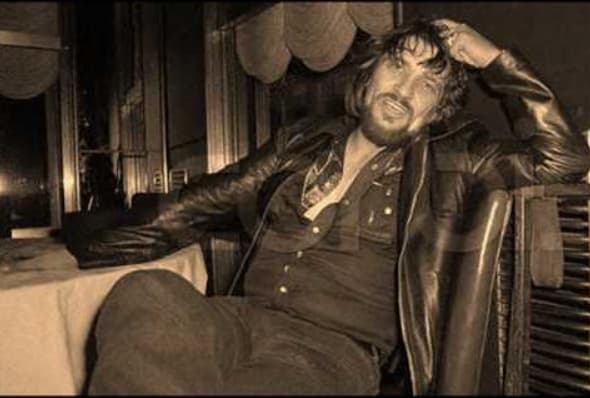
The Song He Never Believed In Became His Legacy: Inside Waylon Jennings and the Enduring Mystery of Luckenbach Texas
In the landscape of 1970s country music, few performances carry a contradiction as striking as Luckenbach, Texas (Back to the Basics of Love) by Waylon Jennings. What appears on the surface to be a warm invitation to simplicity is, in reality, a layered cultural moment shaped by irony, rebellion, and unexpected truth.
Released in 1977, the song quickly climbed to the top of the charts and became one of Jennings’ most recognizable recordings. Yet behind the success lies a surprising fact. Jennings himself reportedly had little affection for the track and agreed to record it almost reluctantly. Even more intriguing is that neither he nor its writers had truly experienced the place that gives the song its soul, the tiny town of Luckenbach, Texas. Despite this, the performance resonates with an authenticity that audiences continue to embrace decades later.
The live renditions add another layer to this paradox. Jennings, a defining figure of the outlaw country movement, brings a grounded and unpolished delivery that contrasts sharply with the song’s reflective message. There is no elaborate introduction, no theatrical buildup. The performance begins with a sense of casual immediacy, as though the story has already been unfolding long before the first note is played. This approach reinforces the song’s central idea of stripping life down to its essentials.
At its core, the narrative explores the emotional cost of success. It tells of lovers overwhelmed by ambition, social expectations, and the pressures of a fast moving world. The call to return to Luckenbach is not about geography but about reclaiming something intangible. It is a longing for connection, for quiet, and for a version of life untouched by excess.
One of the most compelling aspects of the performance lies in its restraint. The tempo often carries a subtle lift compared to the studio version, yet Jennings avoids dramatic vocal flourishes. His voice remains steady, almost conversational, allowing the message to settle naturally with the audience. The closing moments do not strive for a grand finale. Instead, they leave listeners suspended in the idea of escape, as if the journey toward something simpler has only just begun.
Over time, Luckenbach itself transformed from an obscure location into a symbol deeply embedded in country music culture. The song gave the town a second life, turning it into a destination fueled by imagination as much as reality.
What endures is not just the melody, but the contradiction at its heart. A song created without firsthand experience, performed by an artist who questioned it, ultimately became a timeless reflection of a universal desire. In that tension lies its power, and perhaps the reason it still feels relevant today.