
When Legends Sing Like It Might Be the Last Time
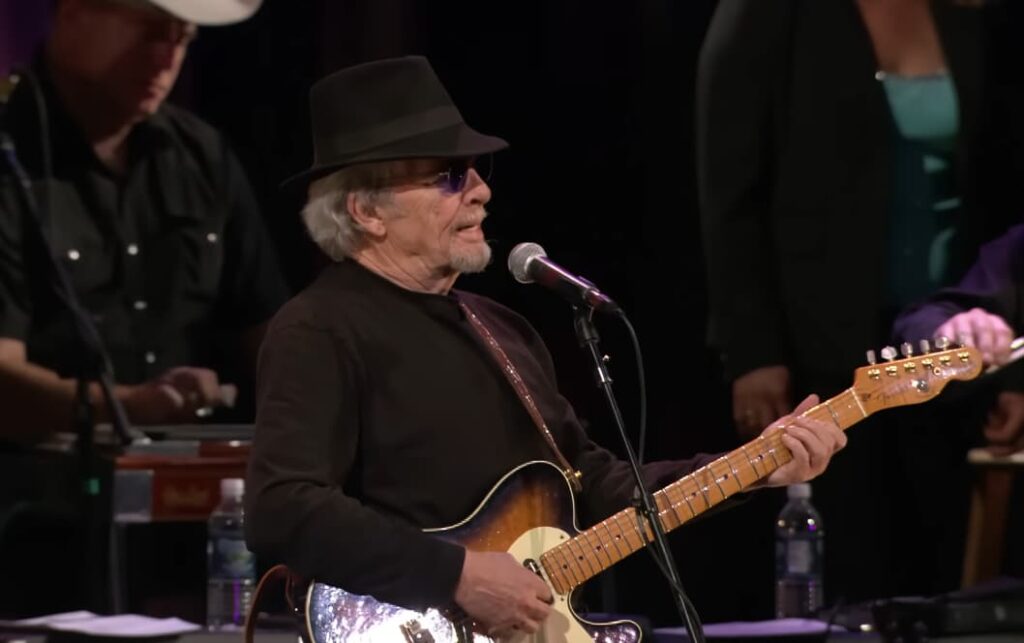
The performance of Sing Me Back Home during the Last of the Breed Tour stands as more than a musical moment. It feels like a document of time itself. On stage, Merle Haggard delivers a song rooted in prison memory and human finality, yet in this setting, its meaning expands far beyond its original narrative.
Broadcast through PBS, the concert carries the tone of preservation rather than spectacle. Alongside Haggard are Willie Nelson and Ray Price, artists who represent a lineage of country music that predates modern production and commercial polish. Their presence transforms the stage into something closer to a living archive than a performance venue.
“Sing Me Back Home” has always told the story of a condemned man asking for one final connection to the world he is about to leave. In this concert, however, the song resonates differently. Haggard is no longer just recounting a story from his past experiences. He appears to be channeling the weight of an entire era. The lyrics, once tied to a single character, now echo across a generation of musicians who built their careers in a vastly different industry landscape.
There is a notable absence of theatricality. No elaborate staging, no dramatic lighting cues, no attempt to modernize the sound. Instead, the performance relies on stillness, restraint, and authenticity. This simplicity becomes its greatest strength. It invites the audience not to be entertained in the conventional sense, but to witness something rare and unfiltered.
The emotional gravity is amplified by the knowledge that such a lineup is unlikely to ever appear again. The term “Last of the Breed” suggests finality, yet it also carries a quiet defiance. These artists are not merely closing a chapter. They are asserting the enduring value of their craft, even as the world around them changes.
In this context, the performance becomes more than a rendition of a classic song. It becomes a meditation on legacy, memory, and the passage of time. What unfolds on stage is not just music, but a reminder that some voices do not fade. They linger, carrying with them the stories of where they came from and the echoes of everything that came before.