
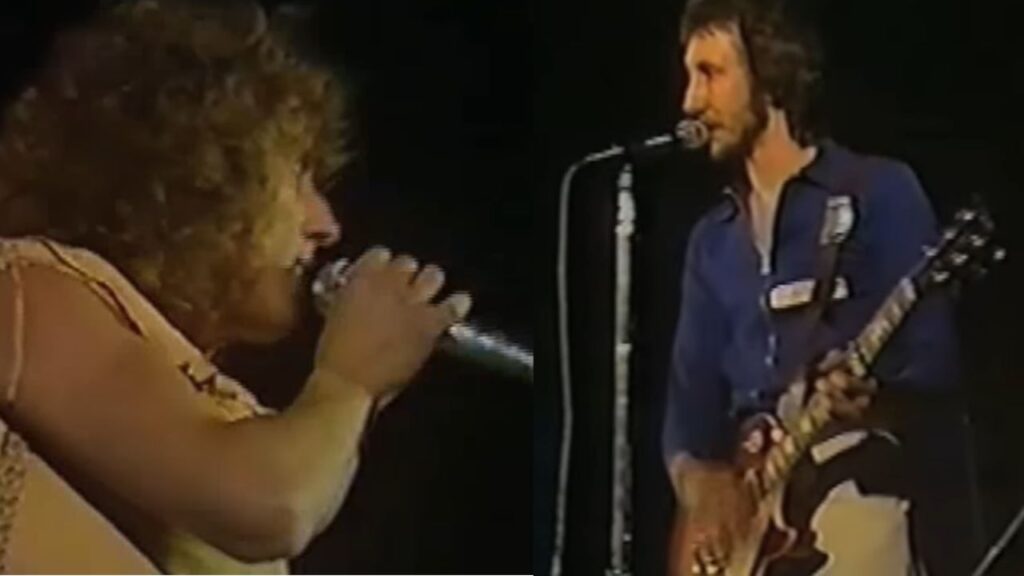
In 1974, The Who delivered one of their most powerful live moments during their performance at The Who Charlton Athletic Football Ground Concert 1974. Among the many highlights of that show, “Drowned” stood out as a defining example of the band’s ability to transform a studio composition into something far more intense and unpredictable on stage.
Originally featured on the album Quadrophenia, the song carries a reflective and emotional tone. However, in this live setting, it becomes something far more physical and immediate. The performance is not simply a recreation of the recorded version. It is expanded, stretched, and driven by the chemistry between the band members.
One of the most striking aspects of the Charlton performance is the sense that the band is playing for each other rather than for the audience. This internal focus creates a raw and almost private intensity, even in front of a massive crowd. Roger Daltrey delivers a vocal performance that feels urgent and unfiltered, pushing his voice to match the emotional weight of the song.
At the center of the instrumental force is John Entwistle, whose bass work has often been cited by fans as one of the most remarkable elements of the performance. Around the middle section of the song, his playing becomes especially prominent, combining precision with a powerful tone that drives the entire arrangement forward. Many listeners have pointed to this moment as one of the finest examples of rock bass performance captured live.
Equally significant is the contribution of Keith Moon. Known for his energetic and unconventional style, Moon dominates the rhythm with relentless motion. His drumming does not simply support the song. It propels it, adding layers of intensity that elevate the entire performance.
Despite its impact, this rendition was not included in the documentary The Kids Are Alright, a decision that continues to surprise many fans who consider it one of the band’s most compelling live recordings.
The Charlton 1974 performance of “Drowned” remains a powerful reminder of what made The Who exceptional as a live act. It is not defined by perfection, but by connection, energy, and a willingness to push beyond the limits of the original song.