
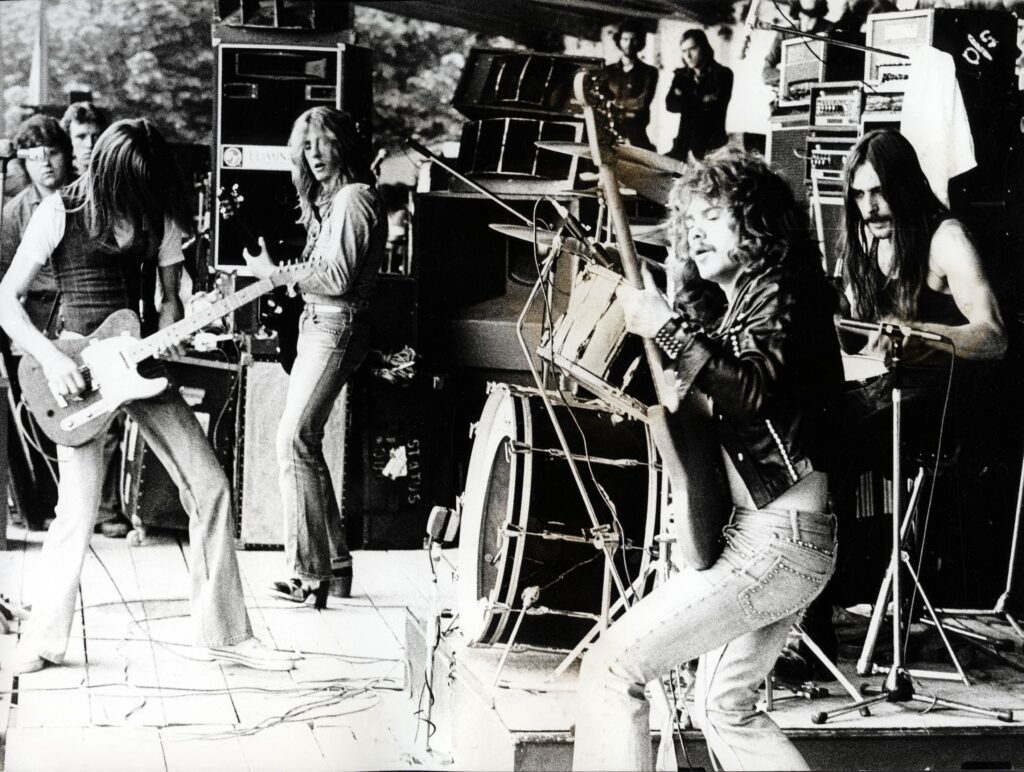
Stripped to the Core: Status Quo’s “Hold You Back” Demo Reveals the Song Beneath the Sound
In the long history of studio recordings, demos are often treated as stepping stones rather than destinations. Yet in the case of Status Quo’s “Hold You Back,” the studio demo has sparked a quiet but persistent debate among listeners who believe this earlier version captures something the final release does not. It is a reminder that sometimes less refinement can mean more clarity.
“Hold You Back” would later appear on the band’s 1981 album Never Too Late, a period when Status Quo were refining their signature boogie rock into a more polished and radio friendly form. The album version reflects that direction, with tighter production and a cleaner overall mix. By contrast, the demo offers a more direct and unfiltered experience, one that places the focus squarely on performance rather than presentation.
One of the most noticeable elements in the demo is the bass work of Alan Lancaster. His playing carries a distinctive phrasing, particularly in the way he rolls notes within the groove. It adds a subtle movement that feels organic and alive, giving the track a rhythmic character that stands out more clearly without the layers of studio polish. This detail, often softened in the final version, becomes a defining feature here.
Vocally, the demo also presents a slightly different texture. The nasal tone that fans often associate with the band’s earlier recordings is more pronounced, lending the track a raw edge that complements its stripped down arrangement. It is not a matter of technical superiority, but of character. The voice feels closer, less processed, and more connected to the instrumental foundation beneath it.
What makes this demo particularly interesting is how it reshapes the listener’s understanding of the song itself. Without the enhancements of full production, the structure and melody are exposed in their simplest form. This can lead to a stronger appreciation of the songwriting, as the core elements must stand on their own. For some, this version feels more honest, offering a clearer window into the band’s creative process.
The discussion around which version is better ultimately reflects broader questions about music production. Does refinement enhance a song, or can it sometimes obscure its essence. In the case of “Hold You Back,” the demo suggests that there is value in hearing a track before it is fully realized in the studio.
For longtime fans of Status Quo, this recording is more than a curiosity. It is a reminder of the band’s roots and the qualities that defined their sound before commercial expectations shaped the final product. In its simplicity, the demo captures a moment where the music speaks for itself, unfiltered and immediate.