
The Enduring Power of a 1970s Live Classic
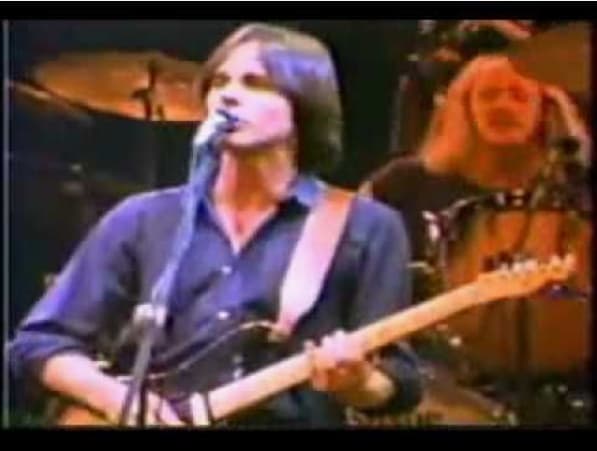
A live performance often reveals more about an artist than any studio recording ever could. The 1979 live rendition of Running On Empty by Jackson Browne stands as a striking example of that truth. Captured during a period when live recordings demanded precision and authenticity, the performance reflects a level of musicianship that continues to resonate with audiences decades later.
Released as part of the broader Running On Empty project, the song itself had already become one of Browne’s signature works. However, it is in the live setting where the track fully reveals its character. There is no reliance on digital enhancement or studio correction. Instead, what listeners hear is a direct connection between artist and audience, shaped entirely by voice, instrumentation, and presence.
One of the defining elements of this performance is the collaboration with David Lindley. Widely regarded as one of the finest lap steel guitar players of his era, Lindley played a crucial role in shaping Browne’s early sound. His contribution during this live version adds both texture and emotional depth, elevating the arrangement without overshadowing the core of the song. The interplay between the musicians feels natural and unforced, a hallmark of seasoned performers working in complete sync.
Vocally, Browne delivers with clarity and control, balancing restraint with intensity. The backing vocals further enhance the atmosphere, creating a layered sound that fills the space without feeling excessive. The energy of the performance builds steadily, drawing the audience into the rhythm of life on the road, which is the central theme of the song.
Beyond its technical qualities, the performance also captures a specific cultural moment. The late 1970s represented a period when live music carried a different weight in American life. Concerts were not only entertainment but also shared experiences that reflected broader social and emotional landscapes. This recording serves as a reminder of that era, offering a glimpse into a time when authenticity was the defining standard.
Today, the 1979 live version of Running On Empty remains widely appreciated by listeners who value musical integrity. While modern production techniques have transformed the industry, performances like this continue to set a benchmark. They demonstrate that at its core, music relies on human connection, something no technology can fully replace.
 Oldies Songs