
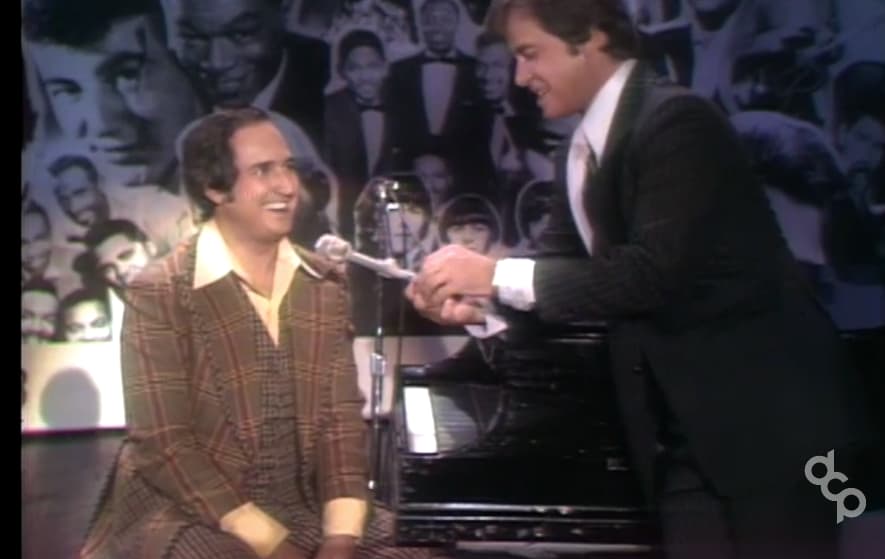
Rare 1973 Dick Clark Interview Reveals Neil Sedaka on Songwriting and Friendship in Early Rock Television
In a remarkable 1973 television segment on Rock N Roll Years, legendary broadcaster Dick Clark sat down with singer songwriter Neil Sedaka for an insightful conversation about music, creativity, and the evolving landscape of popular performance.
The interview highlights Sedaka’s reflections on the process of writing both lyrics and music, a craft he described as deeply connected and essential to his identity as an artist. He spoke about the importance of maintaining harmony between words and melody, emphasizing that his strongest work comes from blending both elements into a unified expression. This approach helped define many of his most enduring songs during the early decades of his career.
Beyond his personal creative process, Sedaka also shared memories of professional relationships that shaped his musical journey. One of the most notable was his friendship with musician Billy Preston. The conversation touches on their mutual respect within the industry, highlighting how collaboration and shared musical understanding played a role in the development of their respective careers. The program later features a performance segment by Preston, adding a live dimension to the broadcast and reinforcing the spirit of collaboration that defined the era.
The episode also includes a historic clip of singer Brenda Lee performing her 1960 hit Sweet Nuthin’s. This archival footage provides viewers with a broader sense of the musical landscape being discussed, connecting the interview to a wider tradition of early rock and pop performance on television.
What makes this broadcast particularly valuable is its ability to capture multiple layers of music history within a single program. It brings together interview, performance, and archival footage in a way that reflects how television helped shape public understanding of popular music during the early 1970s.
Sedaka’s comments, combined with Clark’s steady presence as interviewer, offer a grounded and respectful look at the craft of songwriting. The discussion avoids exaggeration and instead focuses on real working experiences within the music industry, making it a meaningful document for anyone interested in the development of modern popular music.
This 1973 segment remains a strong example of how early television preserved not only performances but also the thoughts and relationships behind them, giving audiences a closer look at the artists who helped define an era.